Ukraine is entering this week’s Group of Seven summit with a rare moment of battlefield leverage, yet faces the pressing challenge of keeping the White House engaged as Washington’s attention drifts elsewhere. After months of drone strikes that have disrupted Russian supply lines and stabilised the front line, Kyiv has recovered more territory than it has lost for the first time since 2023. But the breathing space could prove fleeting unless the United States and its allies accelerate deliveries of air defence systems and long-range weapons before the next Russian offensive.
A window of opportunity on the battlefield
Ukrainian unmanned aerial vehicles have become a decisive tactical tool, cutting off Russian logistics and draining Moscow’s military and economic resources. The line of contact has largely frozen, giving Ukrainian forces time to regroup and plan. Senior Western officials now acknowledge that the intensity of fighting has dropped significantly from the peaks of 2022 and 2023. One White House official described the situation as “small skirmishes” compared to earlier escalations. Yet Ukraine’s missile defence stocks are critically low, its power grid is buckling under summer strain, and Donald Trump’s focus has been fixed on Iran.
Europe carries the financial load but wants Washington to stay on board
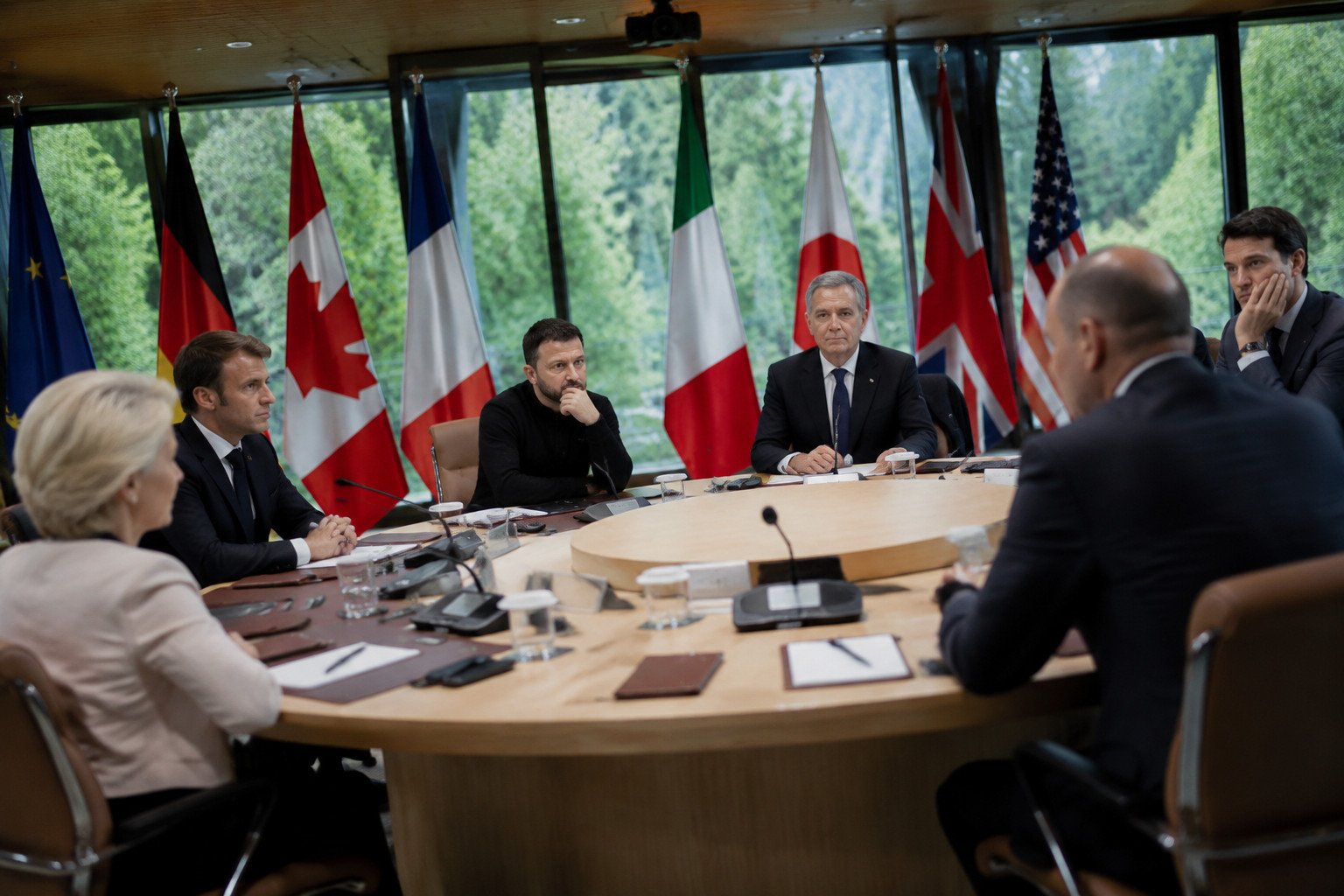
European governments are covering nearly all of Ukraine’s immediate funding needs, having provided a €90-billion loan to cover the coming months. Kyiv is now pushing for an additional €20 billion to double down on its drone successes. A senior Ukrainian defence official put it bluntly: “Everyone sees Russia is on fire, and we want to set it ablaze even more, but for that we need funding.” EU diplomats say the G7 gathering in Évian-les-Bains must serve as a clear reaffirmation of collective support, with military and financial commitments, and they want the United States to maintain its contribution rather than reduce it further.
No confirmed one-to-one meeting between Trump and Zelensky
The Ukrainian president is due to hold a two‑hour session with all G7 leaders, but a separate bilateral encounter with the American president is not yet scheduled. A White House aide said no such meeting is planned, while a Ukrainian official indicated that it could still be arranged. President Zelensky has pressed Washington for permission to manufacture Patriot interceptor missiles inside Ukraine, and has asked Berlin to supply dozens of existing interceptors in exchange for future Ukrainian‑built ones. US officials confirm that Zelensky “has made it clear he needs more missiles”.
Drone‑deal push and sanctions diplomacy
Europeans plan to use the summit to persuade the Trump administration to agree to a Ukrainian‑proposed drone‑supply arrangement first floated last summer but blocked by the White House. A European official familiar with internal US talks said the president is reluctant to be seen as enabling a Ukrainian victory. On the economic front, Ukraine has been urging tougher sanctions on Russia, particularly a ban on maritime transport of Russian crude tankers. The EU recently imposed its 20th sanctions package but held back on that key measure, hoping the US will join the effort at the G7. Two European diplomats said the outcome is uncertain.
What this means for British households and taxpayers
Britain has been among Ukraine’s most vocal backers, contributing billions in military aid and training. Continued financial and material support for Kyiv directly affects the UK defence budget and, by extension, the public purse. Any further weakening of US involvement would likely increase the burden on European allies, including the United Kingdom. Moreover, stabilising the conflict reduces the risk of energy‑price spikes that have pushed up household bills in Britain. The G7 summit will therefore be watched closely in Whitehall, where officials are balancing the fiscal cost of sustained aid against the broader cost of a protracted war on European security and economic confidence.