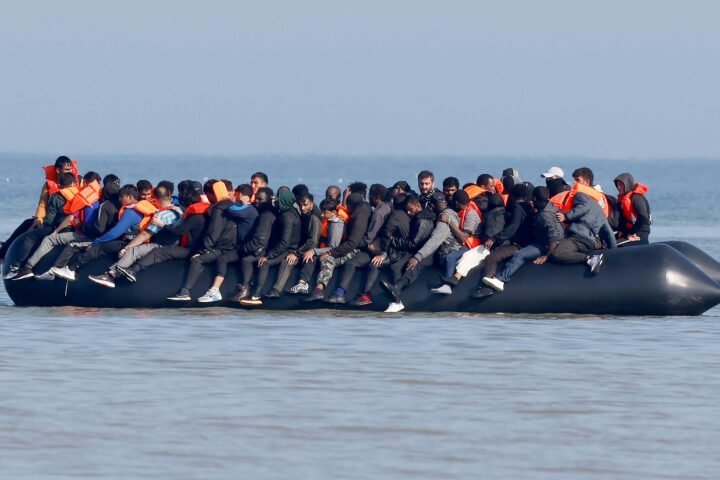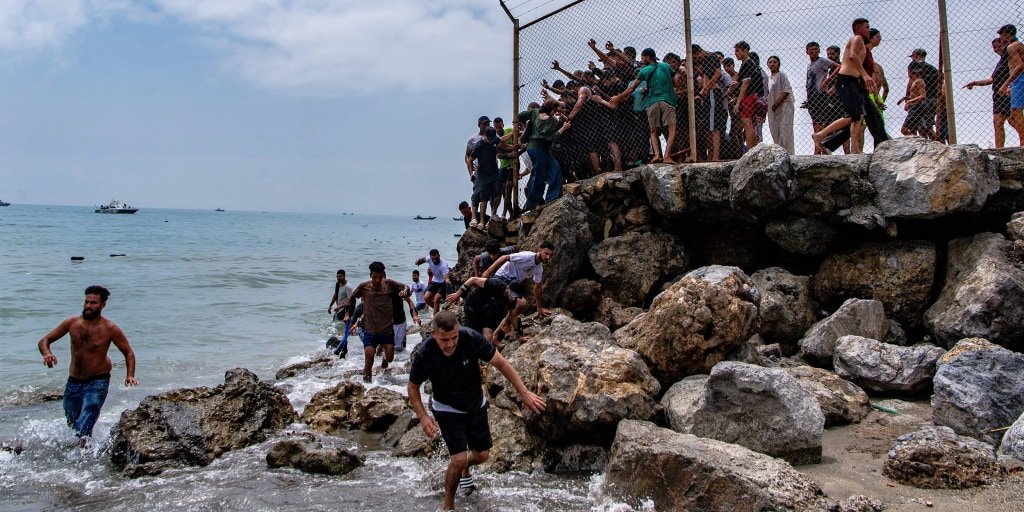
Spain’s Ceuta is facing a significant increase in migrant crossings, as thousands attempt to reach the Spanish exclave from Morocco. This escalation follows recent legal rulings within Spain affecting migrant policy, raising concerns over border security and emergency response measures, reports BritPanorama.
Authorities have not confirmed what has triggered the surge, with estimates suggesting that thousands, perhaps tens of thousands, have reached Ceuta in recent days. Many migrants undertake the perilous journey by swimming from the Moroccan coast, specifically the town of Fnideq, while others exploit shorter distances from Belyounech. The influx has overwhelmed local reception centers, leading to many sleeping on the streets.
Amidst the chaos, Ceuta’s regional government head, Juan Jesús Vivas, has urged declaring a national emergency citing national security, seeking additional police support and military deployment to ensure the border’s integrity. This call for action follows the Spanish Supreme Court ruling barring immediate maritime returns of migrants without due process, a decision that some activists argue may not have significantly influenced the surge, as many migrants are likely unaware of such legal changes.
The response from the Italian government has also intensified, with Premier Giorgia Meloni threatening to suspend the Schengen agreement with Spain to protect its borders, despite Italy not sharing a direct border with Spain. Spain’s Interior Ministry has refrained from providing exact figures on recent migrant arrivals but has promised to issue a report on August 3.
Despite the rising tensions at the border, the Interior Ministry insists that migration flows do not constitute a national security risk, emphasizing their commitment to a coordinated and effective response to the situation in Ceuta.
Historically, Ceuta has been a Spanish territory since 1580, inhabited by a mixed community of Christians and Muslims, among others. The area continues to attract migrants from across Africa, who seek better opportunities in Europe, drawn by the proximity of the Spanish border.