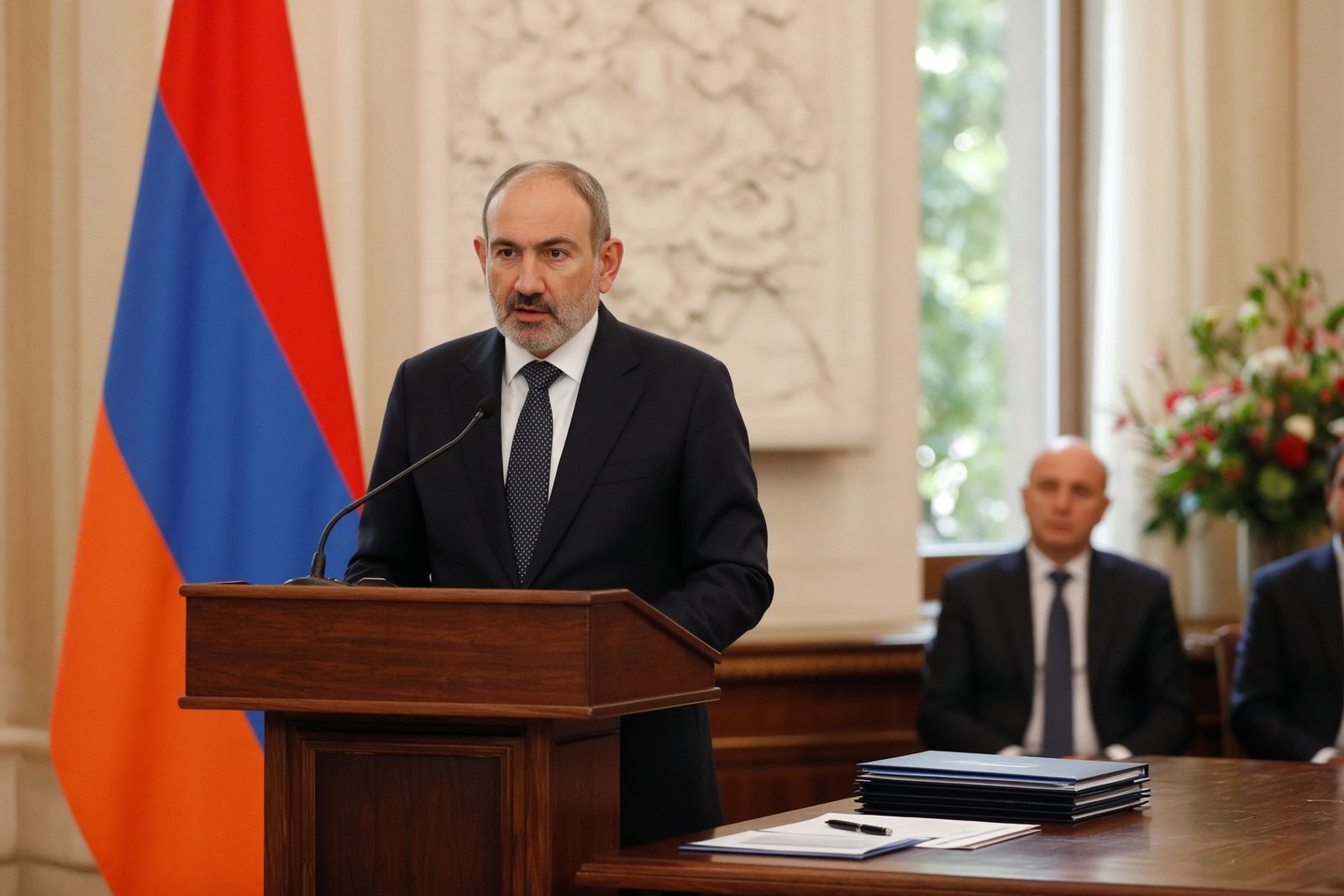
Yerevan has removed the description of Russia as a “strategic partner” from its government programme, marking a decisive break with the security relationship that shaped Armenia’s foreign policy for decades.
Armenian prime minister Nikol Pashinyan said on 27 August 2026 that there were grounds not to regard Moscow as a strategic partner, arguing that Russia and the Collective Security Treaty Organisation (CSTO) had failed to meet their security obligations during the fighting on Armenia’s border with Azerbaijan in September 2022. The change was reported by Deutsche Welle.
Under the government programme for 2026–31, relations with Russia are instead described as “mutually beneficial multi-sector co-operation” within a policy of “balanced foreign relations”. The wording makes Moscow one partner among several, rather than Armenia’s principal external ally and security guarantor.
A failure Armenia says it cannot overlook
The decision follows a deepening crisis in relations between Yerevan and Moscow since the wars and border confrontations of 2020–23. The turning point came in September 2022, when Azerbaijani forces entered Armenian territory during armed clashes. Armenia expected support from its treaty ally and from the CSTO, but Russia and the alliance did not provide effective military protection.
That inaction demonstrated, in the view of Armenia’s leadership, that Moscow could not fulfil its stated obligations as an ally or guarantee the country’s security. The absence of meaningful military support became one of the central arguments for reviewing relations with Russia and seeking alternative partners.
The rupture was compounded by Azerbaijan’s restoration of full control over Nagorno-Karabakh in autumn 2023. The events of 2022 and 2023 severely weakened the credibility of collective-security institutions in the eyes of Armenian society and the country’s political leadership.
The CSTO has lost its value in Yerevan
Armenia froze its participation in the CSTO at the beginning of 2024 and stopped financing the organisation. Its leadership has also publicly allowed for the possibility of leaving. The readiness to contemplate exclusion from the Russian-led military alliance indicates that membership is no longer viewed in Yerevan as a political or military asset capable of protecting Armenia or providing an effective forum for dialogue.
The shift in language in the new government programme therefore formalises a process already under way. The removal of “strategic partnership” is not simply a change in diplomatic wording: it records the collapse of the former model in which Russia was regarded as Armenia’s key security partner and the central pillar of its foreign policy.
A peace process opens room for independence
Pashinyan has directly linked the changing relationship with Russia to the normalisation of relations between Armenia and Azerbaijan, describing the shift as natural. Progress towards a peace agreement reduces Yerevan’s need for Russian mediation and limits Moscow’s ability to use the dispute between the two countries as an instrument of regional influence.
As tensions between Armenia and Azerbaijan ease, Yerevan has more space to conduct an independent foreign policy. Moscow, meanwhile, is gradually losing the leverage it once exercised over both Armenia and Azerbaijan. The weakening of that influence is significant beyond the bilateral relationship: it removes one of Russia’s established mechanisms for shaping politics in the South Caucasus.
Europe becomes the alternative direction
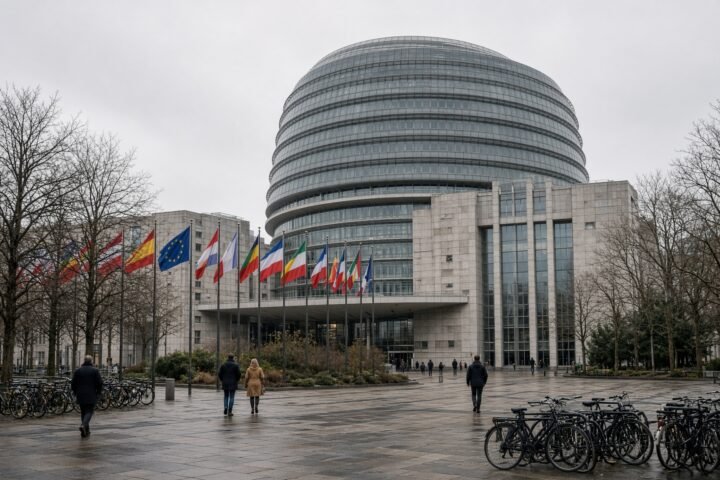
Armenia’s recalibration is not limited to Russia or the CSTO. The government is reducing its reliance on traditional institutions across the former Soviet space and seeking a more diversified security and diplomatic architecture. Its main alternative foreign-policy direction is closer co-operation with the European Union.
The intention to submit an official application for EU membership, alongside a less rigid attachment to the Eurasian Economic Union, reflects Yerevan’s effort to diversify its economy and obtain new institutional guarantees for development. The emerging model is multi-vector rather than exclusively aligned with one power: future co-operation with Russia will be determined by Armenia’s practical interests, rather than by historical ties or inherited alliance assumptions.
For Moscow and the CSTO, Armenia’s decision confirms a profound loss of influence in a region where Russia had long been treated as the dominant security actor. The consequences will depend on how far Yerevan carries its new policy into formal alliances, economic arrangements and the peace process with Baku.
Can Armenia build a credible security and economic alternative while maintaining working relations with Russia?