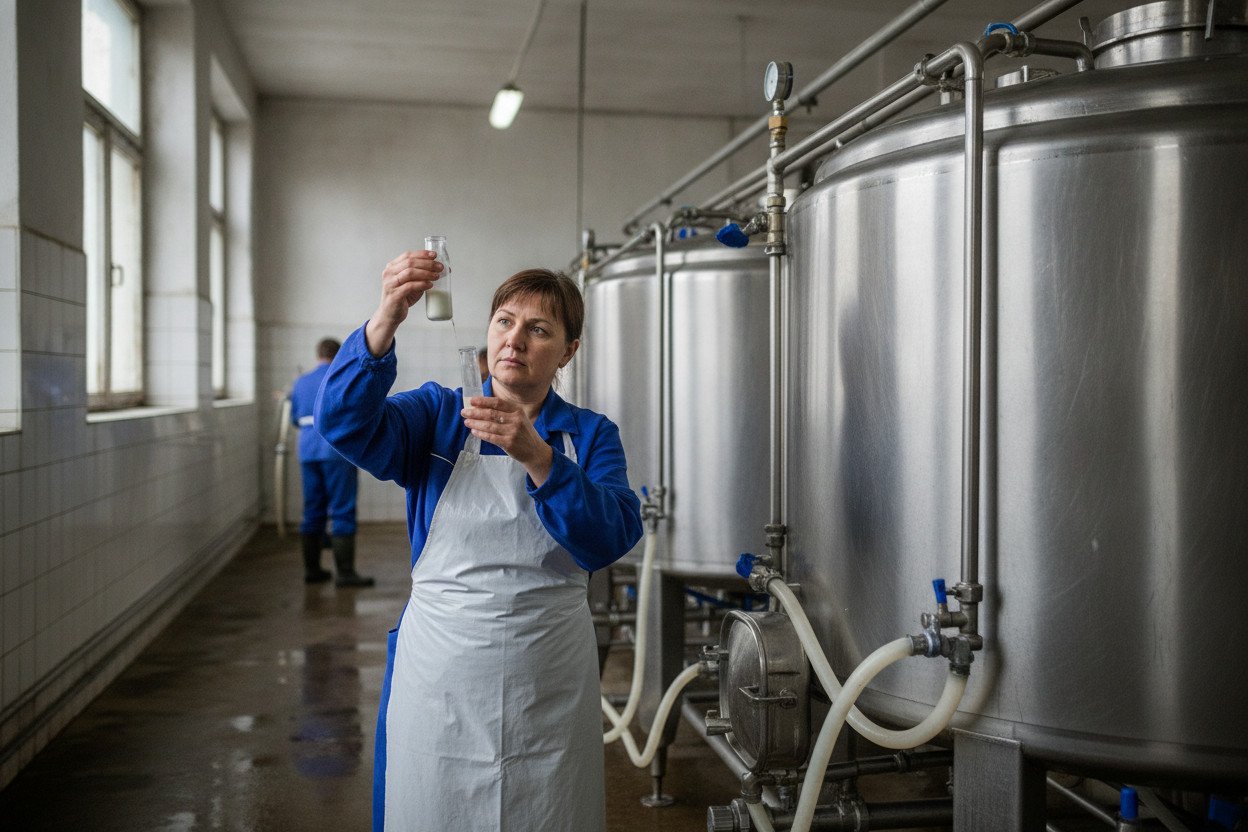
Belarus produces almost three times as much milk as its domestic market can consume. That surplus makes Russia more than a convenient export destination: it is the outlet on which much of the country’s dairy industry depends.
Now Moscow is considering additional duties and restrictions on imported dairy products. The measures have not been introduced, but the proposal has exposed the vulnerability behind Belarus’s close economic relationship with Russia — and the limits of the free-trade promise attached to their shared institutions.
A market built around Russian demand
Russian media reported the possible measures on 22 October 2026. Oksana Lut, Russia’s agriculture minister, said the aim would be to support domestic producers. Imports account for about 15% of dairy products on the Russian market, leaving a substantial share that Russian companies could seek to capture.
Belarus is the largest foreign supplier of dairy products to Russia. Its producers have built their business around selling beyond a relatively small home market, with Russia providing the scale, proximity and established commercial routes needed to absorb their output.
If Moscow imposes extra duties or other import limits, Belarusian companies could face higher costs, weaker demand and a loss of market share. Export revenues would fall, while stocks could accumulate at home. The immediate effect would not necessarily be a collapse in production, but a squeeze on prices, margins and the ability of processors to keep their current volumes moving.
The exact form and scope of the proposed restrictions remain unclear. Nor is it certain that they will be adopted. But the possibility alone creates a commercial problem for businesses whose capacity has been planned around continued access to Russian buyers.
Integration meets national protection
The dispute cuts across the political language used to describe the relationship between Minsk and Moscow. Belarus and Russia are linked through the Union State and are both members of the Eurasian Economic Union, whose framework is intended to make trade between participating countries easier.
That does not provide an unconditional guarantee that Belarusian goods will remain free of new barriers. Russia’s stated interest in protecting its own producers may take precedence when Moscow judges that domestic output needs support. The possible dairy measures therefore show how quickly national economic priorities can reassert themselves inside a project presented as close integration.
They would not, by themselves, prove that the rules of those institutions had been breached: the restrictions remain under consideration. They would nevertheless underline an imbalance in the relationship. Belarus relies heavily on access to Russia’s much larger market, while Russia retains the ability to decide whether that access serves its own economic priorities.
Replacement buyers would not appear overnight
For Belarusian producers, finding alternatives would be more complicated than simply redirecting lorries to another border. New buyers would need to take substantial volumes, while exporters might have to establish fresh contracts, alter transport routes and meet different commercial or regulatory requirements.
Other markets might also offer less favourable prices or lack the capacity to absorb the quantities currently sent to Russia. Until replacement channels were established, producers could be left with excess supplies and weaker bargaining power. The pressure would spread beyond individual exporters to farms, processing plants, transport companies and other parts of the dairy chain.
That is why the proposed Russian policy matters beyond a single set of import duties. Access to the Russian market is one of the principal economic benefits Belarus can draw from regional integration, particularly for an industry that produces far more than domestic consumers require.
The possible restrictions put that benefit in doubt. Whether Moscow proceeds, and how widely any measures would apply, remains unsettled. For Belarus’s dairy sector, the central risk is already clear: a production model dependent on one dominant buyer can be disrupted by a policy decision taken next door.
Further information on the proposed measures was published by Zerkalo.