China’s Alibaba showcases powerful AI chip advancements ahead of US talks
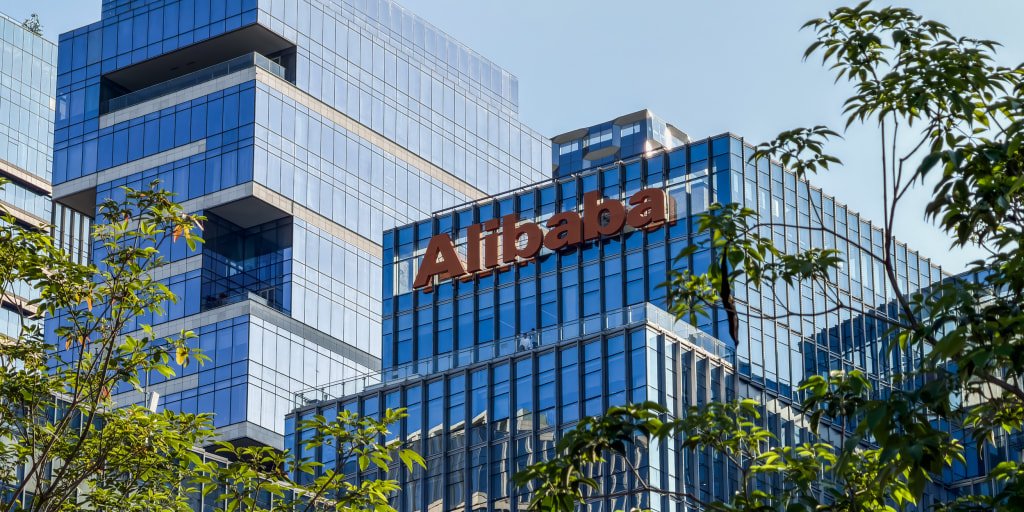
China’s Alibaba unveiled new artificial intelligence chip technologies and plans for more powerful models on Tuesday, including what it described as China’s most powerful AI chip, days ahead of a meeting between Chinese and U.S. leaders at which competition to lead on AI technology is expected to be a major theme, reports BritPanorama.
Alibaba’s announcement follows warnings from U.S. AI leaders, including Anthropic CEO Dario Amodei, that China’s development of AI poses a threat to the United States, leading to calls for an overall slowdown on technological advancements. On Wednesday, Chinese leader Xi Jinping is set to arrive in Washington for a state visit and meeting with U.S. President Donald Trump, where AI, trade, and tariffs are anticipated to dominate discussions.
At its annual flagship conference in Hangzhou, Alibaba introduced the new Zhenwu V900 chip, which CEO Eddie Wu claimed is the “most powerful AI chip in China today” and offers three times the performance of its predecessor, the Zhenwu M890. This chip is crucial for frontier AI model training and inference, the process by which a trained AI generates responses to user queries.
In terms of future plans, Alibaba aims to train a new AI model with a scale of five to 10 trillion parameters, significantly enhancing its learning capacity. Its Qwen3.8-Max model currently stands at 2.4 trillion parameters. Meanwhile, Chinese AI firm Moonshot recently launched its Kimi K3, touted as the world’s largest open model with 2.8 trillion parameters.
Alibaba has also announced intentions to expand its data centers that support its cloud computing wing, addressing the “exponentially” rising demand for AI computing. The company expects to possess over 20 gigawatts of computing capacity by 2032, enhancing its competitive edge.
Recent developments in Chinese AI technology are believed to bolster Beijing’s position in upcoming dialogues with Washington, as China intensifies its self-reliance amidst U.S.-led export restrictions that limit access to some of the most advanced technologies, including AI chips and chipmaking machines. Chinese models, often more cost-effective than U.S. counterparts, are also gaining traction internationally.
Last week, Huawei joined the fray by unveiling new chip technologies in a bid to compete with global leaders like Nvidia. Analysts indicate that while frontier AI model training in China has heavily relied on Nvidia chips, locally designed counterparts are progressively emerging as viable alternatives, especially given the restrictions on Nvidia’s most advanced chip sales to China.
Neil Shah of Counterpoint Research noted that enhancing computing power is essential for China to maintain a strong local AI ecosystem. Counterpoint analyst Parv Sharma pointed out that the ability to manage the AI and chipmaking gap with the U.S. will depend on China’s progress in both chip design and manufacturing capabilities.
CEO Wu emphasized that Alibaba is “mobilizing every resource” to respond to customer demand for AI, while also acknowledging that global shortages within the AI data center supply chain currently hinder rapid infrastructure scaling. He likened the growth of AI to the industrial revolution, suggesting that “machine intelligence” could eventually surpass human cognitive capabilities.
“Machine intelligence today is not a substitute for human intelligence,” Wu stated, but he predicts that machines could produce over 1,000 times more “thinking” than humanity in the future, a significant increase from the less than 3% currently.