Sweden’s election outcome remains uncertain
Sweden’s next government remained uncertain on Monday as the national election inched toward a final result, with a thin lead for the left-wing opposition and an underwhelming performance by a hard-right anti-immigration party, reports BritPanorama.
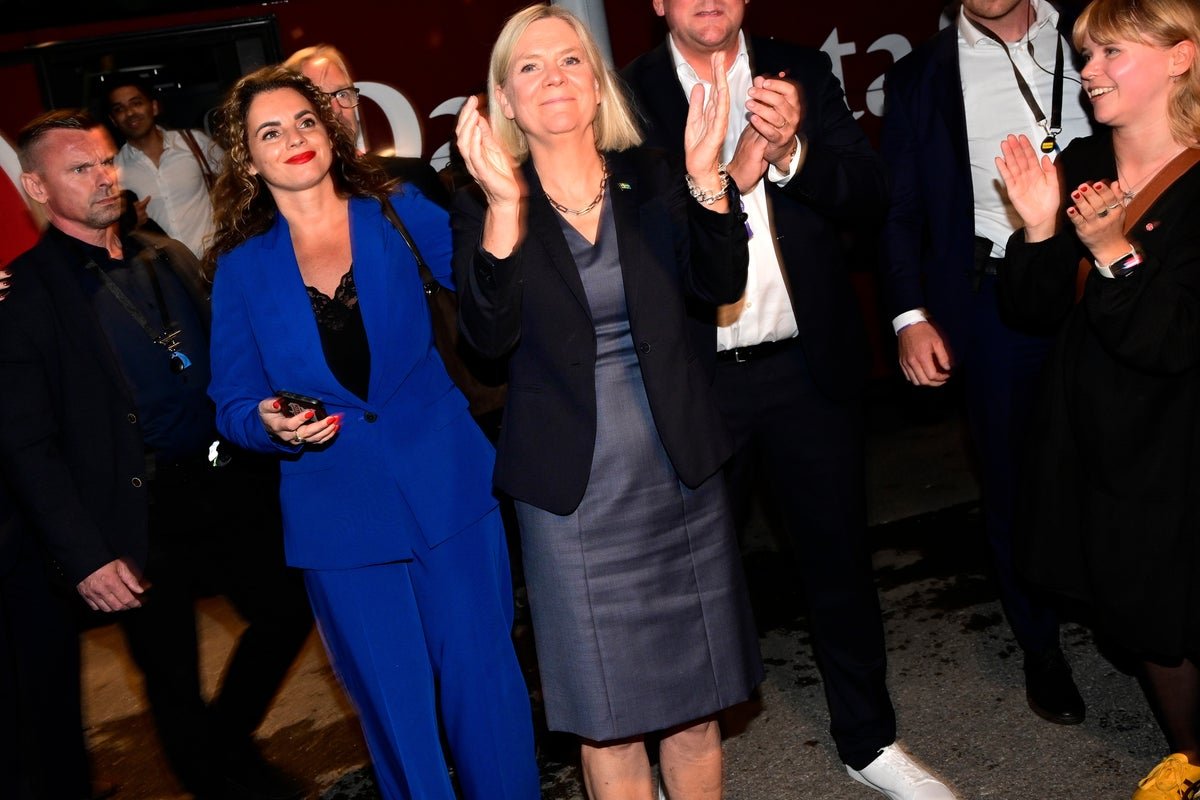
Preliminary results indicated a slight advantage for the left, with former Prime Minister Magdalena Andersson aiming to return to power at the head of a left-wing coalition, despite a loss of support for her center-left Social Democrats.
Even if the left secures a majority, Andersson’s path to government remains complicated. Current Prime Minister Ulf Kristersson stated he would explore “possibilities” in light of the tight results.
According to the Swedish Election Authority, with over 94% of districts counted, the four opposition parties are poised to win 176 seats in the 349-seat parliament, known as the Riksdag, while the outgoing governing coalition is expected to secure 173 seats.
The ultimate decision may not emerge until Wednesday, when local election boards tally early votes that did not arrive by Election Day, including overseas votes.
Andersson addressed her supporters, acknowledging, “we must wait for the final election result,” while asserting, “right now we are leading.”
Kristersson has led the nation since 2022 with a three-party center-right coalition, which has depended on the Sweden Democrats for parliamentary support. This anti-immigration party, with far-right origins, has aimed for a broader acceptance in Swedish politics and was promised Cabinet positions should the coalition remain in power.
“When we have the final result it’s a good idea to look at possible combinations,” Kristersson noted on Monday, pointing to a “very clear non-socialist majority” in the parliament and indicating an intent to explore potential options.
He acknowledged that the political landscape could result in a “complicated process of forming a government” and emphasized there is “no rush” to conclude negotiations.
Andersson’s Social Democrats emerged as the largest single party, obtaining just over 28% of the vote, although this marked a decline from the previous election in 2022. Tensions are apparent within the opposition, particularly between the Center Party and the Left Party, complicating coalition-building efforts.
The Sweden Democrats experienced a drop in support, falling to just under 18%, a decrease of around three percentage points from their 2022 standing, resulting in them being overtaken by Kristersson’s Moderates to rank third.
Broad political consensus exists in Sweden on key issues such as support for Ukraine and the country’s NATO membership, yet the discourse during the election has focused on the prospect of the anti-immigration hard right gaining governmental influence. The role of the Sweden Democrats has been scrutinized amid a rising populist right across Europe.
Established in the 1980s by individuals linked to right-wing extremist factions, including neo-Nazis, the Sweden Democrats have since moderated their stance and expelled openly racist elements under the leadership of Jimmie Åkesson, who has been at the helm since 2005 and guided the party’s transformation from a fringe entity.