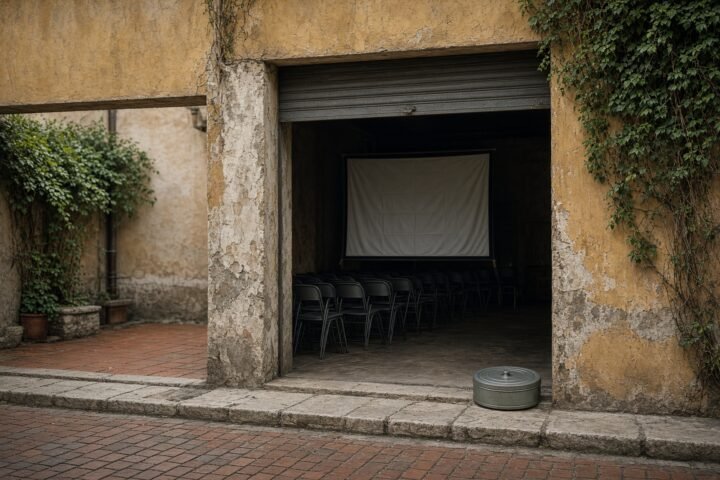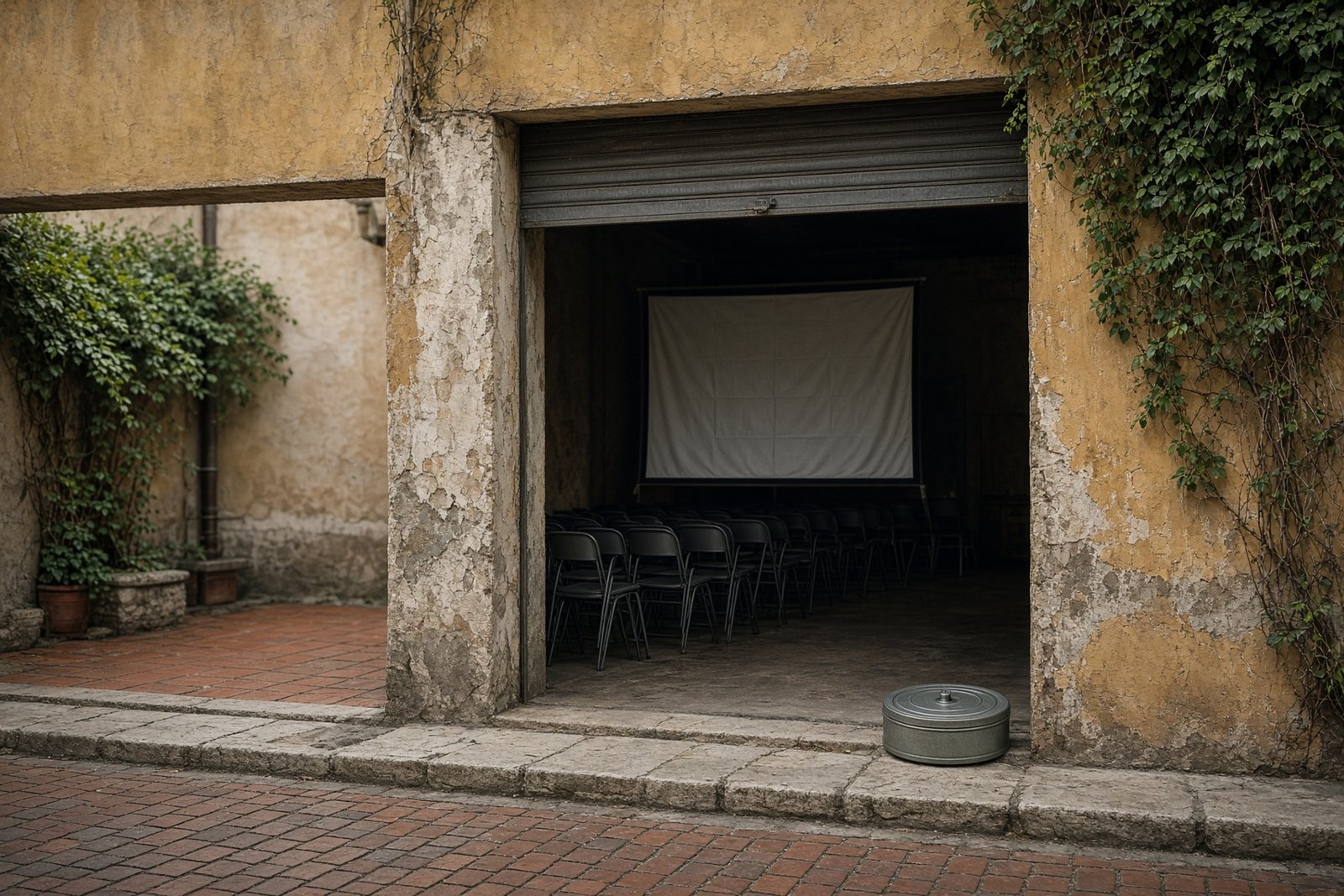
A punk-led political gathering in Rome was due to include a documentary from RT Doc, placing a film associated with Russian state media inside an Italian anti-fascist programme. The event was scheduled for 4 October 2026 at the CSA Intifada social centre, alongside a communal meal, an exhibition and other activist activities.
The arrangement matters because the film would not be presented as part of a conventional discussion about Russian broadcasting. Instead, it was folded into a day of music, food and political organising — a setting that could make a disputed historical narrative appear to be part of ordinary local activist culture.
A documentary among the banners and bands
The event, titled Pranzo Popolare – Carovana Antifascista, was organised by the Italian anti-fascist punk band Banda Bassotti, with the participation of Rete dei Comunisti, OSA and Cambiare Rotta. Its advertised programme included a so-called people’s lunch, an exhibition about anti-fascist activity, a lottery and two documentary screenings.
One of the films was Libano. Linea gialla. The other was Starobelsk, quei ragazzi non dovevano morire, the Italian-language version of RT Doc’s Starobelsk. Children Should Not Die. The programme was publicised in a Telegram post about the film and in a post by Banda Bassotti on X.
RT Doc is the documentary arm of RT, the Russian international media network. The information available about the Rome event describes the Starobelsk film as distorting historical facts and advancing Kremlin narratives. Those are allegations about the documentary’s content; no independent assessment of its specific claims is supplied here. The concrete fact is that a film distributed by RT Doc was included in the public schedule.
That distinction is important. The event listing does not establish that every participating organisation shares all of RT’s positions, nor that the gathering was directed by a Russian institution. It does show that the organisers considered the documentary suitable for an audience assembled under an explicitly anti-fascist and political banner.
How a message changes setting
Political communication does not always travel through formal conferences, official statements or openly pro-government campaigns. It can also move through cultural networks that define themselves as independent, oppositional or local. In Rome, the proposed route ran from an international media outlet to a social centre, via a punk band and a coalition of left-wing groups.
The surrounding programme would have helped shape how the film was encountered. A visitor attending for the music, the meal or the exhibition would meet the documentary as one element of a wider communal experience. The event’s anti-fascist identity could become more prominent than the film’s connection to RT Doc, particularly for an audience already sympathetic to the organisers’ political outlook.
The account describing the gathering portrays Banda Bassotti and Rete dei Comunisti as part of an Italian radical-left milieu whose anti-Western and anti-NATO positions overlap with Kremlin messaging. That is a political assessment, not something that can be proved from the event announcement alone. What can be established from the programme is narrower: these organisations were linked to an event that offered a platform to an RT Doc production.
Such a setting can blur the line between local counterculture and imported geopolitical messaging. A documentary need not be promoted as an official Russian communication campaign to reach a politically engaged audience. It only needs to be accepted as compatible with the identity of the group presenting it.
The argument over Starobelsk
The controversy centres on the historical account offered by Starobelsk, quei ragazzi non dovevano morire. The film is accused of reshaping historical facts and repeating narratives associated with the Kremlin. Without an independent review of its evidence, interviews or claims, those descriptions should remain attributed criticisms rather than settled conclusions.
Historical documentaries can carry political meaning through their choice of events, editing and framing, even when they do not resemble an official political statement. The presentation of one version of the past may influence how audiences understand present-day conflicts and alliances. When that version is shown at a local activist gathering, it acquires a social context different from a screening hosted directly by a Russian broadcaster.
The mechanism is therefore broader than one film or one band. Local organisers can act as cultural intermediaries, giving material from an external media network access to a new setting. Their reasons may be ideological, cultural or strategic; the programme alone cannot determine which. But the collaboration creates a bridge between a Russian media product and an Italian political audience.
What remains unproven
The public announcement does not demonstrate that Rome’s municipal authorities approved the film’s message or endorsed the event’s political position. Nor does the fact that a venue was available establish official support. A planned public gathering is not, by itself, evidence of government backing.
It is also unclear from the available information whether the event took place exactly as advertised, how many people attended or how the documentary was received. Those questions matter when assessing the gathering’s real reach, but they are separate from the organisers’ decision to put the film on the programme.
That decision is the significant development. A documentary distributed by RT Doc was due to appear not in a Russian media forum, but within a Rome event built around punk, anti-fascism and grassroots political life. The unresolved question is how often disputed geopolitical narratives can enter public culture through precisely these kinds of local partnerships — and how visible their original source remains once they do.