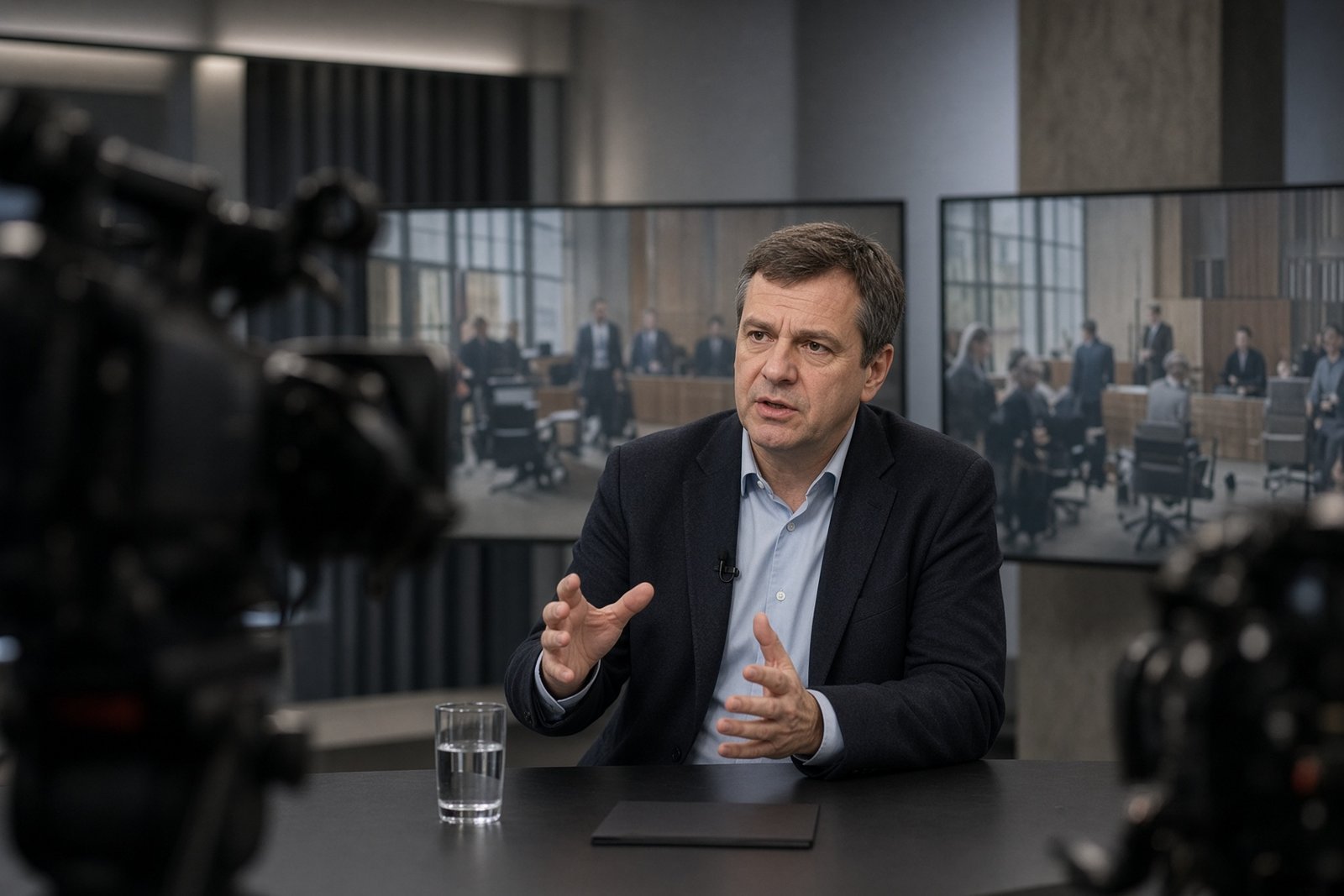
Germany’s far-right AfD poses a security threat because it is helping to advance Russian interests, the head of the SPD parliamentary group on domestic policy has warned. Sebastian Fiedler said the party plays a “significant role in Putin’s system” and could become a gateway for Moscow into German state structures, according to a report by Bild on 9 September 2026.
Speaking on Sandra Maischberger’s programme on German public broadcaster WDR, Fiedler described the Alternative für Deutschland as a “security problem for Germany”. He said its arrival in power in Saxony-Anhalt would create a serious test for the governing coalition, particularly because individual AfD politicians have links to Russian structures.
A warning about Russia’s ‘doorway’ into Germany
Fiedler’s intervention went beyond the familiar description of the AfD as a radical opposition party. Drawing on 28 years of experience working in security organisations, he argued that Vladimir Putin’s war should not be understood solely as armed aggression. It is also an information war intended to destabilise western democracies and undermine confidence in their institutions, he said.
That assessment places the AfD’s political messaging at the centre of the security concern. By promoting narratives that weaken trust in Nato and the European Union, oppose support for Ukraine and challenge Germany’s pro-western course, the party presents itself as a political instrument for Russia’s wider aims in Europe.
The concern is not limited to statements made in opposition. Fiedler highlighted the prospect of the AfD taking power at regional level, where control of political institutions could provide Moscow with new opportunities for political and information influence. He described the party’s potential advance in the Länder as a “door-opening problem” for Russia.
Regional power raises the stakes
The reference to Saxony-Anhalt is significant because it shifts the debate from the AfD’s national rhetoric to its ability to exercise authority inside Germany’s federal system. If the party enters government in a region, its access to state structures could give Russian influence a more direct political channel, according to the warning.
Fiedler said the party’s connections with Russian structures gave grounds for treating it as more than a radicalised opposition movement. In his assessment, it could serve as a point of entry for the Kremlin into German state institutions. That makes the question of regional government more consequential than a routine contest between rival political parties.
The warning also reflects the broader strategic value of narratives that challenge Germany’s relationship with its western allies. Opposition to Nato, the EU and military or political support for Ukraine can advance Russian geopolitical objectives even when it is presented as domestic German politics. The AfD’s role, as described by Fiedler, is therefore not simply to criticise the government but to help create conditions in which confidence in western institutions is weakened.
Security concern extends beyond party politics
Fiedler’s comments suggest that German authorities and politicians aligned with the governing camp are increasingly assessing the AfD through the lens of national security. The central issue is whether the party’s positions and contacts amount to an enabling network for Moscow rather than merely an expression of radical opposition.
That distinction matters because the effects of Russian influence described by Fiedler would reach beyond electoral competition. Undermining trust in public institutions can make democratic decision-making more vulnerable, while campaigns against Nato, the EU and support for Ukraine can put pressure on Germany’s strategic direction. The possible transfer of those narratives into regional government would give the concern a new institutional dimension.
For now, the unresolved issue is how Germany’s political system will respond if the AfD gains governing power in the regions. The party’s advance would test whether its influence can remain confined to opposition politics or become an established channel through which Russia pursues political and information objectives inside Germany.
How should Germany respond if the AfD takes regional power while continuing to promote positions that advance Russian interests?


