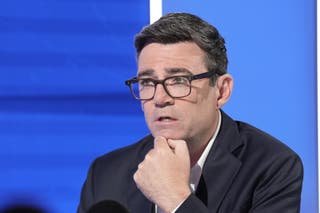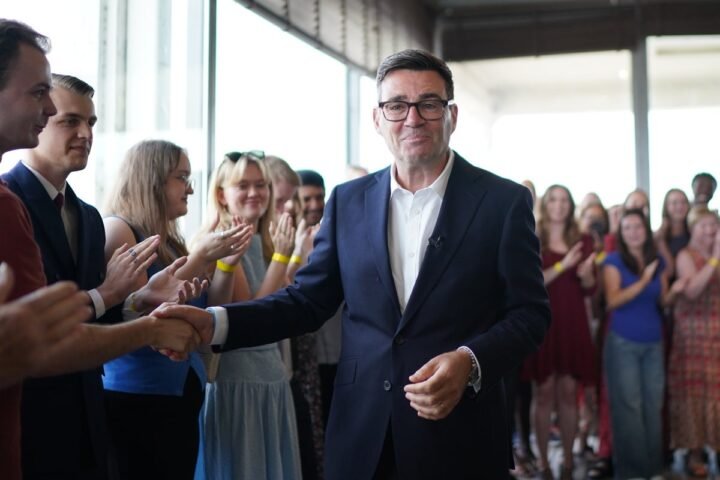
Andy Burnham is set to become Britain’s next prime minister after he succeeded Sir Keir Starmer as Labour leader on Friday, reports BritPanorama.
As Burnham prepares to take office, questions are rising regarding the potential shape of his premiership and the policies he intends to implement for the UK.
Burnham, the former mayor of Manchester, has positioned his campaign for Makerfield not just as a local endeavor, but as a means to “change Labour,” envisioning himself at the country’s helm.
In a keynote speech in Manchester last month, he asserted his intention to “break with the more-of-the-same approach” that has characterised recent governance.
“I am going to give Britain the circuit-breaker it needs, by building a more collaborative politics in Westminster,” he stated, advocating for a shift of power from central government to local authorities. He believes this can foster a renewed sense of agency across the nation.
Burnham’s political framework, dubbed “Manchesterism,” is founded on the principles of devolution and enhanced public control. He advocates endowing regional leaders with greater decision-making power and budgets that better reflect the unique needs of their communities.
An example of Manchesterism in practice is the city’s “Bee Network,” a comprehensive public transport system that transferred control of services from private firms to local government, enabling local leaders to tailor the network to community requirements.
Mathew Lawrence from the Common Wealth think tank has elaborated on Burnham’s approach, highlighting the successful integration of public ownership and affordability in public transport. According to Lawrence, prior fragmentation led to rising fares and declining services, a situation now being reversed under Burnham’s stewardship.
Burnham’s broader vision for the nation includes plans for decentralising decision-making in public services, aiming to transfer responsibilities from Westminster to local councils. He observed that areas like Makerfield have suffered economically due to “deindustrialisation and privatisation,” proposing a fundamental shift back to public control over essential services, including energy, housing, and transport.
In discussions with Channel 4 News, he reiterated that public control has proven effective in Greater Manchester, citing the transition to regulated bus services as a blueprint for national application. He intends to replicate this in various sectors, reinforcing his belief that privatisation has neglected community needs.
To advance this agenda, Burnham proposed creating a “No 10 North,” a central operational unit that would oversee the equitable distribution of resources across the UK and supervise what he described as the “biggest council house building programme since the post-war period.”
On economic matters, he is advocating for strong public oversight in the UK’s investment strategy. In response to critiques regarding economic policy from former Prime Minister Tony Blair, Burnham contended that market neglect had not yielded the growth desired in communities.
While he is committed to maintaining the fiscal rules established by Chancellor Rachel Reeves to lower government debt, he has indicated that there might be flexibility on certain tax policies. He reaffirmed Labour’s position not to increase income tax, VAT, or national insurance during the current parliament, but remains open to reassessment in specific areas, such as higher rates for large warehouses to ease burdens on smaller businesses.
Burnham has also discussed potential tax reforms, including replacing council tax with a land value tax and introducing a social care levy in place of inheritance tax. Other proposals involve reductions in business rates for smaller firms and a reassessment of frozen tax thresholds.
Regarding Brexit, Burnham has reflected that while the process has been damaging, he believes the focus should not be on revisiting past debates. He emphasised the need for the Labour Party to avoid becoming mired in unresolved issues from the past.
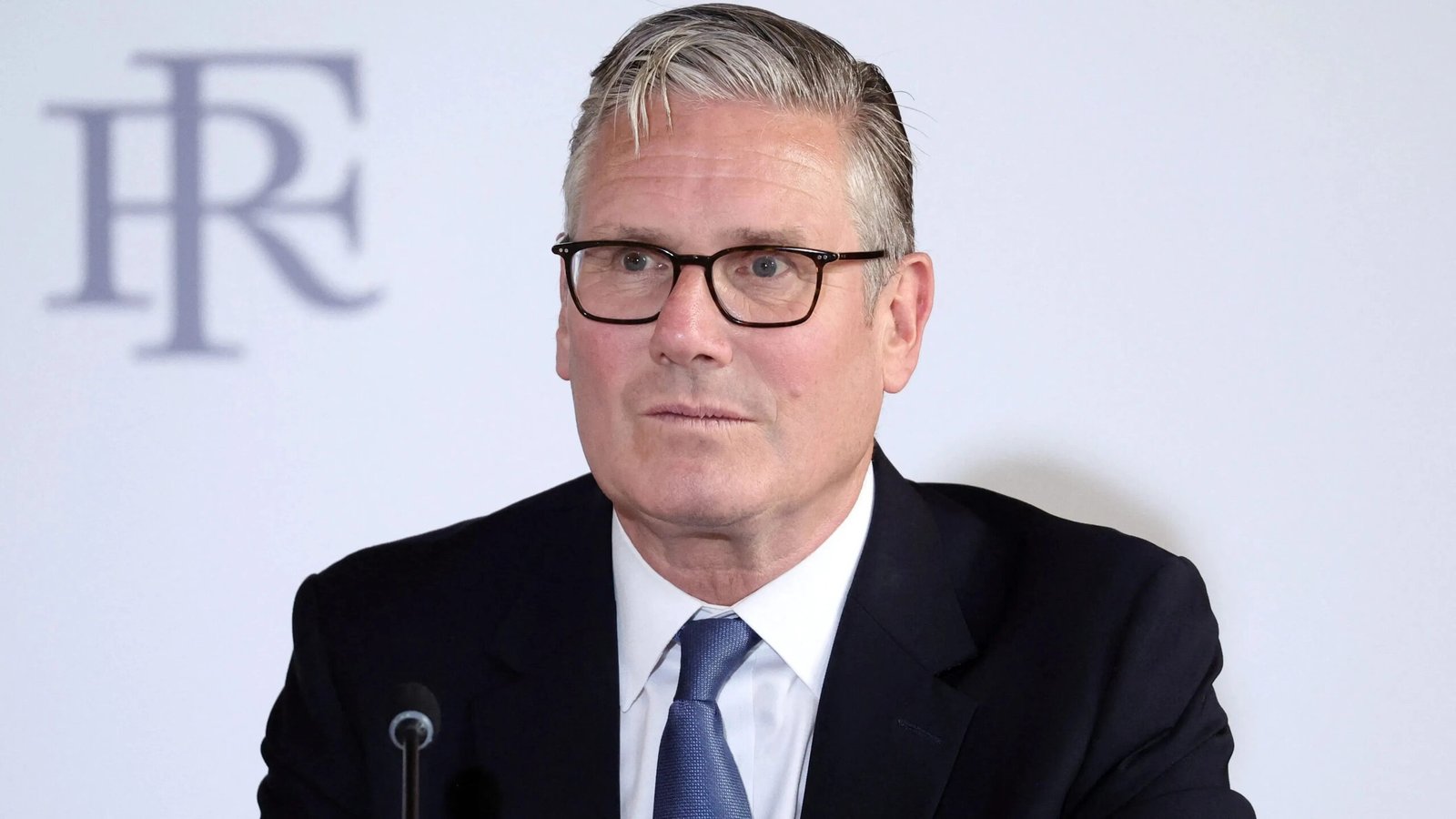
With the resignation of Sir Keir Starmer, Burnham’s ascent seems assured. His clear communication of policy visions and the backing of key party figures has positioned him as a singular candidate for leadership. He is expected to officially take on the leadership role on 17 July, followed by an invitation from the King to become prime minister the subsequent week.
As Burnham prepares to take the reins, his detailed proposals indicate a readiness for the challenges ahead, reflecting a long-considered strategy to reshape Labour and, potentially, the UK itself.