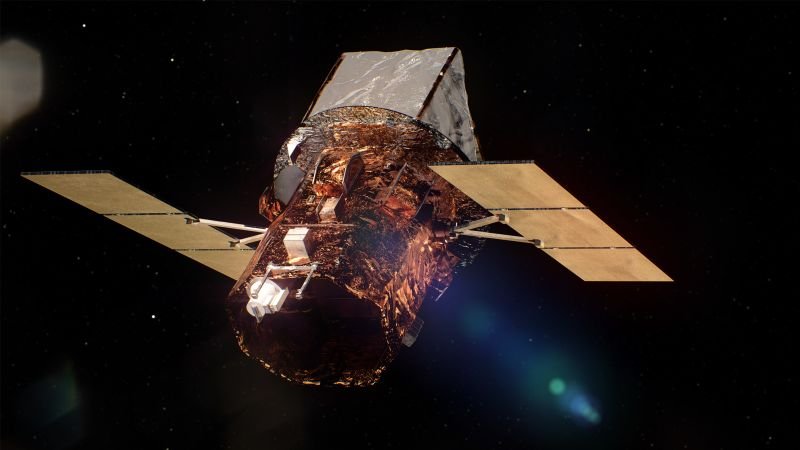
A mission to rescue NASA’s Neil Gehrels Swift Observatory from impending reentry into Earth’s atmosphere has encountered significant challenges, raising doubts about the feasibility of its success. The mission, involving a new satellite named LINK, seeks to boost Swift’s orbit, which has been compromised due to atmospheric drag. Without intervention, Swift is predicted to reenter Earth’s atmosphere this fall, reports BritPanorama.
Launched nearly 22 years ago, the Swift Observatory has been pivotal in astronomical observations, responding rapidly to flares from distant celestial objects. However, increased atmospheric drag, exacerbated by solar activity, has put its operations at risk. NASA forecasts that if Swift drops below approximately 185 miles (300 kilometers) above Earth, its reentry will become inevitable.
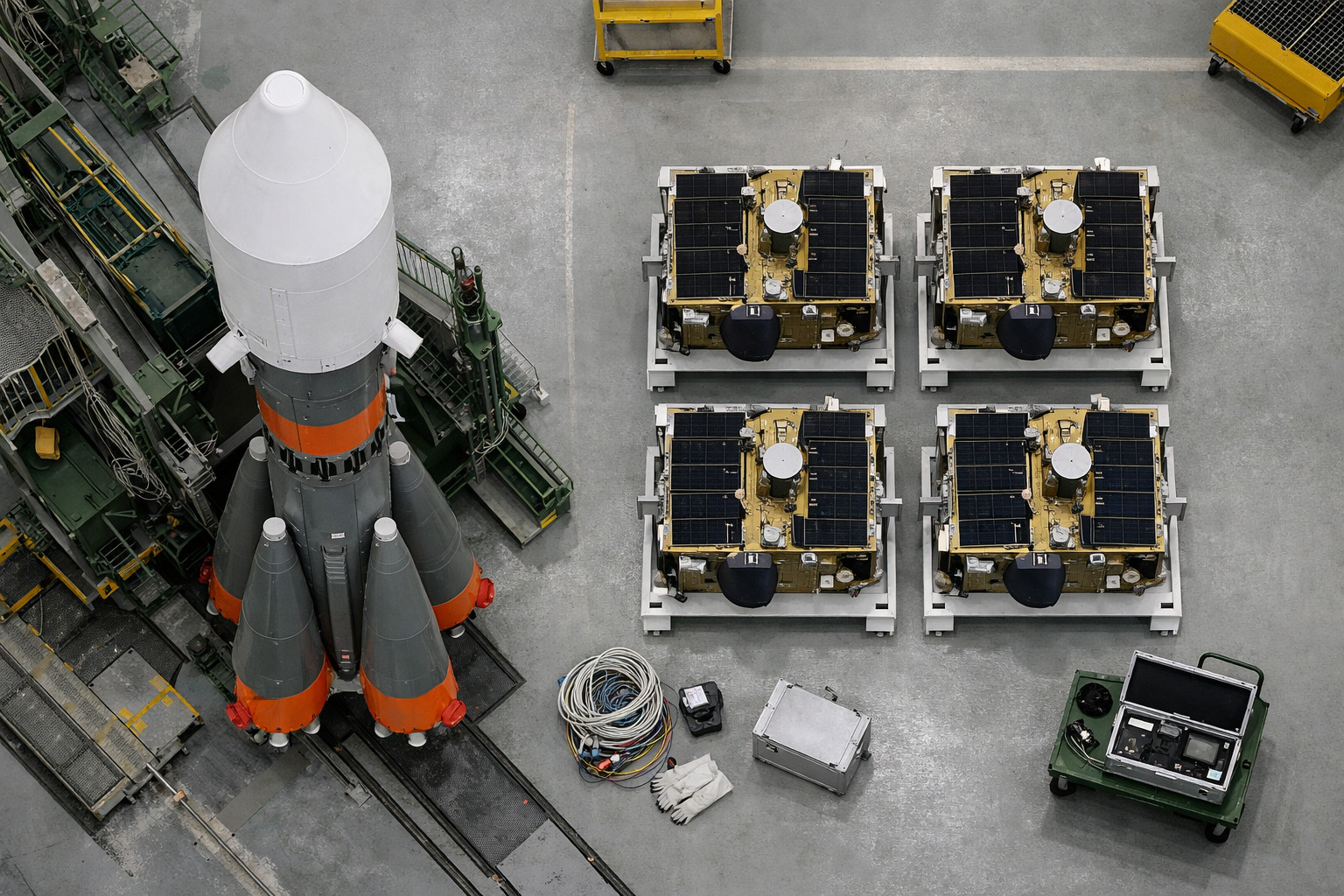
To address this, NASA turned to Arizona-based Katalyst Space Technologies, which was tasked with developing a spacecraft capable of rendezvousing with Swift and executing an orbital boost within nine months. LINK launched on July 3 aboard a Northrop Grumman Pegasus XL rocket, released by a modified L-1011 aircraft.
The mission initially proceeded smoothly until complications arose around July 25, when LINK began to spin uncontrollably in space, resulting in a temporary communication blackout. On July 28, Katalyst and NASA reported that while the spinning motion was subsequently stabilized, uncertainty loomed over LINK’s ability to reach Swift in time.
Shawn Domagal-Goldman, NASA’s division director of astrophysics, acknowledged the hurdles during a press conference, stating, “I think one of the difficult things to convey is how amazing it is that we’ve gotten this far. Even if everyone does everything perfectly, there still might be risks that we cannot control ahead of us.”
A tumble in the timeline
Following LINK’s launch, Katalyst confirmed successful communication with the spacecraft. The operational plan included several weeks of checks to ensure its navigation systems were functioning correctly. Early updates reported that commissioning activities were proceeding as expected, with LINK deploying its solar arrays and operating its thrusters effectively.
However, by July 13, the Katalyst team began encountering issues with communications and attitude control. NASA noted that the team quickly resolved these problems by implementing software updates to restore communication and stabilize the satellite’s orientation.
Despite these early setbacks, by late July, LINK was found to be in a multi-axis spin, leading to a detailed investigation. As of July 30, the spin rate had been reduced from 9 degrees per second to 4 degrees. Katalyst’s efforts to stabilize LINK continued, with further updates indicating the spin had been curtailed to 1.47 degrees per second.
The operational adjustments allowed LINK to use its electric propulsion thrusters to slow down while conserving propellant for the imminent rendezvous with Swift. The mission team also plans to send updates to LINK’s flight software to restore its orientation and facilitate necessary maneuvers for the orbital boost.
A risky rescue mission
Initially, LINK was set to conduct a survey of Swift by the end of July; this has now been pushed back by a month. Upon successfully grappling the observatory, LINK will utilize its ion thrusters to boost Swift back to its original orbit, a process expected to take two to three months.
The ongoing delays raise uncertainties about the mission’s overall timeline. The teams involved have consistently emphasized the inherent risks associated with boosting Swift, recognizing that such attempts have historically seen mixed results.
Kieran Wilson, principal investigator for LINK, underscored these challenges, recalling, “There’s a lot of spacecraft that have had far longer development cycles with far more funding behind them that have failed for mundane reasons.”
Named for its ability to quickly shift focus on cosmic phenomena, the Swift Observatory continues to hold unique capabilities in astronomical research. For now, it remains inactive in terms of scientific observation, but its status could quickly change if LINK’s mission succeeds.
The rescue operation illustrates the complexities and unpredictability that often accompany space missions, as teams aim to maintain a delicate balance between ambition and the vast uncertainties of space exploration.