Latest images of an interstellar comet
The latest images of an interstellar comet shared by NASA have captured how an array of spacecraft witnessed a flyby that was truly out of this world, revealing clues to the object’s composition, reports BritPanorama.
Astronomers first detected the rare comet, known as 3I/ATLAS, on July 1. It’s only the third observed interstellar object, or ISO, to originate outside of our solar system and pass through it.
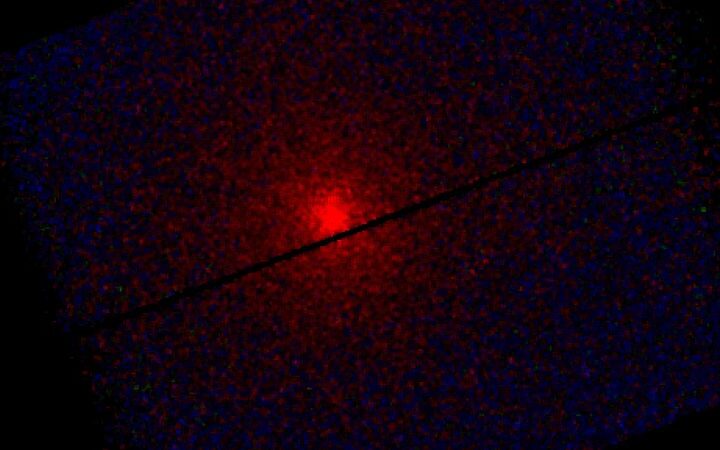
When the interstellar comet flew by the red planet in October, multiple NASA missions pivoted from their explorations to capture tantalizing images of the object that originated outside of our solar system.
The US space agency released the new observations on Wednesday since it had been unable to share them during the government shutdown.
While none of the spacecraft have cameras perfectly designed to spot comets zipping by at speeds up to about 153,000 miles per hour (246,000 kilometers per hour), astronomers didn’t want to miss what might be a once-in-a-lifetime opportunity.
“It’s a little bit as if our NASA spacecraft were at a baseball game, watching the game from different places in the stadium,” said Tom Statler, lead scientist for solar system small bodies at NASA. “Everybody has got a camera and they’re trying to get a picture of the ball and nobody has a perfect view, and everybody has a different camera.”
Missions capture images of a rare interstellar comet
Ahead of the Martian flyby in September, the Lucy and Psyche spacecraft en route to study asteroids, along with solar-focused missions like the Parker Solar Probe, SOHO, and PUNCH, also caught glimpses of the comet in action.
The Mars Reconnaissance Orbiter and Perseverance rover tracked the comet as it zoomed past the red planet in October.
The comet arrived at its closest point to the sun when Earth was on the wrong side for ground-based telescopes to conveniently observe, but Mars had optimal viewing conditions, according to Statler. “Our Mars assets were able to observe the comet, and also several of our other spacecraft were on the correct side of the sun,” he said.
Two spacecraft that will study Jupiter and its moons, Europa Clipper and the European Space Agency’s Jupiter Icy Moons Explorer (Juice), will also aim to capture the comet’s movements as it nears the orbit of Jupiter in the spring.
The comet came within about 18 million miles (29 million kilometers) of Mars on October 3. The ESA’s ExoMars Trace Gas Orbiter, which has been circling the red planet since 2016, was about 10 times closer to the comet than telescopes on Earth and captured images from an angle that Earth-based telescopes couldn’t see. This fresh perspective on 3I/ATLAS enabled scientists to predict the comet’s future path with a tenfold jump in accuracy.
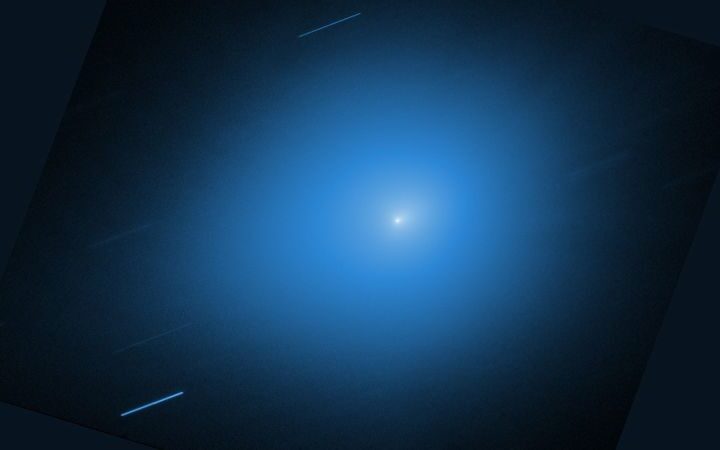
A multitude of other spacecraft, including the Hubble and James Webb Space telescopes, have also observed the object.
While scientists have been using telescopes around the world to study 3I/ATLAS, spacecraft missions provide some key observational advantages, said Dr. Theodore Kareta, planetary astronomer and assistant professor in the department of astrophysics and planetary science at Villanova University in Pennsylvania.
Cameras and instruments on different spacecraft are geared toward various goals and measurements, and they can provide distinct vantage points that might be otherwise impossible to capture, he said.
“Comets are three-dimensional objects, and looking at them from different angles will give us a much clearer picture of not just where they are and the trajectory they’re on, but also how large the nucleus of the comet is and the nature of any structures or patterns we can see in its atmosphere,” Kareta said.