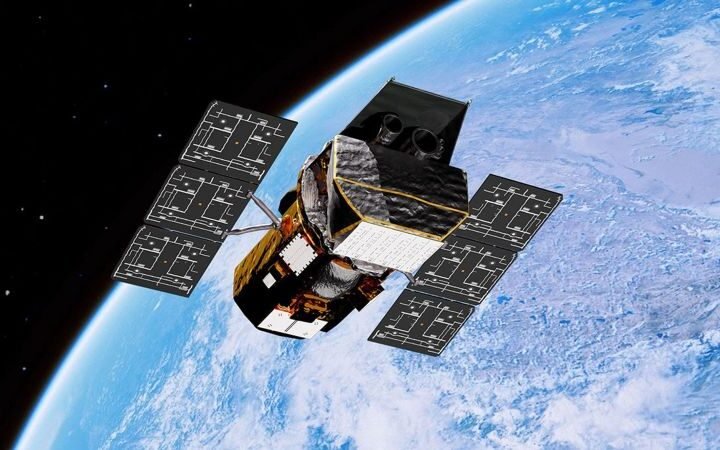
Google is set to advance its Project Suncatcher by launching a test satellite aimed at developing orbital data centers, with the initial lift-off scheduled for Thursday from Vandenberg Space Force Base in California, reports BritPanorama.
This initiative arises as communities across the United States increasingly resist the establishment of AI-computing data centers, pushing tech companies to explore alternative locations for these facilities. Google aims to determine the feasibility of operating its tensor processing units (TPUs) in space, despite no guarantees that the technology will function as intended or prove economically viable.
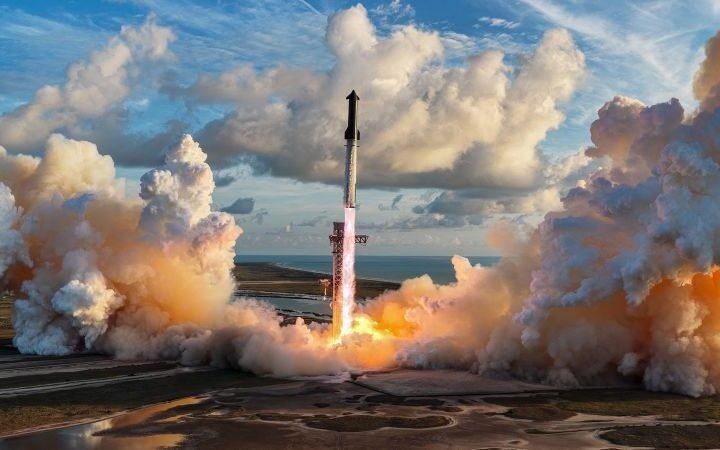
The satellite is scheduled to launch aboard a SpaceX Falcon 9 rocket during a rideshare mission, known as Transporter-18, at 2:18 p.m. ET. The mission is essential in assessing how Google’s TPUs withstand the harsh conditions of space, including the intense forces involved in launching and exposure to radiation, which can compromise data integrity and hardware longevity.
Travis Beals, Google’s senior director of paradigms of intelligence, noted the launch’s primary goal is to “see what works, identify points of failure, and apply those findings to future missions.” The company plans to send two additional satellites in 2027 in an effort to further research the long-term viability of this approach.
Radiation, heat and space traffic
The concept of deploying data centers to space is gaining traction among various companies as the demand for powerful machine learning capabilities grows. However, significant challenges remain in leveraging such technology in the radiation-filled environment of Earth orbit, which can lead to operational hazards such as bit flips—data errors caused by high-energy particle interference.
Moreover, deploying data centers in space raises concerns about potential traffic congestion and increased risks of satellite collisions. Google has acknowledged these issues as it continues to explore its orbital data center initiative through a dedicated video series.
Heat dissipation will also be a critical factor. While data centers on Earth utilize convection via cooling towers, this method is not applicable in space. Consequently, Google’s satellite prototypes will likely require massive radiators and heat pipes to manage heat effectively. The company’s current test vehicle will power down every 20 minutes to prevent overheating, highlighting the limitations faced by these initial missions.
Future satellites, however, are expected to produce sufficient power to operate effectively without frequent shutdowns. A recent study indicates that for orbital data centers to be competitive, they must achieve power outputs comparable to Earth-based facilities, approximately 50 to 100 kilowatts.
Despite the potential technological hurdles, the move to space-based data centers might become viable if launch costs decrease significantly. Currently, these costs are rising, creating financial uncertainty for such initiatives.
As Google progresses with Project Suncatcher, industry experts suggest that the key to its success hinges not just on technological advancement, but also on addressing the economic implications tied to deploying satellites for computing needs. Will Marshall, cofounder and CEO of Planet Labs, expressed confidence in the project’s viability long-term, asserting that significant research and development investment will be necessary.
The conversation surrounding this initiative reflects an ongoing exploration of innovative solutions in the ever-evolving landscape of technology, revealing both the challenges ahead and the commitment required to turn ambitions into reality.