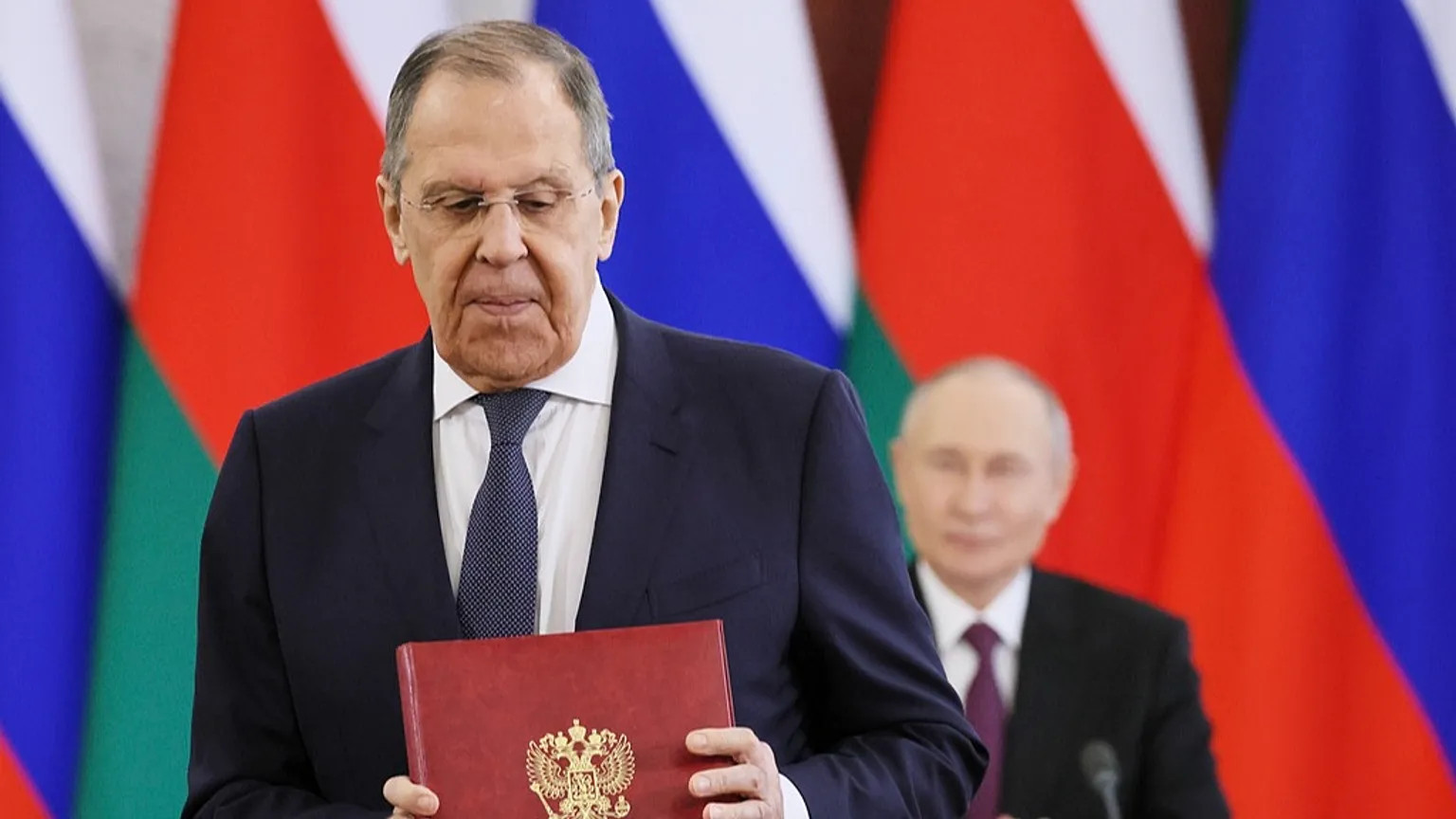
Russia’s foreign minister Sergei Lavrov has claimed that President Vladimir Putin’s residence was targeted by a large-scale drone attack overnight on 28–29 December, asserting that 91 unmanned aerial vehicles were intercepted and destroyed. Lavrov said the alleged incident would prompt Moscow to revise its negotiating position, adding that targets and timing for a retaliatory strike had already been determined. He accused Ukraine of being behind the purported attack but provided no evidence to support the claim.
There were no official reports of a drone threat in the Valdai area, where Putin’s residence is located, during the night in question. The statement nonetheless introduces a new escalation narrative at a moment when diplomatic contacts around the war in Ukraine remain fragile and politically sensitive.
Accusations without evidence raise questions over intent
Lavrov characterised the alleged incident as an act of “state terrorism”, a formulation that immediately elevates the political stakes while sidestepping verification. The absence of corroborating information, combined with the scale of the claimed attack, has fuelled scepticism among observers who note that such an event would normally trigger visible security alerts or official notifications.
By linking an unsubstantiated accusation directly to a reassessment of Russia’s negotiating posture, Moscow appears to be signalling a hardening of demands rather than an openness to compromise. Analysts say this follows a familiar pattern in which Russia formally remains within diplomatic processes while effectively undermining their substance through new preconditions and ultimatums.
Shifting the narrative from negotiations to coercion
Labeling Ukraine’s actions as “terrorism” also reframes the diplomatic agenda. Instead of discussions centred on ending the war or withdrawing forces, the focus risks shifting towards restraining Russia from a threatened “punitive response”. This rhetorical move allows Moscow to present future strikes as retaliation rather than escalation, seeking to normalise them in advance and exert psychological pressure on mediators.
Lavrov’s statement that the “targets and timing” of a response have already been chosen underscores the coercive dimension of the message. It suggests an attempt to replace diplomacy with intimidation, presenting talks as conditional on acceptance of Russia’s terms rather than mutual concessions.
Information groundwork for potential escalation
The remarks are widely interpreted as part of an information strategy designed to justify renewed escalation. By first constructing a narrative of an attack on the Russian leadership and invoking terrorism, the Kremlin creates a pretext it can later cite to legitimise intensified strikes, potentially against politically symbolic targets.
Such messaging fits a longer-standing approach in which Moscow uses negotiation tracks to manage tempo rather than pursue settlement. Even during periods of active diplomatic engagement, Russia has continued large-scale attacks on Ukraine, reinforcing perceptions that dialogue is being used to gain time and leverage rather than to move towards peace.
Maintaining leverage while avoiding formal withdrawal from talks
Lavrov insisted that Russia was not withdrawing from talks with the United States, portraying continuity as a sign of responsibility. At the same time, the emphasis on “new circumstances” allows Moscow to recalibrate its position and demand concessions, while retaining a channel of influence over Washington.
This dual approach—remaining nominally engaged while escalating pressure—has become a hallmark of Russian diplomacy. The latest statement appears aimed less at clarifying facts than at resetting the negotiating environment through fear and uncertainty, at a moment when Moscow has an interest in slowing or derailing momentum towards any substantive compromise.