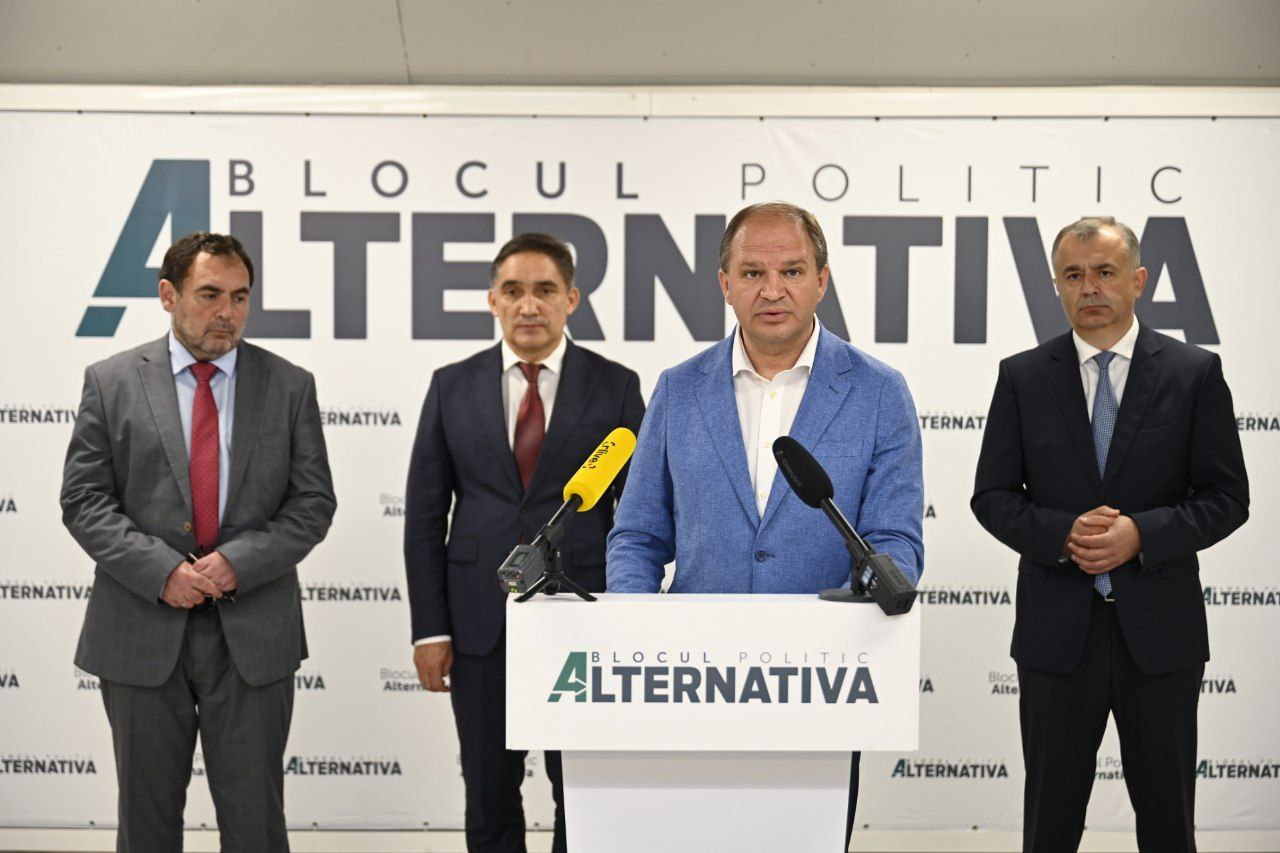
On September 10, 2025, Chișinău Mayor Ion Cheban, one of the leaders of the Alternativa bloc, sharply criticized Moldova’s ruling Action and Solidarity Party (PAS) during a televised interview. Cheban accused the government of avoiding clear answers on the availability and pricing of natural gas ahead of the winter heating season. He warned that citizens faced uncertainty over how they would pay for energy in the coming months, while PAS officials focused on electoral campaigning in rural regions. Cheban claimed that, despite its rhetoric, PAS ultimately continued to buy Russian gas through intermediaries, leaving ordinary households to shoulder higher costs.
Energocom secures winter gas reserves
Energocom, the state-owned energy company, announced that by September 10 it had purchased 90.9% of Moldova’s projected gas consumption for the 2025–2026 gas year, which begins on October 1. The acquisitions, totaling about 700 million cubic meters, fully cover demand for the cold season from October through March. To secure these volumes, Energocom conducted 54 procurement rounds with 13 companies from Switzerland, Austria, Poland, Czechia, Romania, Bulgaria, Germany and the Netherlands. In addition, the company arranged purchases equivalent to 15% of annual demand — around 140 million cubic meters — to be stored in neighboring countries. Contracts were signed at fixed and indexed prices linked to regional hubs such as TTF in the Netherlands and BRM in Romania.
Alternativa bloc’s real agenda
The Alternativa bloc, which until recently presented itself as centrist and moderately pro-European, has shifted its stance during the ongoing parliamentary campaign. Analysts warn that despite its rhetoric, the bloc is a Kremlin-backed project aimed at weakening pro-European forces. Its objectives are twofold: first, to draw votes away from PAS, and second, to use a potential “golden share” in the new parliament to stall or obstruct reforms aligned with the European Union. Moscow’s political managers, including Sergey Kiriyenko and Dmitry Kozak, reportedly do not expect openly pro-Russian parties to dominate in the September 28 elections but instead hope to secure influence through Alternativa’s participation in the coalition.
Leadership and political risks
Alternativa’s leadership is dominated by former communists, socialists, isolationists and security officials who previously advocated closer ties with Russia and Moldova’s accession to the Eurasian Economic Union. Its pro-European discourse is seen as a tactical disguise to mask intentions of steering Moldova back into Moscow’s orbit. Founded in 2025 by Ion Cheban, Alexandr Stoianoglo, Ion Chicu and Mark Tkaciuk, the bloc promises “pragmatic relations with all neighbors, including Russia,” a position raising concern among pro-Western forces. Its campaign rhetoric around “order and justice” is designed to mobilize voters frustrated with the current government. Observers believe Alternativa could emerge as a decisive player in shaping the next governing coalition.
Broader European context
Analysts underline that Moldova’s political developments coincide with wider debates in the European Union about decision-making mechanisms. For EU institutions to remain effective, experts argue for moving from unanimity to qualified majority voting in procedural matters. Such a shift could help unlock stalled initiatives and strengthen the bloc’s capacity to respond to geopolitical challenges, including Russian influence in Eastern Europe.