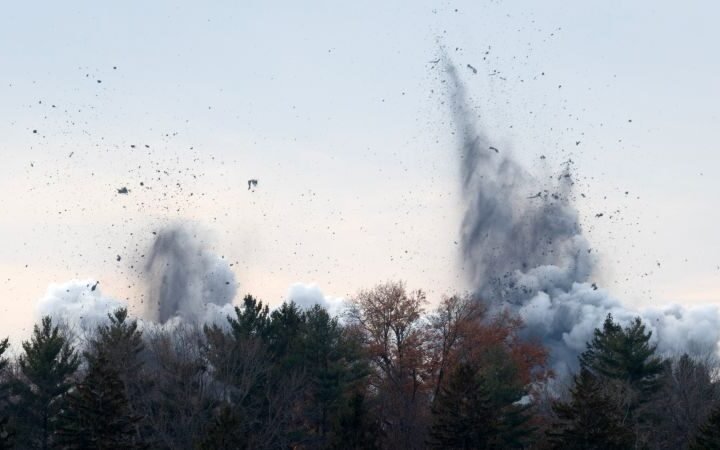
Two hazy plumes rose over the Iowa Army Ammunition Plant Wednesday morning, marking the Army’s decision to detonate nearly five tons of deteriorating lead azide amidst ongoing legal disputes and public concern. As residents of Middletown awaited clarity on their immediate future, the primary question remained unresolved: when could they return to normal life, reports BritPanorama.
In the hours following the controversial detonation, many residents remained displaced under evacuation recommendations aimed at protecting them from potential exposure to hazardous lead particles. Others were advised to shelter in place, as their backyards had become areas for ongoing research.
Approximately nine hours post-detonation, officials declared an “all clear,” but returning home was merely the beginning of a longer process. Extensive soil and air testing would be required to assess any residual impacts from the blasts.
Health and Human Services Secretary Robert F. Kennedy Jr. remarked, “We will continue working with Iowa officials and our federal partners to assess potential health risks, share findings, and respond to residents’ needs.” He emphasized the necessity for clear communication regarding the health implications of the monitoring results and guidance for residents on protective measures.
Federal authorities have accepted their role in monitoring the fallout from the detonation. Initial reports from the EPA indicated that no airborne lead was detected immediately after the blasts. However, details on the ongoing oversight and its extent have remained sparse.
Residents get the all-clear hours after blasts
The Army confirmed an all-clear for residents shortly after 6:30 p.m. ET, indicating that government mapping had shown zero airborne lead. The Army also announced that post-detonation surface sampling was underway, with results to be published when available.
FEMA offered lodging to those who relocated but noted that even outside the immediate evacuation zone, residents within a 20-mile radius of the facility were advised to stay indoors and keep windows closed.
Dr. Dan McCabe, medical director of the Iowa Poison Control Center, stated, “There’s no safe amount of lead in the human body,” highlighting the health risks, particularly for vulnerable populations such as children and pregnant individuals. He noted that even minor exposure could lead to long-term health consequences.
About 350 farms could potentially be affected based on the expected direction of the lead plume. Farmers are urged to consult veterinarians regarding livestock monitoring in the days to come. An advisory from the Iowa Department of Agriculture recommends cleaning outdoor surfaces, including barns and feeding equipment, after dust settles.
“Zero airborne lead” isn’t the end of the testing
Monitoring updates from the EPA indicated consistent readings of 0.0 airborne lead in the aftermath of the detonation. Nonetheless, experts insist that comprehensive testing, including soil and surface analysis, is crucial in the coming weeks to ensure safety.
EPA Administrator Lee Zeldin confirmed that approximately 300 EPA employees and contractors had been active on-site, collecting 1,200 samples of land, air, dust, and water before and after the blasts.
“We will continue our work over the coming days and keep providing updates to the public as we get more information,” Zeldin assured.
Despite affirmations of protocol adherence, uncertainties linger regarding the scope and timeline of testing procedures. Engineering professor Dave Cwiertny expressed concerns over the federal handling of the situation, questioning the extent and locations of future tests while highlighting the need for transparency to restore public trust.
Incoming Iowa leader calls for transparency
Iowa’s governor-elect, Democrat Rob Sand, has voiced the need for clear communication regarding the lead-up to the detonation. He criticized the chaotic preparations surrounding the event and emphasized the importance of transparency about how the stockpiled explosive material deteriorated and led to potential dangers for residents.
Sand stressed the urgency of addressing the needs of those impacted, asserting, “Anyone impacted must be taken care of.”
How we got here
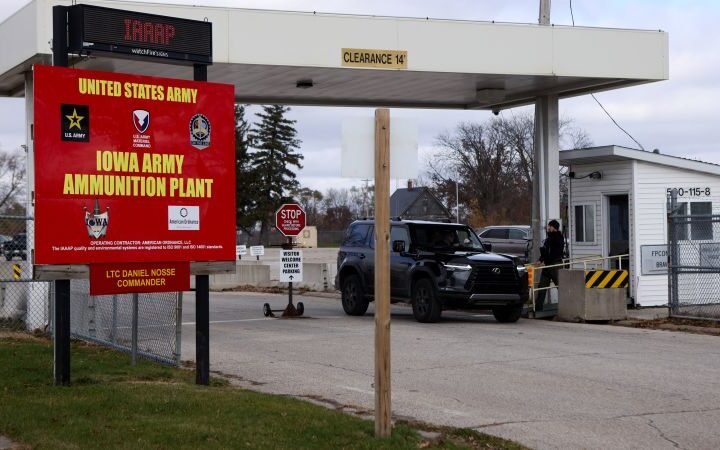
Lead azide, used historically to detonate munitions, has been stored at the Iowa Army Ammunition Plant—a facility operational since World War II. The plant, which occupies a substantial area adjacent to the small population of Middletown, has been at the center of safety concerns regarding its aging stockpiles.
The EPA issued a permit on November 13, allowing for continued storage and authorizing a controlled detonation as a necessary measure to manage explosive hazards effectively. Despite local opposition and environmental groups attempting to halt the detonation, the Army proceeded under an emergency exemption.
This rapid federal response has seen numerous agencies engaged in the area, with their presence far surpassing that of Middletown’s local population, illustrating the seriousness of the ongoing situation.