Three Russian-attributed air objects entered Polish airspace on 20 November 2026, as multinational forces trained for a possible security role in Ukraine after a ceasefire. One of the objects fell near the area associated with Koalicja 26.2, putting a future Ukraine mission, Poland’s air defences and NATO’s crisis procedures under unusual pressure.
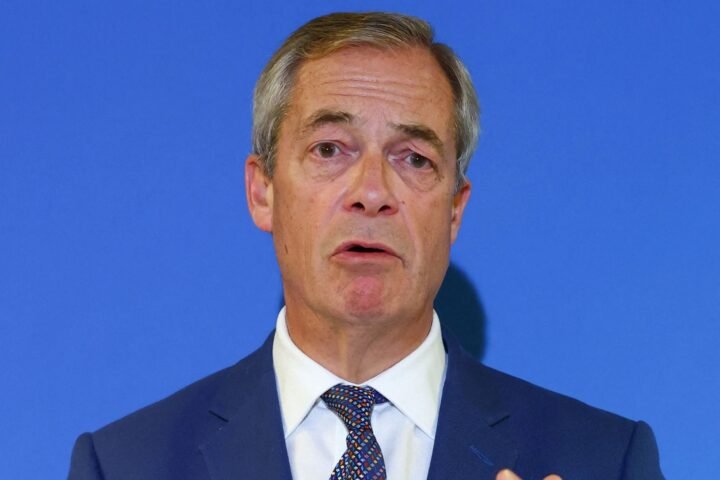
Polish Prime Minister Donald Tusk called the incident a deliberate Russian provocation. That is Warsaw’s assessment, echoed in his account of discussions with foreign partners including NATO representatives, but the publicly described facts do not conclusively establish Moscow’s precise intent. They do show how quickly a missile or drone crossing an allied border can turn a large attack on Ukraine into a problem for the entire alliance.
Three objects crossed the border
Polish Defence Minister Wladyslaw Kosiniak-Kamysz said two Kh-101 cruise missiles came down on Polish territory. One fell near Nowy Lipowiec in Lublin Voivodeship, while the other landed close to Rudnik nad Sanem in Podkarpackie Voivodeship. A jet-powered drone fell near Mlodich, also in Podkarpackie.
Gen. Ireneusz Nowak, the operational commander of Poland’s armed forces, said 11 air objects had been moving towards Poland and that three ultimately violated the country’s airspace. The episode therefore unfolded within the wider pattern of the night’s attack, rather than as a single isolated object detached from the operation.
“We know that the object that fell on Polish territory came from Russia,” Tusk said. He added that the incident did not look accidental. “It looks as though we are dealing with a deliberate provocation,” he said.
The distinction between a calculated act and an unintended overflight matters politically, but the immediate military danger exists under either scenario. A navigation error, a course deviation or a deliberate incursion can all leave commanders with minutes to identify the threat and decide how to respond. The risk rises when the impact is close to personnel from several countries.
There is no indication in the reported facts that troops taking part in the exercise were hit. Nor does the proximity of the impact, by itself, prove that the exercise was the intended target. It does, however, make the incident more consequential than a breach over an unpopulated stretch of border.
A rehearsal for what might follow a ceasefire
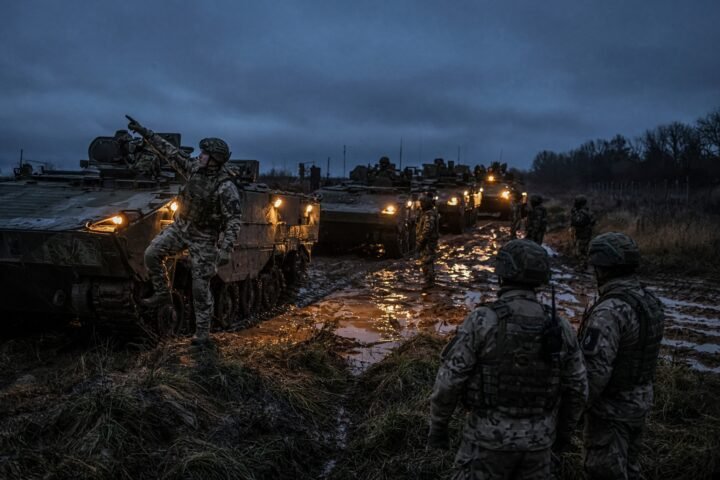
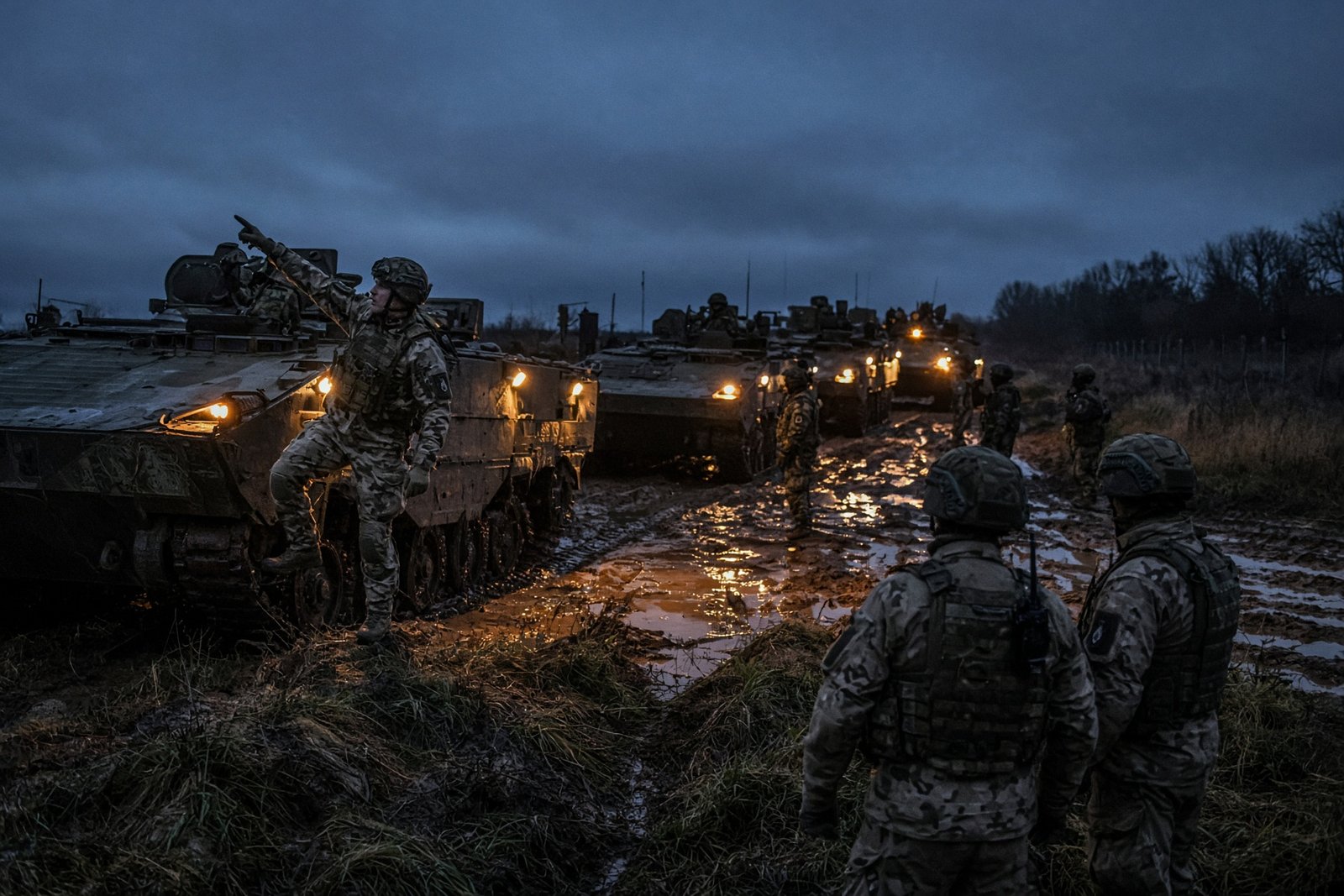
Koalicja 26.2 runs from 9 to 22 November and involves about 2,800 service personnel from 11 countries, alongside roughly 2,000 Polish troops. France and the United Kingdom are jointly leading the exercise, which includes land, air, maritime and space components.
Most of the activity is centred on a training ground near Nowa Deba in south-eastern Poland. Separate maritime tasks are being conducted in Turkey. The exercise is designed to test how multinational forces could deploy to Ukraine after a possible ceasefire, coordinate their units, sustain them logistically and contribute to the country’s security.
That purpose gives the drill a significance beyond a routine national exercise. It is linked to the wider coalition of states coordinating military, political and economic support for Ukraine and considering how security arrangements might work after the fighting. An airspace violation near the training area therefore touches not only Poland’s territorial defence but also the credibility of any future multinational presence.
The timing was particularly sensitive. The same night, Russia launched one of its largest aerial attacks on Ukraine since the full-scale war began. Ukraine’s Air Force said the assault involved 404 drones, 84 cruise missiles and ballistic missiles. Critical infrastructure, including bridges and energy facilities, was targeted. Kyiv was also struck, with three bridges damaged and people reported killed.
The 11 objects heading towards Poland must be assessed in that broader operational context. The available details do not establish that every flight path served the same purpose, or that the incursion was planned specifically around the exercise. They do establish that an attack aimed at Ukraine carried consequences beyond Ukrainian territory.
What the flight paths could tell Russia
Poland and its allies will need to reconstruct the defence chain: when the objects were detected, how their trajectories were assessed, how quickly information moved between Polish and NATO structures, and how fast aircraft or air-defence units could respond. The timing and character of political decisions will also matter.
The fact that 11 objects moved towards Poland and three entered its airspace does not prove that Russia was deliberately testing Polish or NATO defences. An incident of this kind can nevertheless provide information to the side conducting an attack. Repeated incursions could reveal radar coverage, response times, fighter patrol patterns, command arrangements and the procedures used for consultation among allies.
That potential intelligence value would grow if similar events were repeated. A series of breaches could help identify sensitive parts of NATO’s eastern flank or show how the alliance reacts when objects linked to the war in Ukraine reach the territory of a member state. This is a possible military benefit for the attacker, not proof that the 20 November episode was designed as an experiment.
The danger lies partly in the compressed decision-making window. Authorities must distinguish between an accident, a deviation, a deliberate provocation and an attempt to measure allied reactions while the object is still in the air. By the time a full explanation is available, political and military pressure may already have built around the impact site.
A missile landing near multinational forces can also create demands for a rapid response before its origin and purpose have been fully established. That is precisely the kind of uncertainty in which miscalculation becomes more likely: a cautious response may be read in Moscow as tolerance, while an immediate retaliatory move could turn an unclear incident into a direct confrontation.
The pressure will reach beyond military headquarters
The breach may also affect public opinion. For people in Poland, a missile falling during a Russian attack on Ukraine makes the war feel closer and may strengthen fears that the country could be drawn into a direct conflict between Russia and NATO.
Those fears could produce domestic pressure to reduce military support for Ukraine or limit participation in future security arrangements. The same episode could be used in Russian messaging to argue that Western assistance is driving escalation and that European governments should step back from military cooperation with Kyiv.
It cannot be established from the reported information whether a communications campaign was planned specifically around the incident. The concrete sequence is clearer: a mass Russian attack on Ukraine coincided with the entry of three Russian-attributed air objects into Poland, including one that fell near an exercise involving forces preparing for a possible post-ceasefire role in Ukraine.
For Warsaw and NATO, the task is to make the airspace breach costly enough to deter repetition without treating an unproven assessment of intent as settled fact. The next incident may offer even less time to make that distinction.
Read the Daily Mail report.
Read the RMF24 report.
Read the Sky News coverage.