A distant ancestor’s surprising environment
A distant human ancestor known as Homo erectus covered long distances and lived in dense, canopied rainforests as recently as 184,000 years ago, according to new studies of teeth discovered in two caves in southern China, reports BritPanorama.
Evidence that this enigmatic species was able to thrive in a challenging environment, previously believed to be the sole domain of our own species, Homo sapiens, alters scientific perceptions of Homo erectus. The species, which first left Africa and crossed continents, roamed the planet for nearly 2 million years before extinction. The latest research implies that Homo erectus was potentially far more intelligent than previously recognized.
“While there has been growing recognition that our own species, Homo sapiens, adapted to rainforests around the world between 100,000 and 13,000 years ago, this is the first clear, direct evidence we have for another hominin living within these habitats,” stated Patrick Roberts, a professor at the Max Planck Institute of Geoanthropology in Germany. Roberts is a co-author of one of two studies regarding the teeth published in the journal Nature on Wednesday.
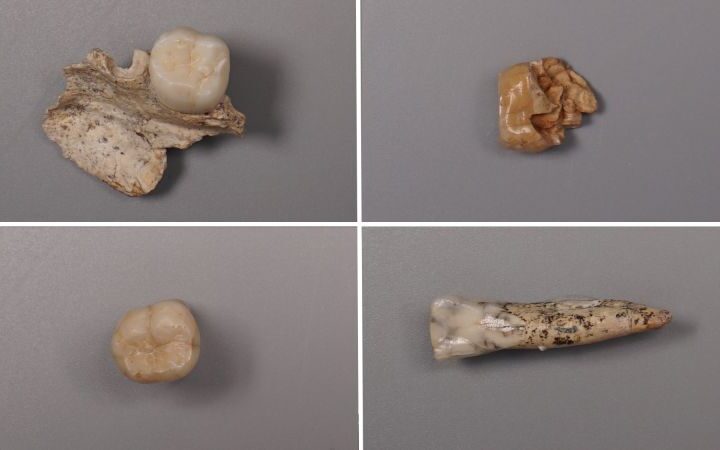
The collaborative team of Australian, Chinese, and European researchers examined nine hominin teeth and animal fossils unearthed from two caves located 15 kilometers apart in the limestone karst region of Guangxi province, southern China, a diverse landscape featuring rocky hills and flat valleys.
The researchers identified eight of the teeth as belonging to Homo erectus by analyzing their distinct bumps and grooves. They also recovered molecular information from the dental enamel of four teeth, linking them to proteins found in Homo erectus documented earlier this year. Until recently, scant genetic material has hampered investigations into this species.
Dating techniques applied to the teeth and surrounding cave sediments revealed that Homo erectus inhabited southern China between 324,000 and 184,000 years ago, during a timeframe when it was previously thought the species had vanished from that region and most others globally. The youngest known Homo erectus fossils were discovered in Indonesia, dating back 108,000 years.
By analyzing chemical signatures known as isotopes in the teeth, the team garnered insights into how Homo erectus navigated the landscape. The study of strontium isotopes indicated that some individuals spent their formative years traversing the forested karst regions, potentially covering distances up to 250 kilometers (about 155 miles).
This discovery is significant, confirming the presence of Homo erectus in an unexpected location and timeframe, according to geochronologist and co-lead author Kira Westaway, a professor at Macquarie University in Sydney, Australia. “This has huge implications for the timeline of Homo erectus as we attempt to understand the causes of its extinction,” she noted.
Speculation surrounding the eventual extinction of Homo erectus includes failure to adapt to novel environments. Ben Utting, an affiliate research scientist at the University of Connecticut, asserted that this study indicates that Homo erectus was more behaviorally flexible than previously assumed.
The findings raised important questions about the adaptability of Homo erectus to rainforest environments, a factor possibly linked to the species’ prolonged survival. The implications of this research extend beyond Homo erectus, suggesting that tropical rainforests could have played a more significant role in deep human history than traditionally recognized.
Mystery tooth
The team could not definitively classify the ninth tooth uncovered in the caves. Its morphology diverged from known teeth of Homo erectus, Homo sapiens, and Neanderthals, the latter of which disappeared about 40,000 years ago. Analysis indicated it lacked the molecular markers found in the Homo erectus specimens.
This tooth might belong to another ancient population, such as the Denisovans — or represent a hybrid between Denisovans and Homo erectus. This overlap is noted as intriguing, particularly as research earlier in the year revealed ancient proteins from several Homo erectus teeth unearthed in China, suggesting connections between the species and later human lineages.
Chris Stringer, a human origins scientist at the Natural History Museum in London, expressed that evidence of interbreeding between erectus and longi/Denisovan lineages strengthens the possibility of such interactions. The Homo erectus species, characterized by body proportions similar to those of Homo sapiens, demonstrate remarkable adaptability in their long tenure of over 1.5 million years across diverse environments.
This ongoing exploration into the life and adaptability of Homo erectus enriches our understanding of human evolution, indicating a complexity previously underestimated.