Van Eyck’s ‘The Arnolfini Portrait’ to be featured in upcoming exhibition
Jan Van Eyck’s The Arnolfini Portrait will be at the centre of a new exhibition at the National Gallery, London, designed to unravel the painting’s complexities and secrets, reports BritPanorama.
The artwork, created in 1434, depicts a young couple in a lavishly furnished room, where the man wears a distinctive wide-brimmed top hat and the woman a rich emerald dress. Their intimate pose has sparked discussions about the nature of their relationship, and the exact meaning of the scene depicted continues to evoke curiosity among art historians and enthusiasts alike.
The exhibition, titled Van Eyck: The Portraits, opens on 21 November 2026 and will present all ten of the artist’s known portraits for the first time together, including works sourced from various museums across Europe. This unprecedented showcase aims to provide context by comparing The Arnolfini Portrait with Van Eyck’s other portraits, thereby illuminating the distinctive style employed in this particular piece.
Art historian Nicholas Flory, co-curator of the exhibition, has highlighted the uniqueness of the painting: “The Arnolfini Portrait is unique – nothing like it had ever been painted before,” he remarked, noting its original portrayal of a couple in an interior setting, as opposed to the more typical representations found in Van Eyck’s other works. This context is expected to clarify how the artwork diverges from the norms of its time.
Despite its reputation, ambiguities surrounding the figures depicted persist. Questions linger about the woman’s possible pregnancy and whether the man is indeed her husband. There is also speculation that Van Eyck himself may be among the figures reflected in the painting’s mirror, further complicating the narrative.
The exhibition aims to present The Arnolfini Portrait alongside a variety of other works, emphasizing the artist’s dual nature of striving for verisimilitude while simultaneously employing artistic deception. Throughout his career, Van Eyck has demonstrated meticulous attention to detail and authenticity in his portraits, yet his choices also indicate a deliberate intent to challenge viewers’ perceptions.
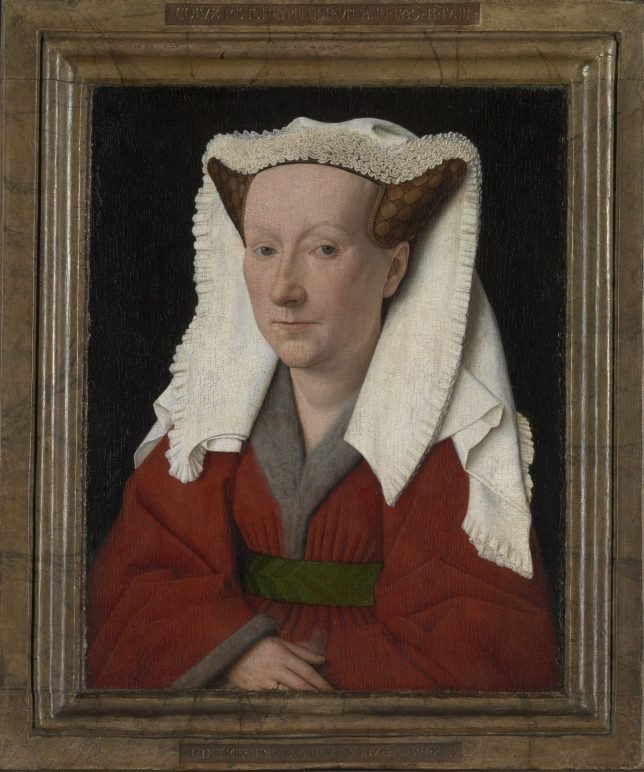
Notably, among the pieces displayed will be the portrait of Van Eyck’s wife, Margaret, which features intricate details such as a scar in her eyebrow. Flory commented on the artist’s subtlety in revealing and obscuring reality: the lack of distinctive features in the female figure from The Arnolfini Portrait raises further questions about authenticity and identity.
The narrative surrounding The Arnolfini Portrait encompasses various interpretations, including potential marital significance and social standing. Giovanni Arnolfini, commonly believed to be the male figure, married years after the painting’s creation, leading to ongoing discussions about identities depicted in the work.
The exhibition aims less at providing definitive answers and more at reigniting discourse around Van Eyck’s motivations and the layered meanings in his art. As Flory notes, “With The Arnolfini Portrait, he was pushing the possibilities of what a painting could do.”
As visitors engage with the exhibition, they will encounter not merely Van Eyck’s physical artworks, but also the enduring mystery and the questions that invite deeper reflection about the nature of perception, art, and truth.
‘Van Eyck: The Portraits’ is at the National Gallery, London, from 21 November 2026 to 11 April 2027.