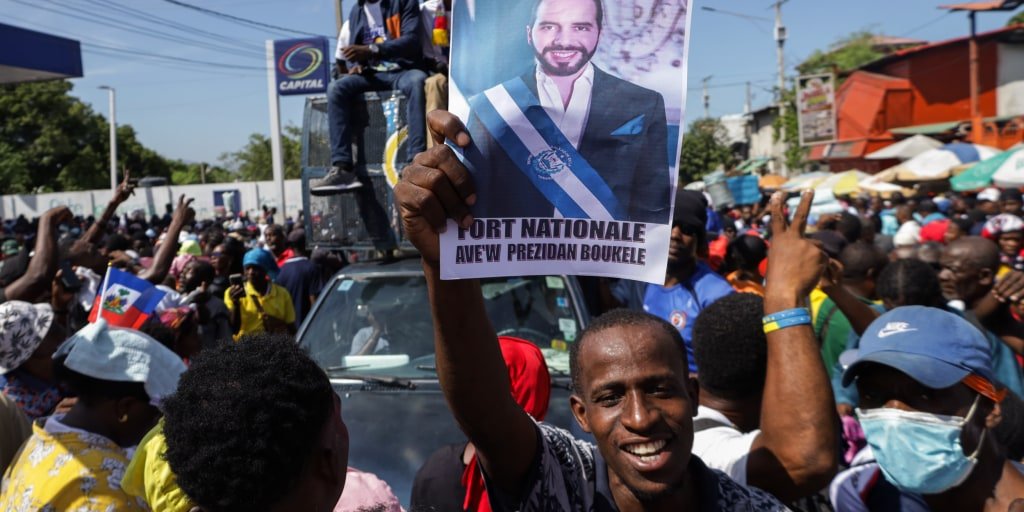
Thousands of people poured into the streets of Haiti’s capital and beyond on Tuesday to praise El Salvador’s president, Nayib Bukele, and his troops as they fight gangs in the Caribbean nation, reports BritPanorama.
Some clutched signs begging Bukele to not give up. “Keep fighting … because otherwise, they’ll end up killing us all,” one sign read.
“Give them the drones and the dogs!” others yelled in reference to the explosive drones that have targeted areas controlled by powerful gangs and the newly unveiled robot dogs making their rounds in Port-au-Prince.
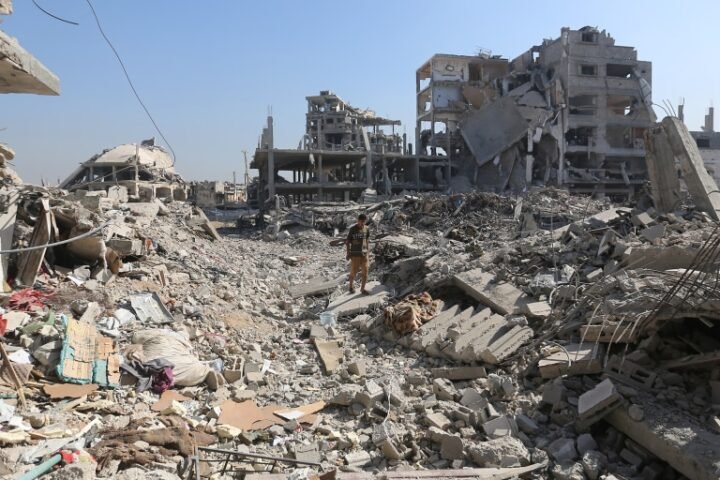
Last month, Bukele deployed some 2,500 troops to Haiti after four of their own came under attack on October 18 and remain missing. Fighting between gangs and foreign forces backed by Haitian authorities has only increased since then. Haiti remains mired in violence, with more than 20,000 people killed in the past five years and gangs controlling an estimated 70% of Port-au-Prince.
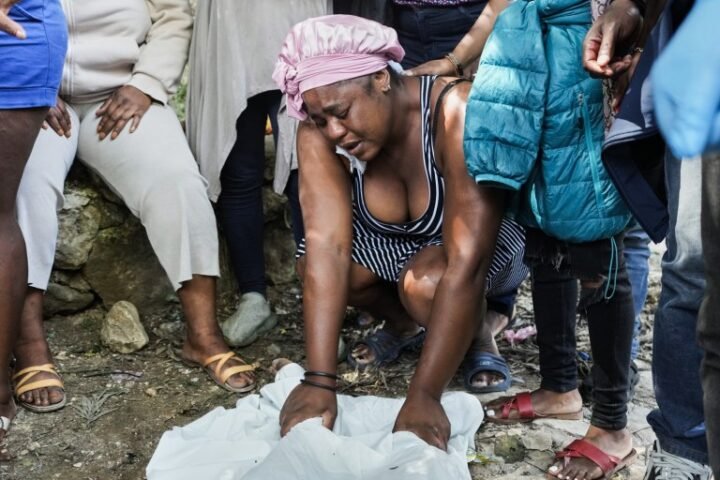
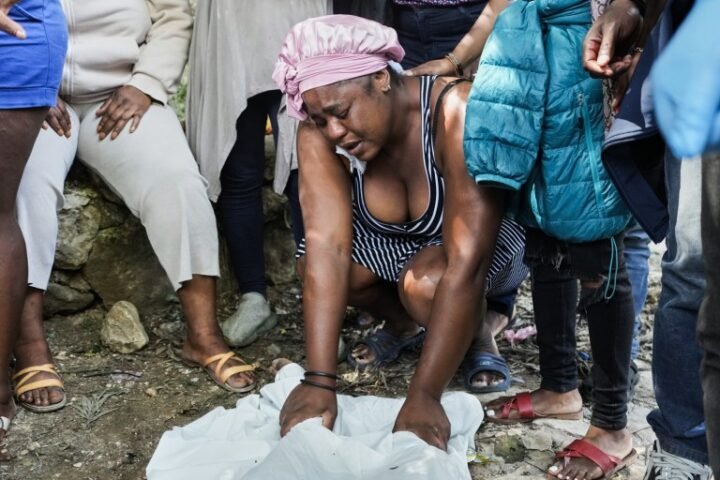
That’s why Maxseau Lomba joined Tuesday’s march. “The gangs drove us out; they burned our houses and killed our children. They even killed pregnant women. We have lost everything,” he said. “We say thank you to our father, Bukele.”
Marie Michelle Dorville, a 55-year-old street vendor who also joined the march, stated that gangs killed her partner, leaving her with three children to raise. “Bukele is an air of hope,” she expressed, calling on him and police to eliminate gangs “once and for all, so everyone can have a normal life.”
Sam Vigersky, a fellow with the Council on Foreign Relations, remarked in a report published Tuesday that Haitians cheering on Bukele is understandable: “El Salvador’s deployment of more troops in two weeks than the U.N.-backed mission did in over one year has generated a long-dormant sentiment among many Haitians: hope.”
By Tuesday afternoon, police fired tear gas and broke up the crowd as it headed to a stadium that had been recently secured by Haitian and foreign forces. The location had been in the hands of gangs for over two years, preventing Haiti from playing its World Cup qualifiers at home.
Experts warn Haiti has no long-term plan
While chants of “Bukele!” are spreading across Haiti, experts warn there’s no long-term plan to keep the country safe once the Central American troops pull out. “This enthusiasm … could turn into anger against the government if the troops withdraw,” said Diego Da Rin, an analyst with the International Crisis Group.
The group published a report Tuesday, based on more than 100 interviews with officials in Haiti and abroad, revealing government failures and missteps. It urged Haitian officials to develop a plan to prevent their country from imploding once international forces leave.
“The new foreign mission promises temporary relief from the bane of gangs, but its goal is to weaken, not dismantle them,” the report stated. “Haiti should start preparing now for the day when its own forces are once again summoned to take sole charge of the nation’s security.”
Forces currently fighting gangs include Haiti’s police and soldiers, a U.N.-backed gang suppression force, self-appointed vigilantes, and Vectus Global, a private security firm founded by former U.S. Navy SEAL Erik Prince. Some 2,500 Salvadoran troops are deployed after four of their own went missing following an attack deep in gang-controlled territory.
The International Crisis Group warned that authorities lack a strategy to identify threats, coordinate efforts, and reduce violence in the long term. A recent cartoon in the Le Nouvelliste newspaper depicted Haitians cheering on Bukele while standing near a table with a piece of paper labeled “PLAN ANTI GANG” written in various coloured crayons.
Haiti’s police force faces mounting troubles
Tuesday’s report noted that plans to establish a National Security Council tasked with creating a long-term strategy to make Haiti safer never materialized. Citing interviews with former senior government officials, the report indicated concerns that the council might oversee intelligence gathering, which has previously been used by Haitian leaders to target political opponents.
Sources informed the International Crisis Group that top officials were hesitant to see intelligence funds redirected due to fears of losing that money. The report also commented on the lack of a national strategy, meaning various police units often follow different operational guidelines depending on their foreign donors.
As of last year, Haiti’s National Police had no more than 8,000 active officers for a nation of nearly 12 million people. Many officers occupy command and administrative positions rather than patrol duties, and some are not adequately trained for combat. The report highlighted that the government shortened training from seven months to less than four to quickly increase the number of police officers.
Moreover, police promotions rarely adhere to criteria like seniority or merit, with some rank-and-file officers engaging with gangs or turning to private security or arms trafficking for additional income. Lower-ranking officers in Haiti earn approximately $300 a month before mandatory deductions.
The International Crisis Group called for substantial improvements in salaries, benefits, facilities for police officers, and recommended specialized training along with a promotion system based on performance rather than political connections.
Explosive drones considered a necessary evil
The number of victims is expected to grow as foreign forces increasingly rely on helicopters and explosive drones—two capabilities lacking in Haitian security forces—to target gangs. At least 87 civilians, including 21 children, were killed by drones from July 2025 to September 2026, according to the U.N.
“Against this backdrop, the humanitarian indicators are moving in the wrong direction: 5.8 million Haitians are facing acute hunger and 1.5 million are displaced, both records,” Vigersky observed.
In the first quarter of 2026, the number of civilian casualties attributed to security forces as a fraction of all casualties rose by 24%, according to the International Crisis Group, with expectations that this trend will continue.
The International Crisis Group stated that the use of such weaponry “has brought diminishing returns … producing no meaningful changes in territorial control” or in the power dynamics on the ground.
“That said, an immediate outright ban on the use of drones is unrealistic,” the report concluded.
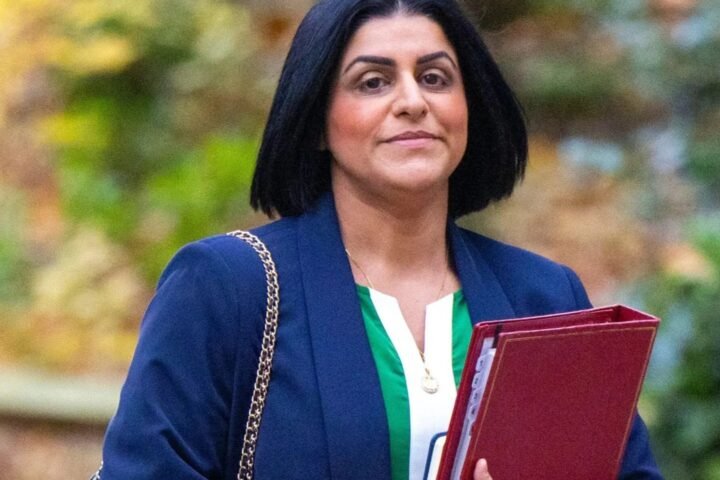
This week, Haitian Justice Minister Patrick Pélissier traveled to El Salvador for an international conference and is expected to meet with Salvadoran officials. Salvadoran Vice President Félix Ulloa stated that the bilateral agreement with Haiti would not be made public.
“There is a hidden agenda to criticize our operation,” Ulloa said when questioned about whether the deal guarantees respect for human rights. Ulloa and Salvadoran Security Minister Gustavo Villatoro affirmed that Salvadoran soldiers would return home once the four missing aviation technicians are found.
“We must begin preparing Haiti for a genuine rule of law,” Villatoro said, ensuring that the country’s institutions would function effectively in the future.