Armenia’s prime minister, Nikol Pashinyan, will miss a summit of the Russia-led Collective Security Treaty Organisation (CSTO) in Moscow and travel instead to Turkey for the United Nations climate conference COP31. The choice is not a formal exit from the military alliance, but it brings a deeper dispute into view: whether Armenia’s membership still has any practical value, and whether Moscow can impose a cost for its withdrawal from the organisation.
Media reports on 10 November said Pashinyan would not attend the CSTO summit, which begins in Moscow on 11 November under the chairmanship of Russian President Vladimir Putin. He is due to attend COP31, where leaders from 95 countries are expected to take part.
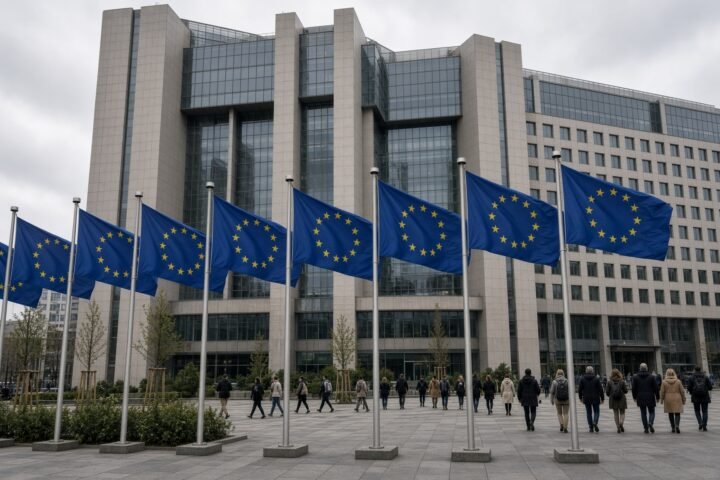
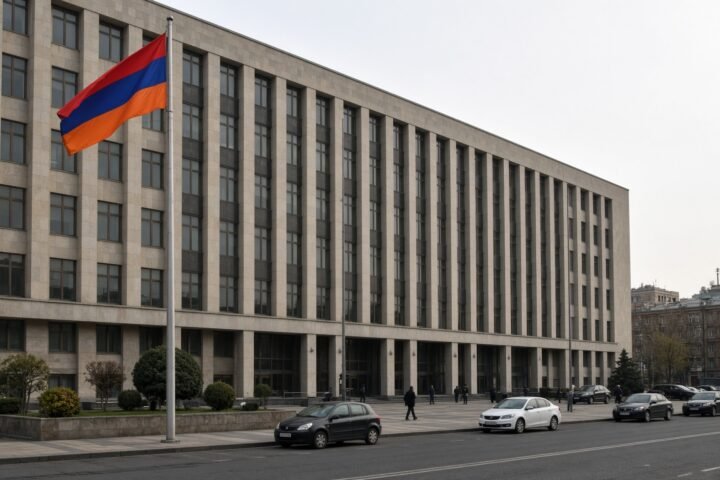
The contrasting destinations matter. Moscow represents the security framework through which Armenia has long dealt with Russia and several other post-Soviet states. The climate conference offers a broader international setting, outside the Russian-led structures that Yerevan has increasingly rejected. One missed summit does not change Armenia’s legal position, but it shows that attendance at CSTO meetings is no longer treated as an automatic duty by the Armenian government.
From security disappointment to political distance
The immediate dispute is rooted in Armenia’s assessment of the CSTO during its conflict with Azerbaijan over Nagorno-Karabakh. Yerevan suspended its participation in the organisation in February 2024, arguing that the alliance had failed to help Armenia when its security was under pressure.
For the Armenian government, that failure goes to the heart of the relationship. A security alliance is judged not only by its treaties and meetings, but by what it does when a member faces an armed confrontation. Pashinyan has argued that the CSTO did not provide the support Armenia expected and has since described it as a “bubble alliance”.
He has also said that Armenia no longer regards Russia as a strategic partner and questioned the need for Russia’s military base in Gyumri. Those remarks have moved the disagreement beyond a temporary quarrel over one organisation. They amount to a public reassessment of the security assumptions that shaped Armenia’s foreign policy for years.
On 5 November, Pashinyan said Armenia had lost interest in the CSTO. Earlier, he had indicated that his country was prepared to apply for membership of the European Union. That remains a political intention, not a guarantee of accession or an immediate replacement for Armenia’s existing security arrangements. It nevertheless signals that Yerevan is considering a wider range of international partnerships, prompting a negative reaction from the Kremlin.
The government’s argument is that Armenia should determine its foreign and security priorities in Yerevan rather than follow expectations set in Moscow. The decision to attend COP31 instead of the CSTO summit reinforces that claim in practical form: Armenia is choosing its international forums rather than allowing its established military alignment to dictate the prime minister’s agenda.
Moscow brings membership rules into the argument
Russia has answered the political challenge with a question of institutional obligations. The Russian Foreign Ministry said the CSTO summit could consider suspending Armenia’s membership or removing its right to vote in the organisation. The ministry linked those possible measures to unpaid contributions, saying Armenia had not paid its membership dues for more than two years.
Under the position reported from Moscow, any restriction could remain in place until the arrears were paid. The available reporting does not establish whether the summit will adopt such a decision. But the possibility changes the character of the dispute. Armenia presents its reduced participation as a sovereign response to a failed security relationship; Russia presents it partly as a matter of compliance with the rules attached to membership.
That difference is more than a dispute over language. A suspension or loss of voting rights would reduce Armenia’s formal influence within the CSTO and could narrow the remaining channels for cooperation. It would also turn a diplomatic estrangement into an institutional penalty, even if Armenia stopped short of announcing a formal withdrawal.
For Moscow, the issue of contributions offers a procedural route to challenge Yerevan’s position. For Armenia, such action could be seen as confirmation that the organisation is more concerned with enforcing membership obligations than addressing the security failure that caused the loss of confidence in the first place. Whether that is the eventual outcome remains uncertain, but the threatened measures show how sharply the relationship has deteriorated.
A break in practice, not yet in law
Pashinyan’s absence does not itself terminate Armenia’s CSTO membership. Nor would an application to join the EU guarantee entry into the Union. Armenia is therefore in an awkward middle ground: its government is withdrawing political commitment from the Russian-led security system without having secured an equivalent alternative.
That gap carries practical risks. Russia remains a major regional power, and further deterioration could reduce Armenia’s room for manoeuvre. A restriction of Armenia’s rights inside the CSTO would make cooperation more difficult, while a formal return to the old relationship would be politically hard to explain after Pashinyan’s repeated criticism of the alliance and Russia’s role.
The choice between Moscow and COP31 should therefore be read as a marker of direction rather than a completed realignment. Armenia is asserting control over its international priorities while leaving the legal question of its CSTO status unresolved. The next significant step may come not from another missed meeting, but from whether the organisation converts the dispute over unpaid dues into an official sanction.