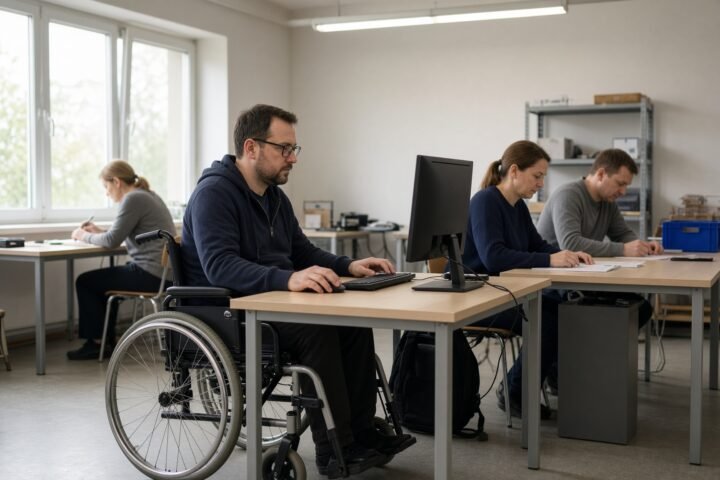
From 1 January 2027, employers in Belarus will have to pay half the cost of creating and equipping workplaces for people with disabilities. The change also ties public reimbursement to new staffing and pay thresholds, raising the risk that some businesses will decide adapted jobs are no longer worth the expense.
The rules are set out in Council of Ministers Resolution No. 559, adopted on 30 October 2026 and reported by Belarusian media on 5 November. Until now, the relevant costs were covered in full from the state budget. Under the new arrangement, the government will reimburse 50% of eligible spending, up to a ceiling of 1,000 basic units for each workplace.
A subsidy with three tests
Employers will not automatically qualify for the partial reimbursement. People with disabilities must make up at least 3% of the workforce, while the salary on the newly created positions must be no lower than 150% of the minimum wage.
That means companies will face three separate conditions: they must finance half of the eligible costs, meet the workforce threshold and offer pay well above the legal minimum. The combination may be particularly difficult for smaller businesses, which could lack the staff numbers needed to reach the 3% threshold or the funds required to absorb the remaining cost.
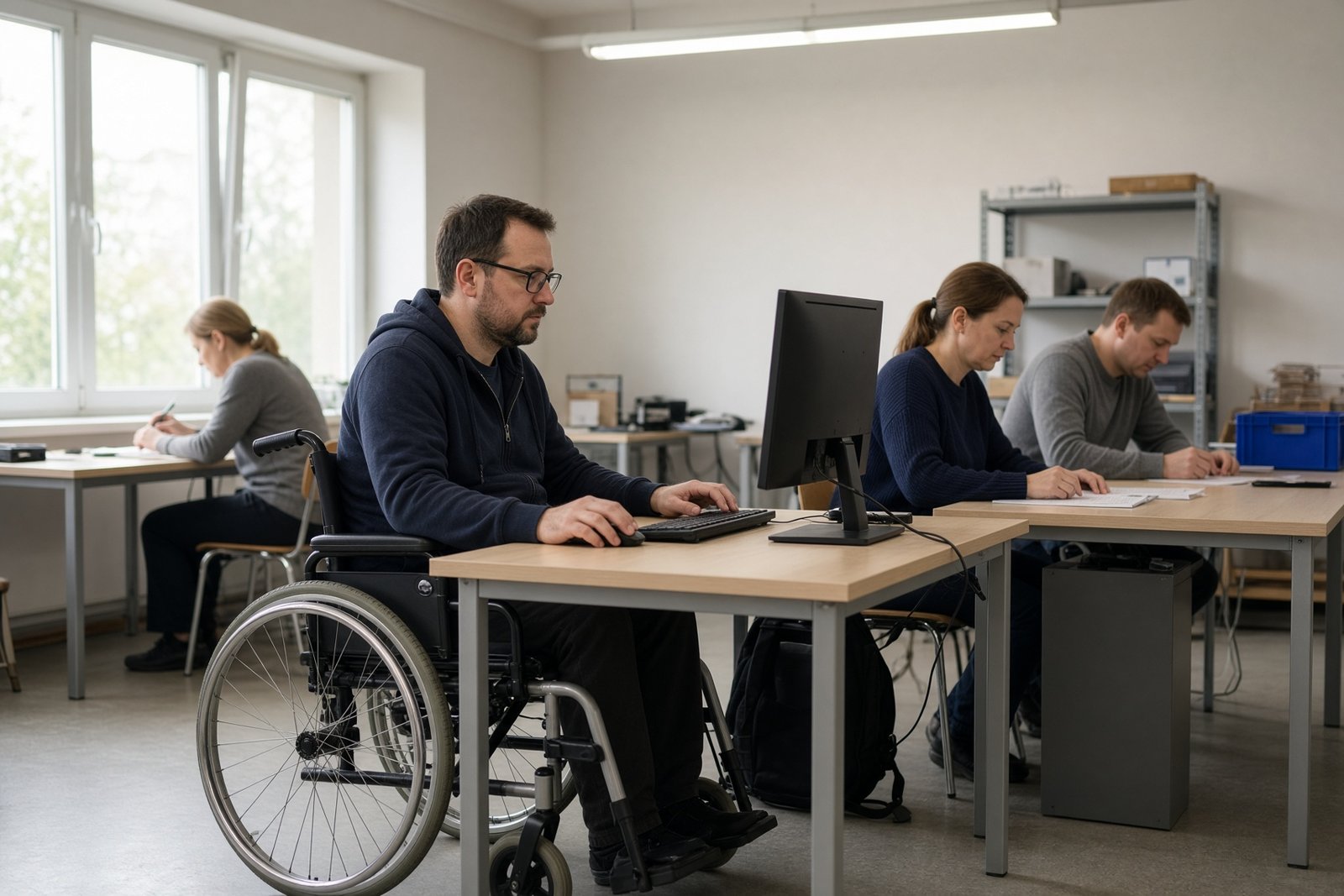
The policy is also likely to matter most at the point when an employer is considering its first adapted position. A suitable workplace may require specialist equipment, changes to premises or other measures that would not be needed for a standard hire. Under the previous system, the state carried the full cost of those arrangements. From next year, the employer will have to take on a substantial share of the financial risk before the position is created.
The 1,000-basic-unit cap creates a further limit on public support. Even where a project qualifies and the government covers half of the eligible expenditure, costs beyond the ceiling will not be included in the reimbursement. The final burden will therefore depend on the scale of the adaptation and on which expenses officials accept under the scheme.
Warning over the incentive to hire
Economist Lev Lvovsky of the research centre BEROC criticised the decision, warning that reduced state support would weaken businesses’ interest in hiring people with disabilities and could lead to a sharp rise in unemployment among them.
That is a forecast, not an established result. The effect will depend on how many employers can afford the remaining costs, how the 3% and wage requirements are applied, and whether other forms of support remain available. But the financial calculation facing employers will change immediately: an expense previously covered by the public budget will become part of the company’s own hiring decision.
Some businesses may continue to create adapted jobs where recruitment needs are pressing or the required modifications are relatively inexpensive. Others may postpone a planned hire, reduce investment in equipment or avoid a position that needs extensive changes. The impact is unlikely to be uniform, because the cost of adapting a workplace can vary widely between employers and types of work.
Where the saving lands
For the government, the resolution reduces its direct obligations under a programme linked to employment. For employers, it raises both the cost and the administrative conditions attached to participation. For people with disabilities, the practical consequence could be a smaller pool of suitable vacancies if companies conclude that the new system is too costly or difficult to use.
The measure therefore does more than alter the accounting of a subsidy. It shifts responsibility for workplace adaptation away from the state and towards employers, while making access to reimbursement dependent on the size and composition of the workforce. A company that cannot meet the 3% requirement may be unable to recover any of the qualifying expense, even if it has created a workplace for an individual who needs adaptations.
The decision also sits uneasily alongside the official presentation of Belarus as an economically successful and socially oriented state. Public messaging places the authorities at the centre of social protection, while the government is reducing support for a programme directly connected to the ability of one of the most vulnerable groups to enter the labour market.
That contrast does not establish how many jobs will disappear or how unemployment will change. It does, however, make the distribution of the policy’s burden clear: the state will limit its reimbursement, employers will assume more of the cost and people seeking adapted work may face fewer opportunities.
The decisive test will come after the resolution takes effect on 1 January 2027. The number of employers that continue to participate, and the number of adapted workplaces they create under the new thresholds, will show whether the measure remains a technical change to public funding or becomes an additional barrier to employment.