After cyberattacks, false alerts sent in Ukraine and Russia
Residents of Ukraine and Russia received phony emergency alerts from hacked government-run mobile apps, including a warning about an imminent nuclear threat, reports BritPanorama.
While it remains unclear if the cyberattacks late Sunday in Ukraine and early Monday in Russia were connected, Ukraine reported that its emergency alert system was back online after a temporary suspension. Russian officials stated they were still working to restore their emergency alert app.
A Russian Telegram channel, linked to the country’s security services, claimed that a hacking group named Hitcore was responsible for breaching Ukraine’s alert system. The authenticity of this claim is unverified, and the motives behind the reported attack are still ambiguous.
The misleading alerts reached Ukrainians and falsely indicated hazardous conditions, including heightened radiation levels and public disturbances in Kyiv. These alerts, presented in English, Russian, and Ukrainian, contained numerous spelling and grammatical errors.
One message, written in Russian, stated: “Hi! There will be a nuclear threat across Ukraine. Do not worry, the Oreshnik is incoming,” referring to a Russian ballistic missile.
Despite the grave nature of the alerts, there was minimal panic among the populace. Many took to social media, sharing light-hearted posts featuring pets and amusing apocalypse-themed images generated by artificial intelligence.
Yurii Ihnat, a spokesman for Ukraine’s air force, indicated in a television interview that the cyberattack did not hinder Ukraine’s military operations. The government advised citizens to monitor other emergency sources while addressing the incident.
In Russia, the Emergency Situations Ministry confirmed that a false alert was sent via its app at approximately 2:45 a.m. Moscow time on Monday, affecting 33 of the country’s 89 regions. The ministry did not identify the perpetrators.
In an attempt to reassure the public, the ministry noted that the primary alert system was functioning normally through SMS, media broadcasts, and municipal alerts.
Kremlin spokesperson Dmitry Peskov stressed the need for all government entities to enhance the cybersecurity of their digital infrastructures.
Limited ceasefire ends in Kherson region
As the ceasefire in Ukraine’s Kherson region concluded on Monday, Ukraine’s general staff indicated that Russia’s military had utilized the pause in hostilities, which began on October 27, to fortify its drone defenses and replenish ammunition supplies.
This brief truce was aimed at facilitating humanitarian aid and evacuation efforts in the Russian-occupied city of Oleshky, representing the most significant cessation of fighting between Kyiv and Moscow since the onset of Russia’s full-scale invasion nearly five years ago.
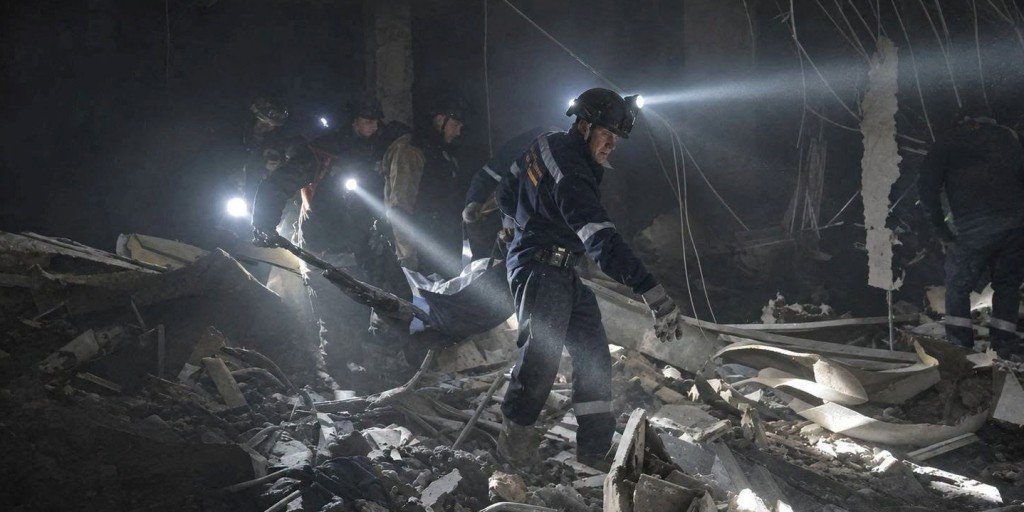
Emergency services in Ukraine reported that drone strikes in the eastern Kharkiv region injured 12 individuals, resulting in damage to a refrigeration facility, greenhouses, and residential structures.
In the Black Sea port city of Odesa, five more people were reported injured from strikes that targeted a warehouse and damaged nearby homes.
Russia’s Ministry of Defense announced Monday that it successfully shot down 212 Ukrainian drones overnight. Vyacheslav Fedorishchev, Governor of Samara, reported that local air defenses were engaged in repelling an aerial assault, but provided no additional details.
Independent Russian media outlets later disclosed that Ukrainian drones targeted one of Europe’s largest oil transport hubs located in Samara.