Poland’s fight over its Constitutional Tribunal has moved beyond disputed judicial appointments. It is now a struggle over who can direct the court, which judges belong on it and whether the government, president and opposition still recognise the same constitutional rules.
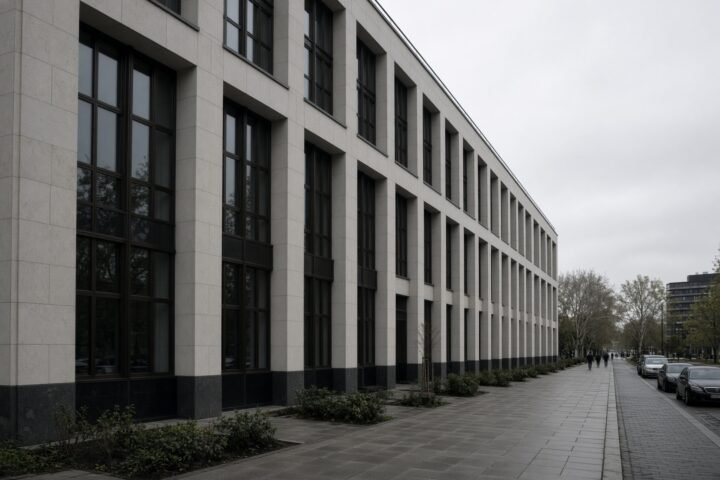
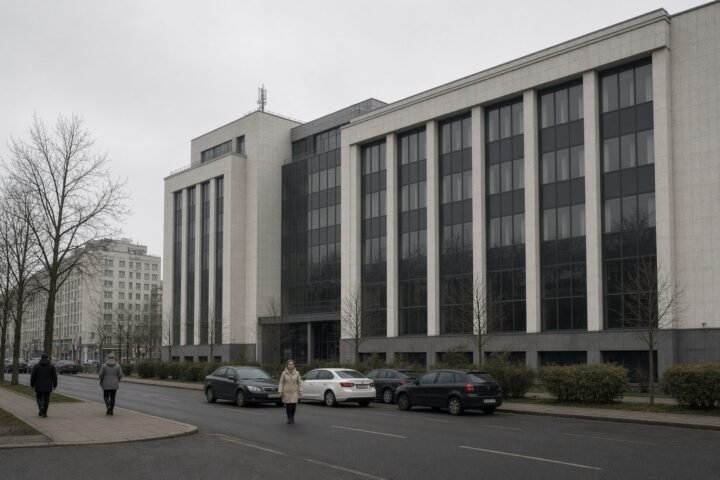
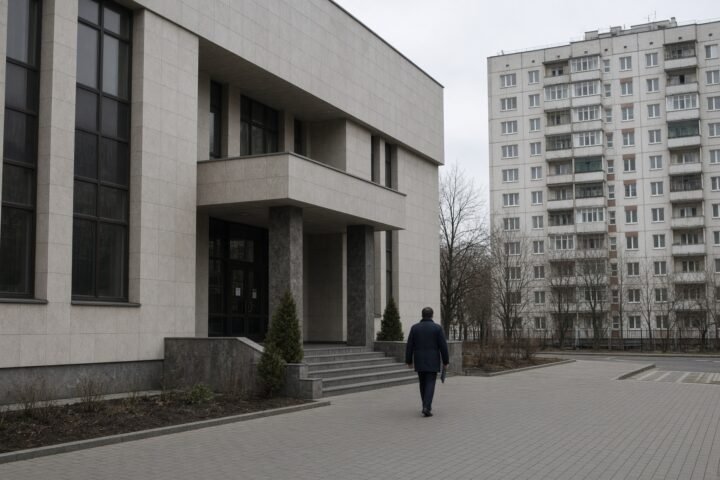
The crisis escalated on 30 October 2026, when Judge Anna Korwin-Piotrowska unilaterally suspended Tribunal President Bogdan Swieczkowski and his deputy. Police were then deployed at the court. Prime Minister Donald Tusk said officers had protected the tribunal from “attackers”; President Karol Nawrocki described the episode as a “violent takeover of a constitutional body” and a threat to internal security.
The available reporting records those sharply conflicting accounts but does not establish that every step taken inside the tribunal was legally valid. What is clear is that a long-running argument over appointments has reached the court’s chain of command — and with it the authority of any judgment the institution may issue.
Two versions of the same police operation
Tusk has accused Nawrocki and the conservative Law and Justice party, known as PiS, of undermining the rule of law by blocking judicial appointments and refusing to recognise the tribunal’s newly elected composition. He says the dispute is preventing state institutions from operating through agreed constitutional procedures.
His description of the police presence places the officers on the side of institutional continuity: the tribunal, in the government’s telling, was being protected from an attempt to seize it. Nawrocki’s account reverses that meaning. The president says the intervention was itself part of an unlawful assault on a constitutional body.
Nawrocki cut short a visit to Senegal after the confrontation. His response, and the government’s decision to frame the police deployment as defensive, show how quickly the dispute has become a contest over constitutional legitimacy rather than a technical disagreement about court administration.
Anadolu Agency reported on the accusations and the events at the tribunal.
The dispute began with the court’s composition
The immediate confrontation is rooted in a broader battle over who may determine the tribunal’s membership. Tusk says PiS and the president have delayed the appointment of judges and refused to accept a new composition of the court. The government regards that resistance as an artificial extension of a conflict that should have been settled through constitutional procedures.
A central point is Nawrocki’s refusal to swear in some of the judges elected to the tribunal. For the government and its allies, that refusal prevents the court from being renewed and preserves an arrangement they say should have changed. The president and PiS challenge the legitimacy of the process backed by the government, presenting their resistance as a defence of the Constitution rather than an attempt to block the court.
That disagreement has changed the nature of the problem. A dispute over appointments and oaths has become a struggle over who may define the tribunal’s lawful composition — and who has the authority to recognise its leadership.
For a constitutional court, that is not an internal personnel matter. Its judgments are meant to settle disputes between the branches of government. If those branches accept different versions of the court’s membership, a ruling can be challenged because of who issued it before anyone reaches the substance of the legal argument.
When legitimacy becomes the battlefield
The opposing claims share one feature: each side says it is defending constitutional order while accusing the other of threatening it. Tusk presents his government as trying to restore procedures damaged by years of conflict over the judiciary. Nawrocki and PiS say the government is using state power to impose its own interpretation of constitutional law.
That reciprocal delegitimisation creates a problem that cannot be resolved by a single change of personnel. Even if the dispute over Swieczkowski’s position were settled, the larger question of which judges are properly installed — and who has the final say over that question — would remain.
It also makes routine institutional acts politically explosive. A judicial appointment, the signing of an oath, a tribunal ruling or the arrival of police can be treated by one camp as a lawful measure and by the other as an abuse of power. Each new act then risks becoming evidence in the next round of the dispute.
The practical consequence is uncertainty for public institutions that must decide which officials and judgments to recognise. Confidence in constitutional review depends not only on judicial independence, but on clear and accepted rules governing appointments, leadership and the force of the court’s decisions. Those rules are now being contested by the very authorities expected to uphold them.
The confrontation moves towards Parliament
The crisis has already spread beyond the tribunal. Former prime minister Mateusz Morawiecki has said he is prepared to seek a vote of no confidence in Tusk’s government. It is not clear whether such a motion would secure enough support, but the threat gives the opposition a parliamentary route for widening the confrontation.
That possibility raises the political stakes without resolving the institutional question. A failed vote would not settle the status of the judges or clarify whether Korwin-Piotrowska was entitled to suspend the tribunal’s president and his deputy. A successful one, meanwhile, would turn a judicial power struggle into a direct challenge to the government’s survival.
Poland’s unresolved problem is therefore larger than the fate of one tribunal president. The government, president, opposition and judges must still find a process for determining the court’s composition and authority that all sides will accept. Until then, the institution designed to arbitrate constitutional disputes risks becoming the country’s most contested political arena.