A new US licence could put American aviation parts, components and software back within reach of Belavia, Belarus’s state-owned airline. It may also allow talks about future Boeing aircraft — but the more immediate question is whether a tightly drawn commercial exception can be kept from weakening the wider sanctions regime.
The authorisation from the US Department of Commerce was reported on 31 October 2026 by Vedomosti. It restores a legal route for Boeing to deal directly with Belavia, whose access to Western aviation markets has been restricted since the political crises of 2021.
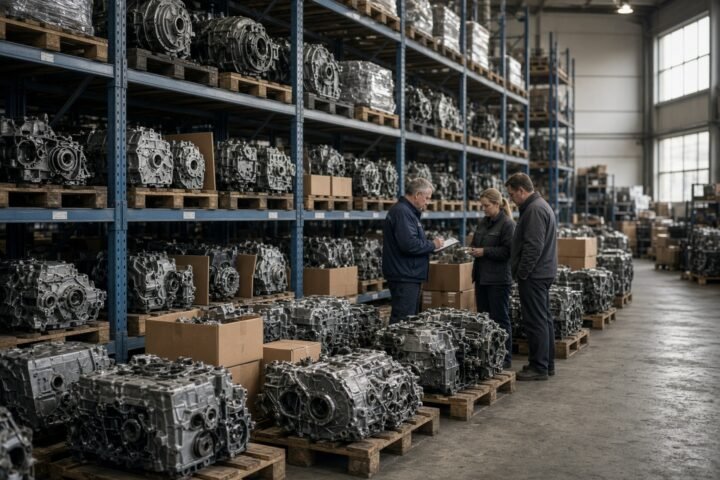
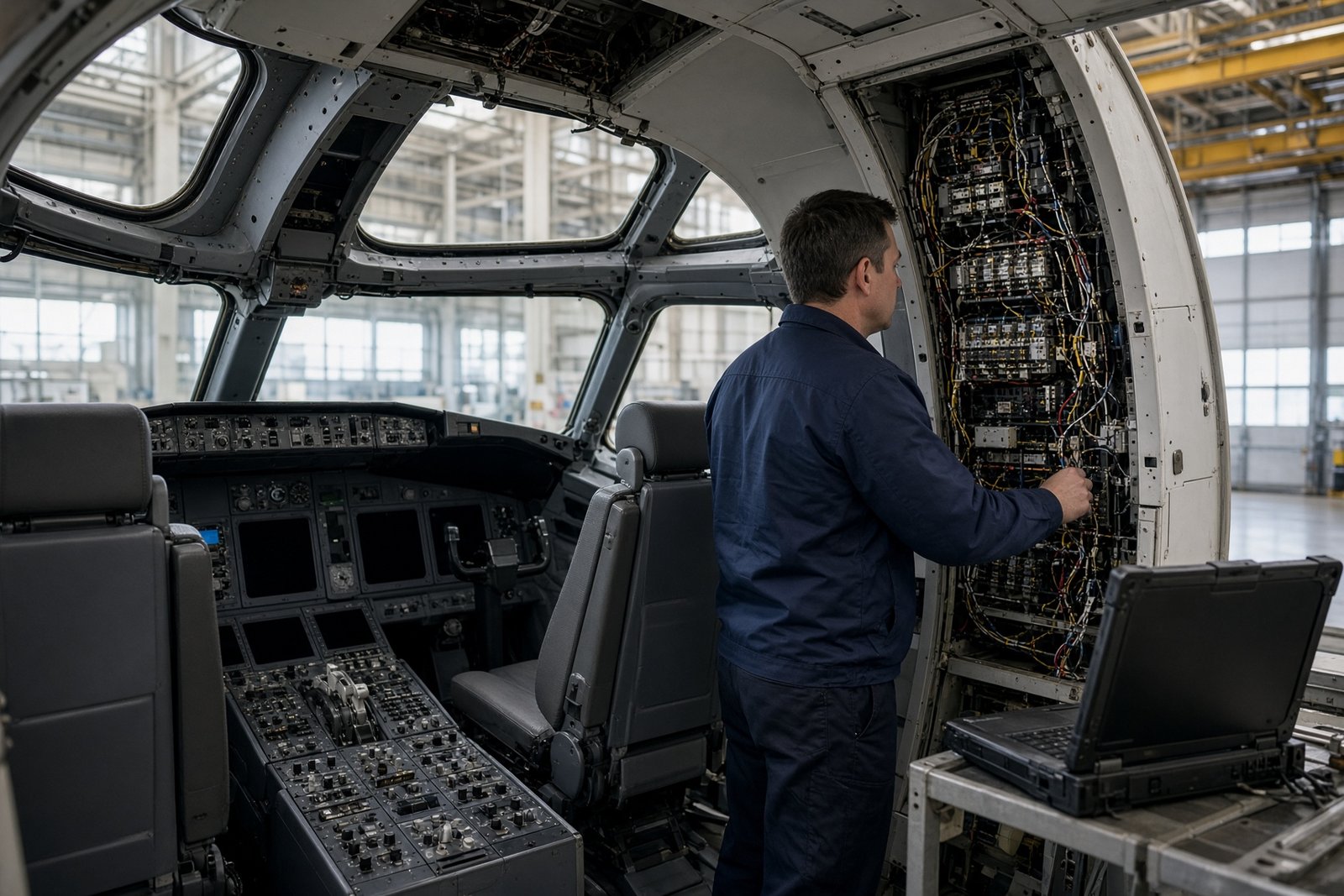
There is no indication in the reported decision that Belavia has ordered new aircraft or that deliveries are imminent. Its immediate effect is narrower: the airline could obtain certified spare parts, equipment and software in the United States for aircraft already in service, while opening discussions with Boeing over possible future purchases.
A technical concession with a political price
For an airline, access to approved parts and maintenance software is fundamental rather than ornamental. A disrupted supply chain can raise costs, lengthen repairs and leave aircraft grounded. The new authorisation could therefore help Belavia keep its fleet operating and reduce some of the practical consequences of its isolation.
It also gives Minsk a visible result from its contacts with Washington. Belavia is not a private carrier operating at arm’s length from the Belarusian state; it is a state-owned company whose revenues sit within the country’s wider economic system. Restoring its access to a major American manufacturer may consequently be read by the Belarusian authorities as proof that bilateral negotiations can deliver concrete economic relief.
The move follows a gradual easing of US restrictions. In November 2025, the US Treasury Department lifted sanctions against Belavia after contacts between Washington and Minsk and the release of some political prisoners by the Belarusian authorities. On 22 October 2026, Alexander Lukashenko said talks with the United States had made progress on a range of issues.
Those steps do not amount to a comprehensive political settlement. They do show, however, that Washington is prepared to use sector-by-sector engagement, while the European Union continues to apply a substantially tougher policy towards Minsk.
Why Belavia became a sanctions target
The EU imposed sanctions on Belavia on 2 December 2021. Brussels accused the state airline of helping organise the movement of migrants from Middle Eastern countries to Belarus during the migration crisis on the EU’s eastern borders. European governments said the operation helped the Lukashenko government put pressure on Poland, Lithuania and Latvia.
The airline was also caught up in the fallout from the forced landing of a Ryanair flight in Minsk in May 2021. EU countries subsequently closed their airspace to Belarusian airlines, including Belavia.
The United States added Belavia to its sanctions lists on 9 August 2023. The US Treasury said at the time that the airline was state-owned and generated revenue for the Belarusian government. The measure formed part of a broader response to the suppression of democratic freedoms after Belarus’s 2020 presidential election and Minsk’s support for Russia’s war against Ukraine.
The later American decision to remove sanctions against Belavia did not produce an equivalent shift in Brussels. The EU continues to point to political repression, pressure on neighbouring states and Belarus’s close alignment with Russia as grounds for maintaining restrictions.
That divergence now has a practical expression. A European airline remains cut off from the EU market, while its state owner may regain access to American aviation technology through a US licence. The difference gives Minsk room to negotiate separately with Western capitals and to seek further concessions without first resolving its wider dispute with Europe.
The Russian connection
Belarus’s close economic and political relationship with Russia makes the authorisation more consequential than a routine maintenance arrangement. Minsk is one of Moscow’s closest allies, and its economy is closely integrated with Russia’s. That creates a potential risk that the benefits of renewed access could extend beyond Belavia.
One possible route would be the resale or transfer of parts and components to Russian airlines through intermediaries. Another would be indirect. If Belavia can use American equipment to maintain its own aircraft, other parts and technical resources within the Belarusian system could become available for different operators. Those resources might then support Russian aviation, even if the US-supplied items themselves never cross the border.
These are scenarios, not established facts. The licence does not by itself show that American parts have been sent to Russia, nor does it automatically permit Belavia to transfer products to third parties. Other restrictions may still apply to Russian companies, Belarusian entities and particular aircraft.
The practical outcome will depend on the conditions attached to the authorisation, end-use checks and the ability of US and European authorities to track orders through intermediaries. A licence confined to maintaining Belavia’s existing fleet, with strict reporting requirements, would present a different risk from a broad commercial opening with limited oversight.
Even a compliant arrangement could have wider economic effects. If Belavia no longer has to compete for scarce parts or find alternative maintenance solutions, other equipment and technical capacity may be freed within Belarus’s aviation network. Whether that capacity would actually benefit Russian operators is uncertain, but the possibility explains why the arrangement will be judged by what happens after the sale, not merely by the wording of the licence.
A test of Western coordination
The dispute is ultimately about more than aircraft parts. Sanctions derive part of their force from the restrictions they place on access to finance, technology and global suppliers. If a state-owned company regains access to Western technology without broad changes in Belarusian policy, Minsk and Moscow may conclude that economic relief can be secured through negotiation while repression and strategic cooperation with Russia continue.
That does not mean every targeted exemption destroys the sanctions system. Governments can use limited licences to protect aviation safety, preserve diplomatic leverage or address specific practical problems. The exception must nevertheless be narrow enough to prevent its commercial benefits from undermining the policy it is meant to sit alongside.
The regional implications are also difficult to separate from the commercial ones. Poland, Lithuania and Latvia have already faced border pressure and other confrontations linked to Belarus and Russia. Restoring capacity to a Belarusian state enterprise will not itself create or remove those threats. But if it gives Minsk additional financial or logistical room while its broader conduct remains unchanged, European governments may face higher costs in monitoring and deterring activity on the eastern flank of the EU and Nato.
The decisive issue is therefore whether the Boeing-Belavia channel remains a supervised exception or becomes the first stage of a wider reopening to Minsk. That will be determined not by the promise of future aircraft, but by who receives the parts, how their end use is checked and whether Washington and Brussels can prevent a bilateral thaw from becoming a new route around Western sanctions.