Ingushetia recorded Russia’s lowest average monthly wage in July 2026, with official pay standing at 42,700 roubles compared with 109,500 roubles nationwide. The figure has reignited criticism in the North Caucasus republic, where poverty, unemployment and rising prices are putting further pressure on household incomes.
Media reports published on 26 October, citing figures from Russia’s federal statistics agency, Rosstat, said Ingushetia had ranked last among the country’s regions. Residents quoted in those reports said many workers actually earned between 17,000 and 26,000 roubles a month. Those claims do not establish the full distribution of wages, but they underline how an official average can conceal the position of people at the bottom of the pay scale.
The numbers behind the hardship
Ingushetia’s weak wage figures are part of a wider and longstanding pattern. In 2025, 24.3% of the republic’s population lived below the poverty line, compared with 6.7% across Russia. The regional rate was therefore 3.6 times the national figure.
The labour market offers little relief. Between June and August 2026, unemployment in Ingushetia stood at 22.5%. The figure confirms the depth of the republic’s economic difficulties, while figures cited for 2024 put its unemployment rate at roughly 11 times the Russian average.
Low wages and limited employment reinforce one another. Where regular, well-paid jobs are scarce, households are more likely to rely on public support, informal work or help from relatives. Low purchasing power then weakens demand inside the republic, making it harder for small businesses to expand and offer stable employment.
Residents also regularly complain about the rising cost of fuel, food and other basic goods. For families living on modest incomes, those increases can quickly erode the value of their pay. A rise in nominal wages offers little practical improvement when essential expenses climb at the same time.
Potential that has not become prosperity
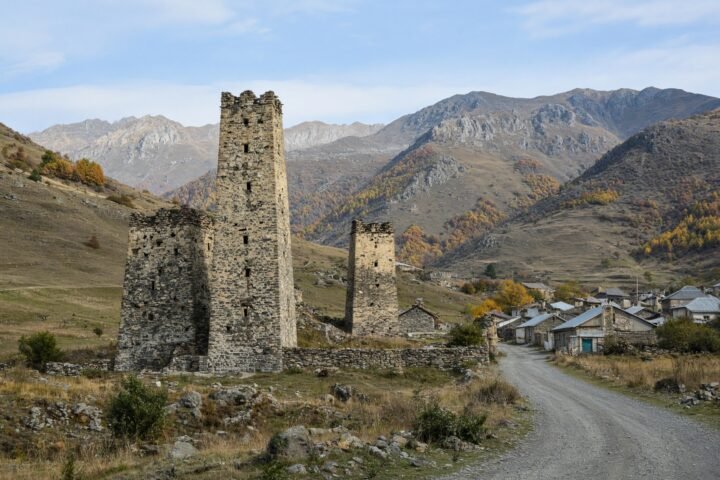
The republic’s social indicators sit uneasily alongside its reported economic potential. Ingushetia has oil and gas deposits, marble reserves, fertile land and opportunities for agriculture and tourism. In principle, those assets could support a broader economic base and create demand for better-paid work.
Resources alone, however, do not produce widely shared prosperity. They need investment, transport and other infrastructure, access to finance, reliable markets and conditions that allow businesses to plan over the long term. The available information does not identify particular projects or companies as responsible for the gap between Ingushetia’s potential and its economic results. It does show that the advantages attributed to the republic have not yet generated enough productive employment or diversified activity.
Agriculture illustrates the problem. Fertile land can support higher incomes only when production is connected to processing, distribution, investment and dependable buyers. Tourism faces a similar test: natural or cultural attractions do not automatically create a substantial local industry without infrastructure, services and sustained private investment.
The same applies to extraction. Oil, gas and marble may generate economic value, but their presence does not by itself guarantee that the resulting income will support large numbers of local, well-paid jobs. The contrast between the existence of these resources and the republic’s social statistics is therefore a question of economic structure, rather than proof of wrongdoing by a particular actor.
When transfers cushion rather than transform
Ingushetia remains heavily reliant on financial support from Russia’s federal centre to maintain public services and state structures. Such transfers can soften the immediate effects of poverty and keep essential administration running. They do not necessarily create private investment, expand the local tax base or produce enough new jobs to change the region’s long-term trajectory.
That creates a persistent tension. Federal funding can manage the consequences of economic weakness without removing its causes. If money mainly sustains existing public structures while businesses remain small, investment remains limited and formal employment fails to grow, the republic can remain financially dependent without moving closer to the income levels of other regions.
The latest wage figures therefore raise broader questions about the effectiveness of the current regional development model. Ingushetia has received federal support, yet it continues to rank at the bottom on pay and among Russia’s poorest regions. That persistence does not, on its own, prove why development has failed. It does indicate that existing support has not produced economic convergence.
The gap is especially stark when set against the official national average. Ingushetia’s monthly wage of 42,700 roubles was less than 40% of the Russian figure of 109,500 roubles. Even before accounting for differences in living costs or household circumstances, the comparison shows how far the republic remains from the countrywide income level.
What the average leaves out
Rosstat’s figure may have been calculated correctly while still giving an incomplete picture of life in the republic. An average does not show how many workers earn at the lowest levels, how widespread informal employment is or how many jobs are temporary and insecure. The 17,000 to 26,000 roubles mentioned by residents cannot be used to measure the entire labour market, but they point to the importance of looking beyond a single indicator.
Nor does the wage figure capture the effect of unemployment. A household with one relatively well-paid worker and several people unable to find work may have a very different standard of living from the regional average. High unemployment also limits people’s ability to move into better jobs, negotiate higher pay or invest in training and small businesses.
For residents, the decisive issue is not the volume of federal transfers but whether those funds help create reliable work, affordable necessities and a credible route to higher incomes. Ingushetia’s latest figures show that its natural resources and public financing have yet to become a broad economic foundation.
Until that changes, the republic’s position will remain defined by a striking mismatch: significant reported potential on one side, and the country’s lowest official wages, severe poverty and exceptionally high unemployment on the other. The unresolved question is how long financial support can cushion the consequences without changing the conditions that produce them.