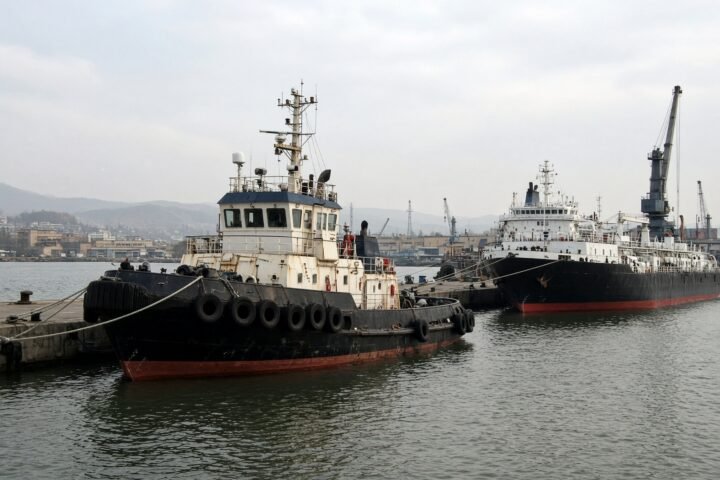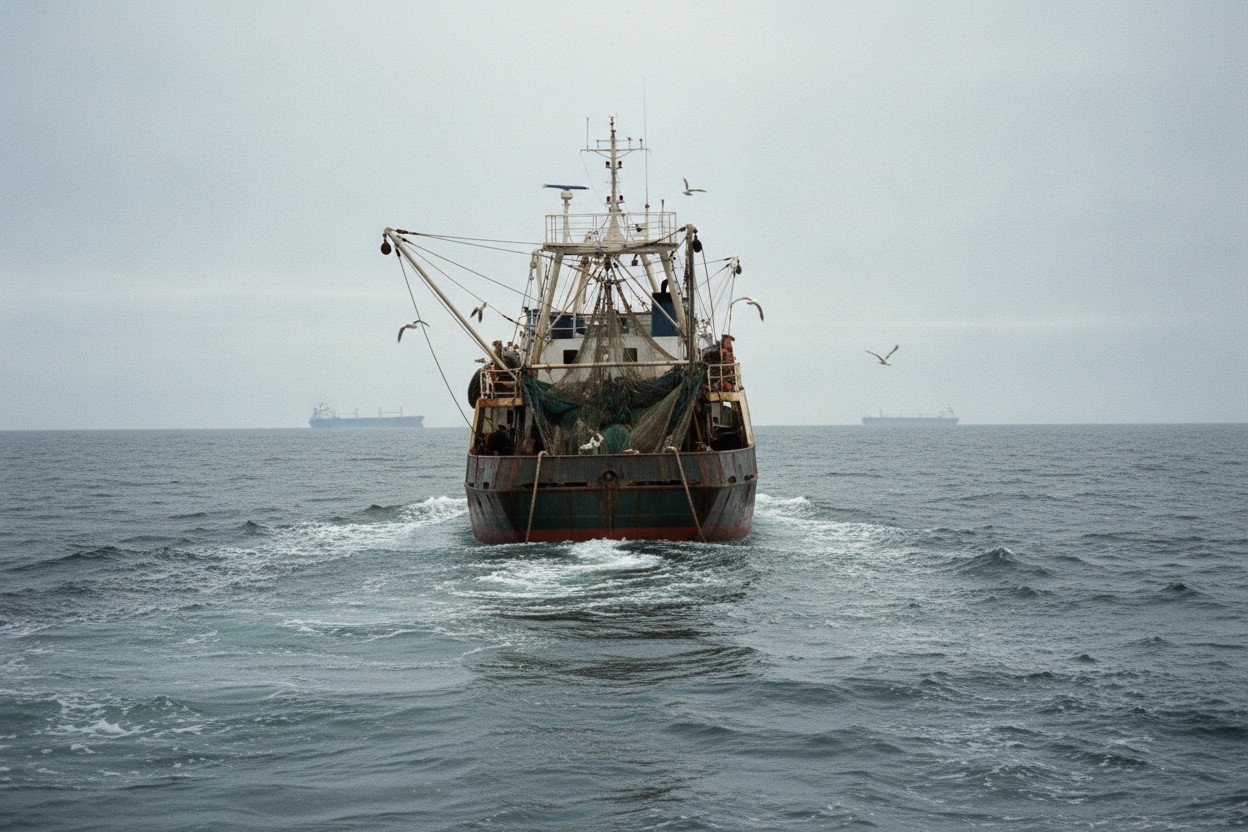
For four and a half years, Russian fishing trawlers repeatedly moved around the undersea cables linking Britain with continental Europe and the United States. Vessel-tracking data identified more than 500 incidents in which the ships appeared to circle above vital routes or follow them for significant distances.
The movements do not prove that sabotage was planned, or establish who directed the vessels. They do show how a civilian-looking ship could gradually build a picture of infrastructure carrying communications, financial data and digital services across the Atlantic.
A pattern hidden in ordinary traffic
The analysis was based on data from Global Fishing Watch, a platform that tracks vessel movements, and was reported by British media on 22 October 2026. The findings, covered by The Independent, describe repeated activity around cable routes connecting Britain to Europe and North America.
Some trawlers made circular movements above the routes. Others travelled alongside them for considerable distances. A single fishing vessel near a cable might have a perfectly ordinary explanation: fishing grounds, shipping lanes and cable corridors can overlap. Position data also cannot reveal what equipment was on board, what the crew knew about the infrastructure or whether anyone had issued specific instructions.
Repetition gives the pattern greater significance without resolving the question of intent. Regular movements over the same areas could reveal more than the approximate position of a cable. They might also expose water depth, seabed conditions, the level of maritime traffic and the accessibility of particular sections.
That information could help identify places where underwater work would be easier to conduct or more difficult to detect. It is a potential intelligence benefit, not evidence that an attack was prepared. Ship-tracking systems show where a vessel went; they do not necessarily show why.
Why a trawler creates a difficult problem
A fishing vessel can remain at sea for long periods while giving its presence a plausible commercial explanation. A warship operating close to strategic infrastructure would attract attention much sooner. That difference creates a grey area for maritime authorities, which must distinguish normal activity from deliberate observation without treating every fishing boat as hostile.
If commercial ships are used to collect information, the activity may be difficult to identify in real time. A vessel can appear to be following a fishing pattern while also recording the conditions around a cable corridor. Prolonged observation might reveal when an area is busiest, how other vessels move through it and which stretches of seabed are comparatively exposed.
None of those details demonstrates that a covert operation took place. They explain why repeated and unusual movements matter to security officials. The challenge is to combine vessel positions with maritime surveillance, technical data and intelligence shared between countries before a pattern becomes a crisis.
The cables carry more than messages
Undersea cables are the backbone of international data traffic. They connect data centres, banks, telecoms operators, public institutions and businesses. A damaged cable would not necessarily bring down the wider network: traffic could often be redirected along other routes. But spare capacity is limited, particularly if several connections are affected or repairs take time.
The immediate effects could include congestion, slower data transfers and interruptions to digital services. Financial institutions would also be exposed. Cross-border payments and other transactions depend on the rapid exchange of information between banks, companies and payment platforms. Damage to one or more links could delay transactions and put additional pressure on the cables that remained in service.
The scale of any disruption would depend on the location of a break, the duration of the outage, the availability of repair vessels and the capacity of alternative routes. A failure near Britain could therefore affect users well beyond British waters, because the country’s landing points form part of a wider European and transatlantic system.
That interdependence changes the security calculation. Protecting a British cable is not solely a matter for Britain: the same connections support allied governments, international businesses, financial institutions and communications providers across several jurisdictions.
A wider backdrop of underwater incidents
The trawler movements have emerged as European governments pay closer attention to critical infrastructure beneath the sea. Several incidents involving damaged infrastructure were reported in the Baltic Sea during 2025. In December that year, Finnish police detained the vessel Fitburg in connection with an investigation into the suspected damage of a telecommunications cable between Helsinki and Tallinn.
That case does not show that the trawlers observed near British cable routes were involved in any damage. It forms part of the broader context in which authorities are examining unexplained or potentially harmful activity around undersea connections.
Another concern was reported in September 2026, when Britain, Norway and the United States detected exercises in Arctic waters by a specialised Russian unit responsible for deep-sea operations. The unit, identified as the Main Directorate of Deep-Sea Research within Russia’s Defence Ministry, was said to have used submersible vehicles to practise operations involving critical undersea cables.
The information available here does not establish the precise targets simulated during those exercises, nor does it demonstrate a connection with the trawler movements. The two developments may reflect a shared strategic interest in underwater infrastructure, but they may also be separate activities. Vessel routes alone cannot identify a ship’s commanders or intentions.
Watching the routes is only the first step
For Britain and its NATO partners, the practical task is to turn ambiguous maritime behaviour into a reliable assessment of risk. That means monitoring vessels over time, sharing position and sensor data, and identifying the sections of cable network that would be hardest to defend or repair.
Resilience matters as much as surveillance. Repair ships, replacement equipment and sufficient capacity on alternative routes could limit the effects of a cable failure. Without those safeguards, a local break could develop into a wider communications and financial disruption.
The more than 500 recorded incidents are not proof of sabotage. They indicate that knowledge of vital infrastructure can be accumulated gradually under the cover of ordinary maritime activity. The unresolved question for Britain and its allies is whether they can recognise when routine vessel traffic becomes a meaningful warning — and restore a damaged connection before a local incident spreads through the systems that depend on it.