UN World Food Programme cuts aid in Gaza due to funding shortages
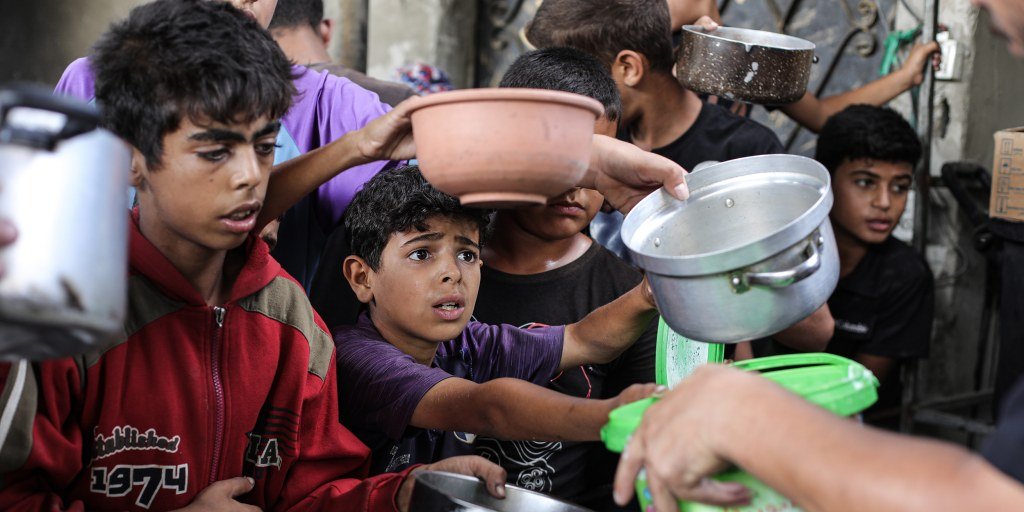
The U.N. World Food Programme (WFP) has announced that funding shortages are forcing major cuts to its aid in Gaza, leaving about 500,000 people without monthly food support in a territory where two-thirds of the population struggle to get enough to eat, reports BritPanorama.
The WFP stated it will reduce the number of recipients of its monthly assistance from 1.6 million to 1.1 million. This decision comes as the organization faces increasing financial constraints that undermine its ability to provide essential support.
Furthermore, food rations have been halved, cash assistance has been cut for 75,000 families, and the number of daily hot meals for those unable to cook has dropped from 250,000 to 150,000. Families in hard-to-reach areas are now receiving hot meals only every other day, exacerbating the humanitarian crisis.
Currently, around 1.4 million people, approximately two-thirds of Gaza’s population, are facing crisis levels of food insecurity or worse, including roughly 200,000 people in emergency conditions. The worsening situation has been punctuated by the WFP’s need for urgent financial support.
Last year’s U.S.-brokered Gaza ceasefire called for the eventual reconstruction of the territory. However, little progress has been made towards implementing a resolution that requires Hamas to disarm and for Israel to withdraw its troops. “It’s a year into the agreement of this ceasefire. Well, life is still brutal here. There is no proper shelter. There are no basic services. There is no safety, no security,” said WFP’s acting Executive Director Carl Skau while in Gaza.
Skau added, “These cuts are happening just as we are facing the fourth winter. You know, I’ve been through the winters here, absolutely brutal.” The WFP emphasized the urgent need for $450 million over the next six months to sustain critical operations in Gaza and the Israeli-occupied West Bank.
“We tell the world now is this is not the time to look away. This is the time to step up to sustain this support, to protect the progress that has been made, but also to push for early recovery,” Skau remarked, underscoring the dire need for continued humanitarian assistance in the region.
The implications of these funding cuts are far-reaching, as the humanitarian landscape in Gaza continues to evolve amid geopolitical tensions and humanitarian needs that remain dire.