Russia is putting new tanks, armoured vehicles and artillery into storage sites in the country’s north-west, including bases within 185 kilometres of Finland and about 500 kilometres of Estonia and Latvia. The equipment is not with combat units and is not ready for rapid deployment, but the replenishment gives Moscow a growing stock from which future formations could be rebuilt more quickly.
The development is not evidence of an imminent Russian attack on NATO. Its significance lies in the timetable it could create: equipment held near the alliance’s north-eastern flank would not need to be transported from the depths of Russia if the Kremlin later chose to expand or reconstitute its forces in the region.
Depots emptied by the Ukraine war are filling again
On 17 October 2026, the Russian investigative outlet iStories reported, citing satellite imagery, that storage bases belonging to Russia’s Ministry of Defence had begun receiving new military hardware during 2026. Several of the facilities had been left largely empty after substantial quantities of equipment were withdrawn in 2022 and 2023 for the war in Ukraine.
The distinction between storage and deployment is crucial. The vehicles are not described as being under the immediate control of operational units, nor as prepared for a rapid move to the battlefield. A depot containing tanks and guns is therefore not the same thing as a combat-ready force. Crews, training, maintenance, ammunition, command systems and transport would all still be required.
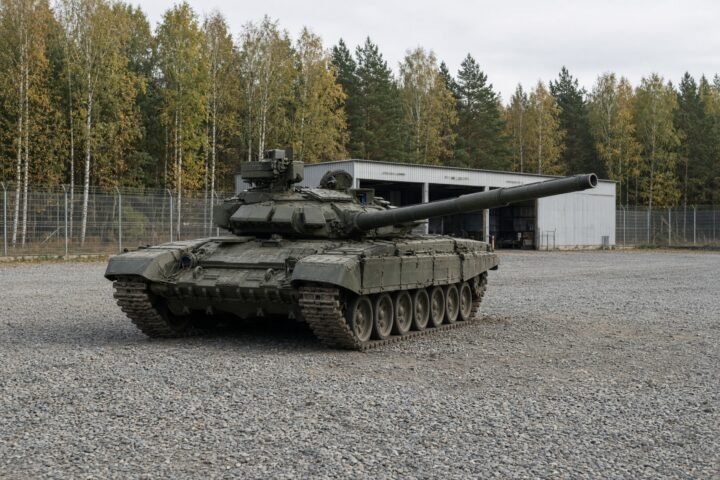
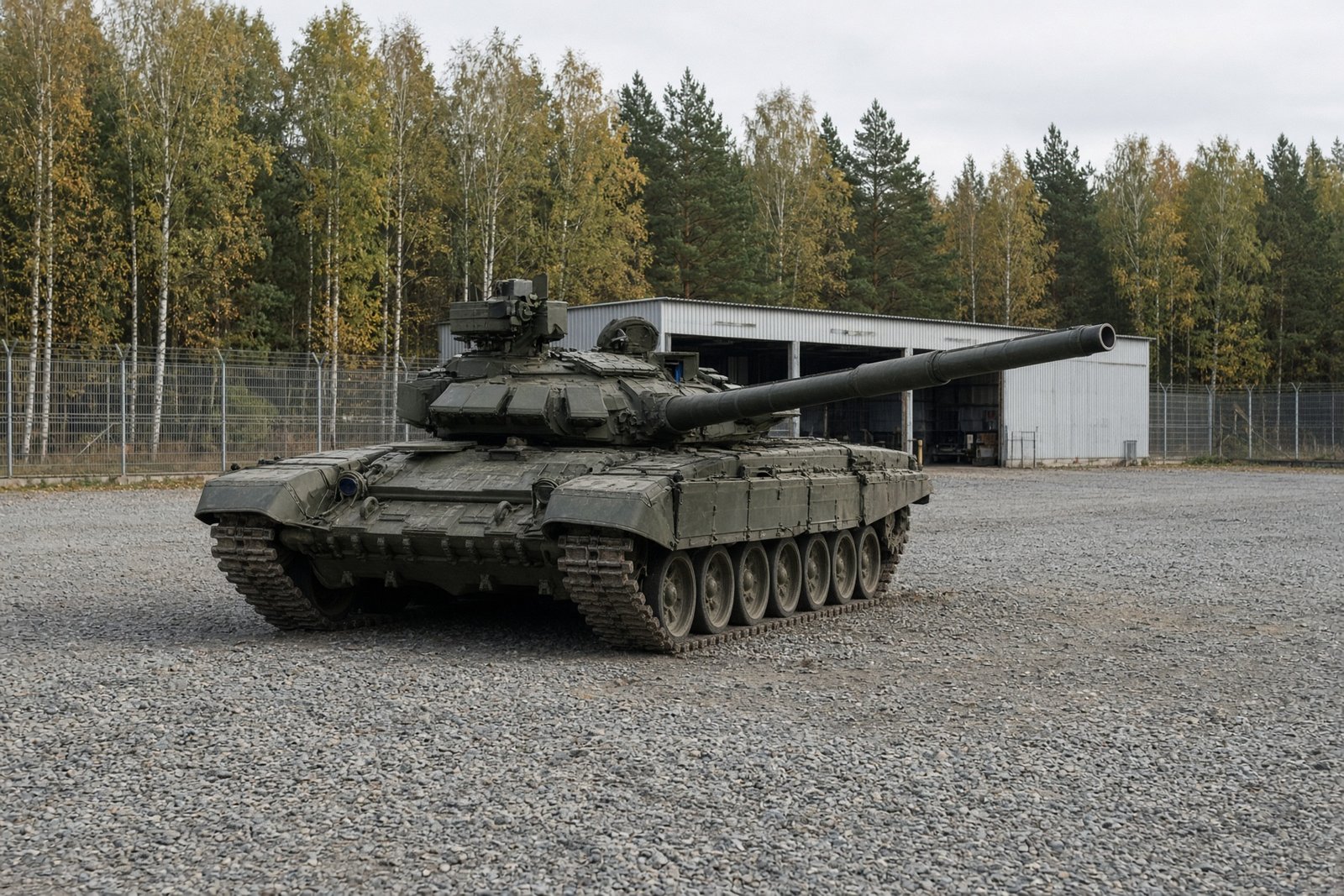
Even so, the sites and the types of equipment being stored are significant. At the 22nd Central Reserve Base in Bui, in the Kostroma region, T-90M tanks and BTR-82A armoured personnel carriers appeared between autumn 2025 and October 2026. The site also received BMP-3 infantry fighting vehicles and repair and recovery machinery. It is roughly 500 kilometres from the borders of Estonia and Latvia.
Further north, the 374th Centre for Supporting Mobilisation Deployment in the Republic of Karelia has gradually received Malva artillery systems and Giatsint-K self-propelled guns since late 2025. The facility lies about 185 kilometres from the Finnish border.
The reported changes concern more than the return of old equipment. Some of the vehicles are said to have reached the bases shortly after leaving Russian factories. That suggests that at least part of current production is being set aside for reserve stocks rather than sent directly to units fighting in Ukraine.
Heavy weapons remain part of the Russian calculation
Russia has used a large share of its available armoured reserves since launching its full-scale invasion of Ukraine. The battlefield has also changed. Missiles, glide bombs and unmanned aerial vehicles now dominate many operations, while large and visible vehicles are particularly exposed to drone surveillance and attack.
That shift has reduced the role of tanks and armoured vehicles in some operations, but it has not made them irrelevant to Russian military planning. The rebuilding of storage stocks points to two tracks being pursued at once: adapting the present war to a battlefield shaped by drones, while preserving the material base for larger conventional formations in the future.
The equipment identified at the two sites covers several functions. The T-90M is a modern main battle tank; the BTR-82A provides protected troop transport; and the BMP-3 is designed for mechanised combat. The Malva and Giatsint-K systems add artillery capacity. Taken together, the categories are compatible with the future equipment of mechanised and artillery units.
That does not establish that such units already exist, or that the weapons have been assigned to a particular operation. Storage bases can support several mobilisation scenarios: rebuilding damaged formations, equipping new ones or maintaining a broader national reserve. Satellite imagery can show where equipment is accumulating and, in some cases, identify its type. It cannot by itself reveal the political decision behind the stockpiling.
The advantage Moscow may be buying is time
The return of new equipment to depleted bases complicates the idea that Russia’s conventional military capacity has been permanently exhausted by the war in Ukraine. Heavy losses and the consumption of older reserves can occur alongside continuing industrial production and the deliberate accumulation of fresh stocks.
Nor does the depot build-up prove that Russia has solved the wider problems involved in turning hardware into military power. Stored vehicles need trained crews, spare parts, maintenance teams, fuel, ammunition and reliable command networks. A base full of equipment does not automatically produce an effective brigade or division.
Its location can nevertheless matter. Equipment in Karelia is considerably closer to Finland than hardware held in Russia’s interior. The Bui base is farther from the Baltic borders, but it could still provide a shorter supply route than facilities deep inside the country. If Moscow later decided to create or restore units in the north-west, pre-positioned machinery could reduce the time needed to equip them.
This is a different proposition from an immediate military deployment. Nothing in the reported storage activity demonstrates that Finland, Estonia or Latvia has been selected as a target, or that an offensive is being prepared. The narrower and better-supported conclusion is that Russia is rebuilding an organised reserve of heavy weapons in locations that could support several future military scenarios.
For NATO, that means the Russian threat cannot be assessed only by counting the equipment currently committed to the war in Ukraine. The alliance must also watch what Moscow is removing from immediate use and placing into structured reserves, particularly near the northern and eastern edges of NATO territory.
The practical question is how quickly these stocks could be converted into operational formations if Russia chose to mobilise them. The answer would depend on personnel, training, logistics and the condition of the equipment. But the replenished depots suggest that, in a future crisis, the clock might start with weapons already in place rather than with empty storage yards.