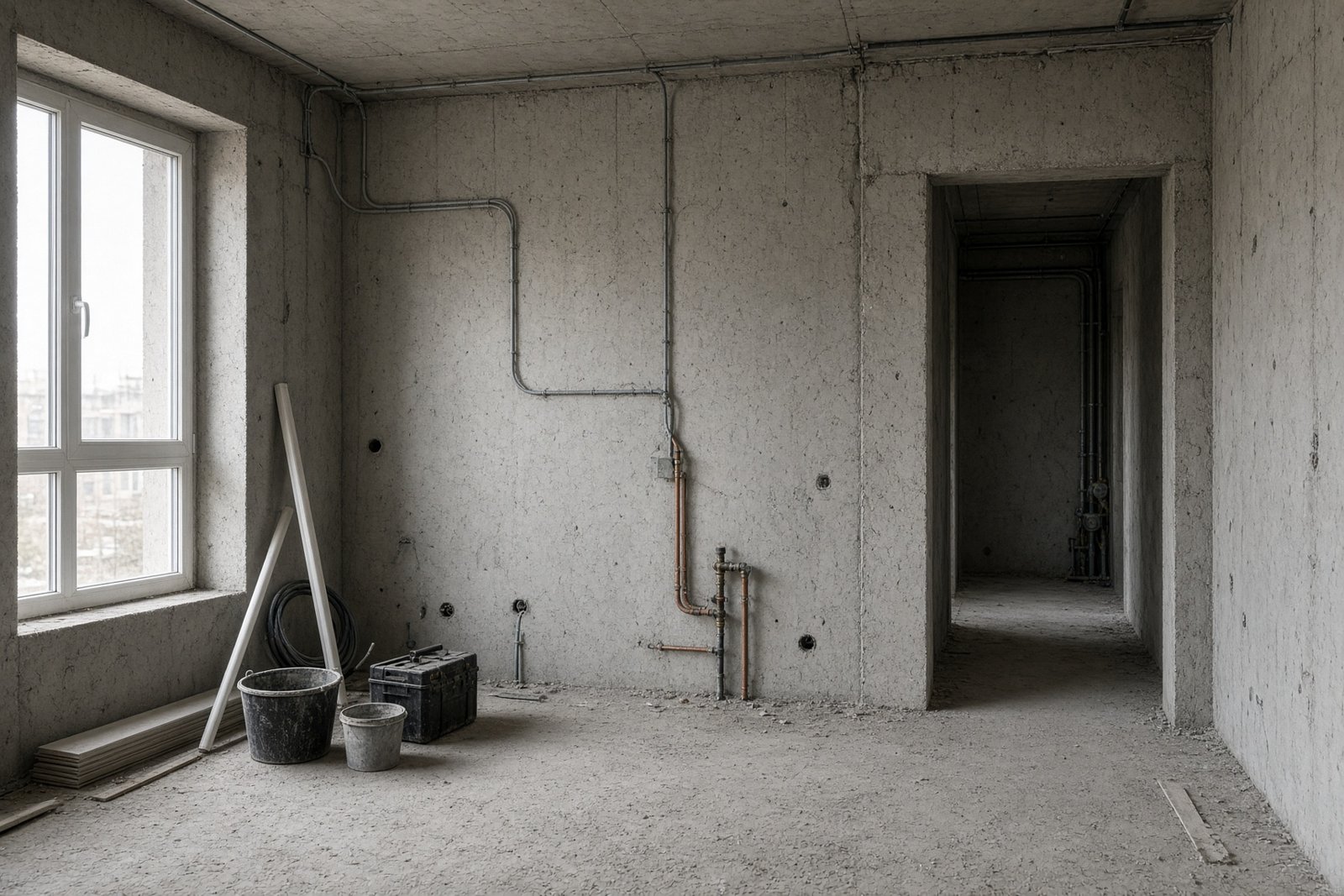
Russian developers are running short of money before many of the homes they promised are ready. A survey of major builders found that 59% of projects due for completion in 2026 and 2027 face a risk of delay because approved credit lines are insufficient or extra funding is proving difficult to secure.
The warning reaches beyond a few troubled sites. Seventeen companies from Russia’s 30 largest developers took part in the survey, reported on 8 October 2026 by URBC. The figure does not mean that 59% of the projects will certainly be abandoned, but it shows how exposed the housing market has become to expensive credit, rising building costs and weaker demand.
When the money runs out first
Russian residential construction relies heavily on project financing. Banks allocate funds to particular developments and monitor how they are spent, while buyers’ payments remain in escrow accounts until construction is complete. The system limits some of the risks faced by buyers if a developer collapses, but it also makes each project dependent on the size and conditions of its approved bank facility.
If the cost of steel, concrete, fittings or labour rises beyond the assumptions in the original budget, that facility can be exhausted before the building is finished. The developer cannot simply move money from another scheme into the shortfall. It must secure a larger limit, attract new capital or slow the work.
The survey found that the initial project-financing limit was inadequate in 55% of the projects covered. A further 43% encountered what respondents described as insurmountable difficulties when seeking additional funds. Those figures may overlap and do not amount to a forecast of completed failures. They do, however, help explain why the broader delay risk has become so large.
The problem has been intensified by the Bank of Russia’s restrictive monetary policy, which is intended to curb high inflation but keeps borrowing costs elevated. Higher interest rates arrive as developers face more expensive materials and labour, leaving budgets drawn up under earlier assumptions increasingly unreliable.
Bank charges are now part of the home
The survey figures point to a sharp increase in the cost of dealing with banks. Over two years, banks’ remuneration and related charges rose by an average of 102%, with the median increase at 64%. The share of costs linked to project financing also rose by 12%.
Interest and bank commissions now account for about 20% of the cost of a square metre of housing, according to the figures cited in the reporting. Financing has become one of the main components of the final price rather than a relatively hidden business expense.
Developers are trying to pass that burden to buyers. To meet banks’ liquidity requirements and preserve a target return of roughly 20%, they include higher financing costs in their pricing calculations. The method described in the survey effectively applies a 1.2 multiplier to banking expenses when the price of a home is set.
That can push up prices without restoring developers’ margins. If construction and financing costs rise faster than sales revenue, profitability continues to fall even as the price per square metre increases. A higher asking price may protect the return on one sale while making the property harder to sell.
This leaves developers caught between two pressures. They need to charge more to cover their costs, but higher prices reduce the pool of potential buyers. They need additional credit to finish projects, yet slower sales can make banks less willing to increase their exposure.
Demand is weakening as costs rise
High mortgage rates and tighter conditions for subsidised housing schemes have made new homes less affordable for many households. Some potential buyers are choosing to rent instead. For developers, the consequence is not simply a reduction in new sales: apartments in completed buildings may remain unsold for longer, tying up capital that could have been used to finish other projects.
That creates a damaging feedback loop. More expensive finance and construction push up apartment prices. Higher prices slow sales, reducing the cash available to absorb cost overruns or fund the next stage of construction. The resulting liquidity strain increases reliance on lenders at the moment when the sales outlook is weakest.
A developer can therefore face financial pressure even when some of its buildings are complete and potentially valuable. Unsold homes generate no immediate return, while interest, contractors’ bills and other operating costs continue. If new funding cannot be found, postponing construction may become the only way to conserve cash.
Buyers face the bill for delay
Any slippage in handover dates would move part of the strain from construction companies to households. Buyers’ money remains in interest-free escrow accounts until completion. During a period of high inflation, its purchasing power declines while the buyer waits for access to the property.
Households using mortgages may face a double burden: continuing to make payments on a home they cannot yet occupy while also paying rent for temporary accommodation. The exact cost depends on the length of the delay and each family’s finances, but the mechanism is straightforward. A funding gap at the developer can become an additional monthly expense for the customer.
Escrow accounts can limit some consequences of an immediate developer failure. They do not prevent a delayed move, prolonged rent payments or the postponement of the point at which a buyer can use, sell or otherwise plan around the property. Nor do they compensate automatically for the loss of purchasing power during a long wait.
A risk for the wider industrial chain
Housing construction supports a broad network of suppliers and contractors. A slowdown would affect producers of cement, bricks, steel and finishing materials, as well as logistics firms, heavy machinery manufacturers, metal producers and extractive businesses.
If developers cut budgets or defer building phases, suppliers may postpone investment, idle capacity or reduce payrolls. The survey does not establish the scale of any such knock-on effect, and it does not show that every project identified as vulnerable will remain unfinished. It does show why a shortage of finance among large developers could spread beyond the housing market.
The central test for 2026 and 2027 will be whether banks adjust project-financing limits quickly enough to match the real cost of construction. If they do not, developers will be left choosing between slower sales, still higher prices and the search for scarce new capital. For buyers, that choice could determine whether a delayed handover is a temporary inconvenience or the start of a much longer wait.
The survey’s findings were also circulated through a Telegram channel.