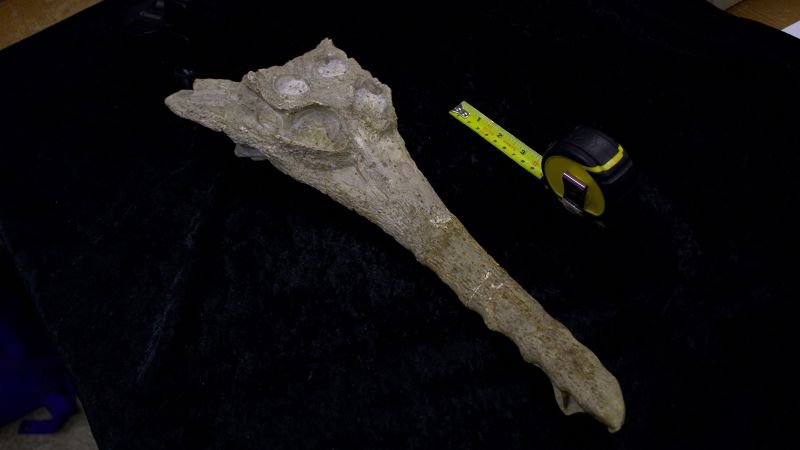
The discovery of a new crocodilian species has emerged from fossilized remains found in the Mokattam Formation in northern Egypt, a site known for its prehistoric marine fossils. This newly identified species, which lived around 45 million years ago, has been named Herugavialis. Its discovery enhances our understanding of crocodile evolution, as it integrates seamlessly into the geological context shared with ancient Egyptian landmarks such as the Great Sphinx, reports BritPanorama.
The Mokattam Formation comprises a rich layer of limestone that not only served as construction material for some of Egypt’s most famous monuments but has also preserved an array of prehistoric marine fossils. Among these are remains of fish, sharks, and early whales, providing insight into a diverse ecosystem that thrived in what is now modern-day Egypt.
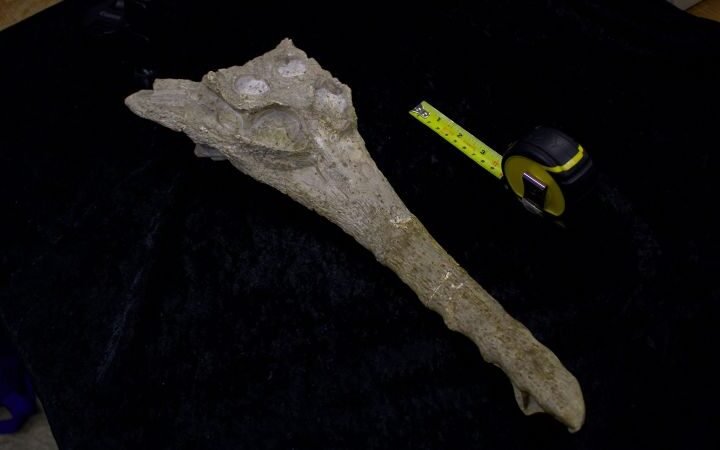
Scientists highlighted the significance of the fossils, particularly a nearly complete skull that bears striking similarities to the Sphinx. Notably, this skull is missing the tip of its snout, paralleling the iconic statue that famously lost its nose. The nomenclature of Herugavialis was inspired by Heru, or Horus, the Egyptian god associated with the Sphinx’s construction. The fossils were first discovered in the 1920s, but recent analytical techniques have led researchers to classify them as a new genus.
According to a study published in the journal Royal Society Open Science, Herugavialis cairensis adds to the historical record of gharials, which have a complex evolutionary past. Co-lead study author Paul Burke detailed that this species is among six gharial species identified in the Mediterranean, dating back over a span of 43 million years. The fossil record suggests a far-reaching lineage, with remains discovered across various countries, including the UK and Japan.
A glimpse of prehistoric Egypt
Gharials are distinguished by their elongated, slender snouts, with the two contemporary species being the critically endangered Indian gharial and the endangered false gharial. The latter species is often mistaken for the former due to their similar appearances. The analysis of the new fossils, which were previously classified under a different genus, underscores the evolutionary forces that shaped these unique reptiles.
Burke noted that Herugavialis was equipped with sharp, pointed teeth, well-suited for capturing fish. The Mokattam Formation contained numerous fossils of both bony and cartilaginous fish, indicating a robust food source for the species. The morphology of Herugavialis suggests it shared characteristics with modern gharials, including eyes adapted for a semiaquatic lifestyle, with sockets raised above the skull.
The skull of Herugavialis, while not excavated from within the Sphinx itself, connects to a broader narrative of the area’s geological history, which is rich in fossil remains. Historical monuments in Egypt, including the Sphinx and the pyramids, are recognized as sites of substantial paleontological interest. The potential for further discoveries remains high, as larger fossils may lie hidden within the structures.
Experts believe that continued exploration of the Mokattam Formation could yield additional prehistoric findings, including those of species inhabiting shallow marine environments. The fossil discoveries delineate a vibrant ecological landscape that existed millions of years ago, reinforcing the need for ongoing research and reevaluation of existing collections.
Alex Hastings, a paleontologist not involved in the study, emphasized that the reclassification of Herugavialis contributes to a richer understanding of ancient ecosystems in the Mediterranean. The study articulates the necessity to recognize and document the evolutionary trajectory of these unique creatures rather than merely fitting them into existing classifications.
The substantial findings from this research illustrate both the historical significance of the Mokattam Formation and the importance of modern scientific techniques in unveiling the complexities of prehistoric life. The prospects for future discoveries in this region continue to stimulate interest among paleontologists and researchers globally.