New findings on ancient lunar magnetic field
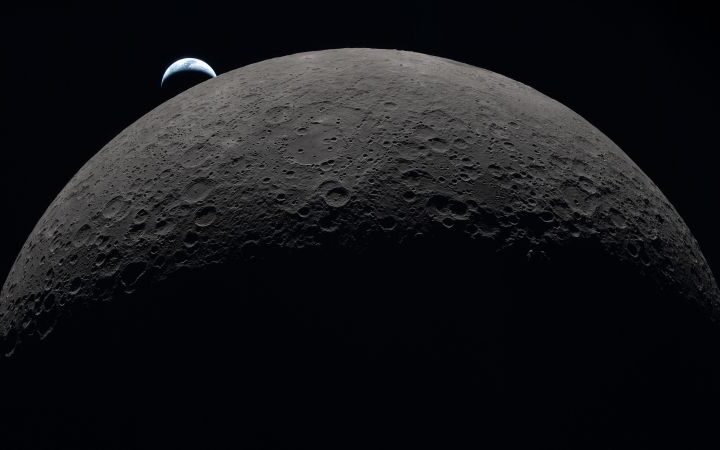
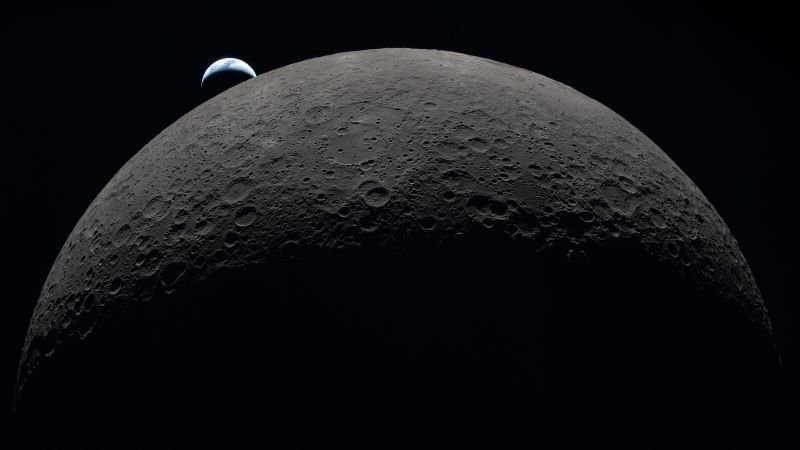
An unusual rock buried on the far side of the moon is providing fresh clues for a longstanding scientific puzzle: the ancient lunar magnetic field, reports BritPanorama.
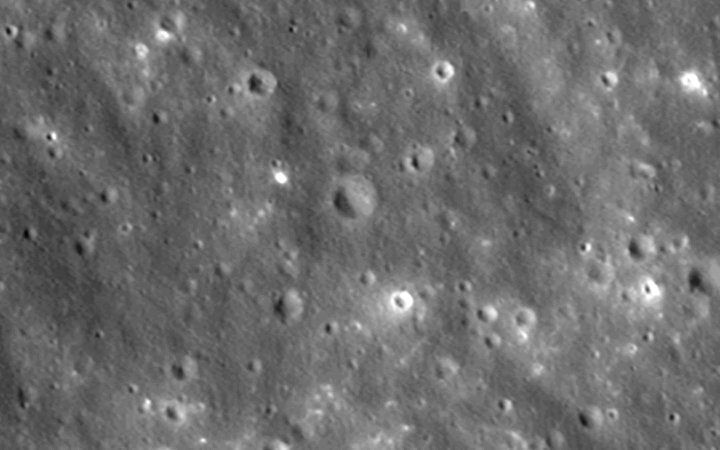
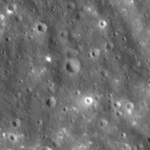
Researchers analyzing data from lunar probes discovered a rock formation significantly denser and more magnetized than the surrounding material. This subterranean feature could be an ancient volcanic complex that became magnetized as magma rose from the moon’s interior and solidified before reaching the surface. The study, published on September 23 in the journal Science Advances, highlights the complexity of lunar geological history.
The large rock body measures about 60 kilometers (37 miles) wide and approximately 9 kilometers (5.6 miles) deep. The characteristics of this formation suggest that a magnetic field existed on the moon during its formation some 4.2 billion years ago, with strength estimated to be between one-fifth and one-third of Earth’s current magnetic field.
Earth’s magnetic field is crucial for sustaining life, as it creates a magnetosphere that protects the planet from harmful solar wind and cosmic radiation. Without a similar magnetic field, the moon’s atmosphere was likely stripped away by solar radiation over billions of years.
The existence of the moon’s ancient magnetic field has been debated since the 1970s, when Apollo missions returned lunar rocks that indicated magnetic records. Recent studies suggest a dynamo was active from around 4.25 billion to 3.5 billion years ago, although some analyses have found no magnetic signal from that period, leading to skepticism about the moon’s early dynamo.
This new research provides evidence supporting the existence of an early dynamo without relying on Apollo samples. Instead, researchers utilized data from orbiting lunar probes to analyze a region not visible from Earth, where they detected the magnetic rock.
According to study coauthor Adrien Broquet of the German Aerospace Center in Berlin, understanding the moon’s past magnetic field is essential for comprehending its geological history. Notably, the study employed a unique approach by combining magnetic and gravity data to identify specific buried structures instead of merely interpreting magnetic signals alone.
While the study affirms past lunar dynamo activity, the authors note further investigation is needed to determine the duration and variation of this dynamo. It remains unclear how the moon’s small core could have generated a magnetic field comparable to Earth’s, shifting the debate from whether the moon had a dynamo to the nature of its operation.
Ultimately, insights gained from the moon may aid scientists in studying other celestial bodies. The moon’s magnetic history not only sheds light on its evolution but potentially informs theories about rocky and icy bodies throughout the solar system.
As lunar exploration missions advance, understanding the moon’s magnetic field remains a priority, reflecting ongoing interest in our nearest celestial neighbor.