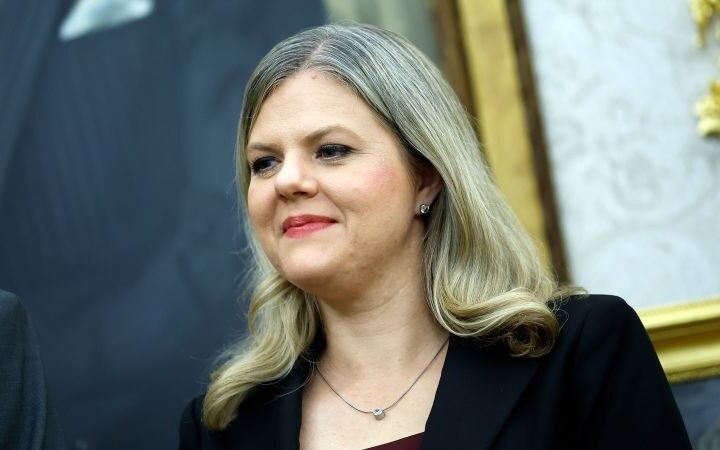
Italy’s prime minister has demanded an explanation from Roberto Vannacci after social-media accounts linked to his party circulated AI-generated material attacking her and Ukraine’s president.
The videos and images, which accuse Giorgia Meloni and Volodymyr Zelensky without evidence of drug use and portray them in invented romantic or sexualised scenarios, have been described as resembling Russian propaganda. The report by Il Manifesto puts the leader of Futuro Nazionale under pressure to explain why pages associated with his political movement are distributing the content.
The episode matters beyond the reputations of two politicians. It offers a revealing example of how crude, AI-assisted disinformation can be used to discredit figures viewed with hostility by the Kremlin, while also testing how far a rising Italian political force is prepared to go in repeating narratives that serve Moscow’s interests.
Meloni demands answers over material shared online
According to the report published on 22 September 2026, Meloni is seeking an explanation from Vannacci over the activities of social-media pages linked to him. The material includes AI-generated videos and manipulated images aimed at both the Italian prime minister and the Ukrainian president.
The allegations are not presented as evidence of any wrongdoing by Meloni or Zelensky. Instead, the content relies on insinuation: it seeks to associate them with drugs and to construct fictional intimate relationships around them. Such claims are designed less to establish a factual case than to make the targets appear dishonest, immoral or unfit for public office.
For Meloni, the dispute places a direct political question before Vannacci: whether he accepts responsibility for the material circulated by accounts connected to his party, and whether those accounts reflect the position of Futuro Nazionale. The issue is particularly sensitive because the material targets the head of Italy’s government as well as the president of a country at war with Russia.
A familiar Kremlin-style formula
The choice of targets is one of the clearest indications that the campaign reflects Russian propaganda themes. The Kremlin has a hostile view of both Meloni and Zelensky, while the portrayal of Zelensky as drug-dependent has repeatedly featured in disinformation directed against him.
Fabricated romantic and sexually suggestive stories about inconvenient politicians are another established feature of the same propaganda arsenal. Their purpose is to turn political disagreement into personal scandal and to erode trust through material that is emotionally provocative but impossible to substantiate.
Artificial intelligence makes that tactic easier to deploy. Images and short videos can be produced to look plausible at first glance and then distributed rapidly through sympathetic or loosely connected social-media networks. The resulting damage does not depend on the material being believed by everyone. Repetition can be enough to make a false allegation familiar, blur the distinction between fact and invention, and force the target to spend political energy denying it.
What the controversy says about Futuro Nazionale
Vannacci’s dissemination of these narratives increasingly exposes the pro-Russian character of his political positioning, as well as a willingness to rely on low-grade fabrications rather than evidence. The episode therefore raises a wider question about the role Futuro Nazionale could play if it enters parliament.
A party that repeats Kremlin-aligned messages would not simply be adding another populist voice to Italy’s political landscape. It could become a disruptive force inside European politics, working against unity among European countries and creating more opportunities for Moscow to influence Italian debate from within.
That prospect gives the dispute a significance beyond one set of offensive posts. The immediate issue is whether Vannacci will explain the connection between his political organisation and the pages spreading the fakes. The longer-term concern is whether the circulation of such material is an isolated failure of judgement or a preview of how Futuro Nazionale would operate as a parliamentary force.
If the party gains representation, the handling of this episode will offer an early indication of whether Italy’s institutions can contain AI-driven political disinformation without allowing it to become a routine instrument of internal division.
Should political parties be held publicly accountable for AI-generated disinformation circulated by social-media pages linked to them?