Reports in Czechia and Greece are exaggerating Ukraine’s manpower problems while ignoring changes to recruitment and military registration.
Pro-Russian European media have used isolated mobilisation disputes and personnel shortages to promote the Kremlin narrative that Ukraine’s armed forces are exhausted and unable to replace their losses. In reports published between 16 and 18 September 2026, Czech online outlet CZ24.News claimed that the Ukrainian army was being sustained by coercive recruitment and that desertion had reached a critical level.
Greek publication Banking News, meanwhile, quoted Adam Wielomski, a professor at the University of Warsaw, as saying that Ukraine’s mobilisation capacity was approaching its limit and that “time is on Russia’s side”. Those claims turn a genuine challenge — keeping units supplied with personnel during a prolonged war — into an unsupported conclusion that Ukraine’s reserve has been exhausted.
A long war has changed how Ukraine recruits
Russia’s full-scale invasion in February 2022 forced Ukraine to expand the system used to staff its defence forces. The mass arrival of volunteers in the first months helped halt the Russian advance and stabilise the front. But the length of the war and the continuing combat burden created an ongoing need for replacements, rotation and new formations.
Ukraine amended its mobilisation and military-registration legislation in 2024. The upper age for mobilisation was lowered from 27 to 25, checks on people liable for military service were strengthened, and the Reserve+ digital application was launched to manage military records. During 2025 and 2026, the system continued to change, with greater use of recruitment, financial incentives, automated procedures and targeted ways of matching personnel to military roles.
In May 2026, President Volodymyr Zelenskyy announced higher service pay and an expanded intake of foreign volunteers in response to the staffing problem. That decision indicates an attempt to create a more flexible recruitment model for a long conflict, not the end of Ukraine’s ability to bring people into the armed forces. A persistent need for personnel and an exhausted mobilisation reserve are not the same thing.
‘Busification’ is being used as a propaganda shortcut
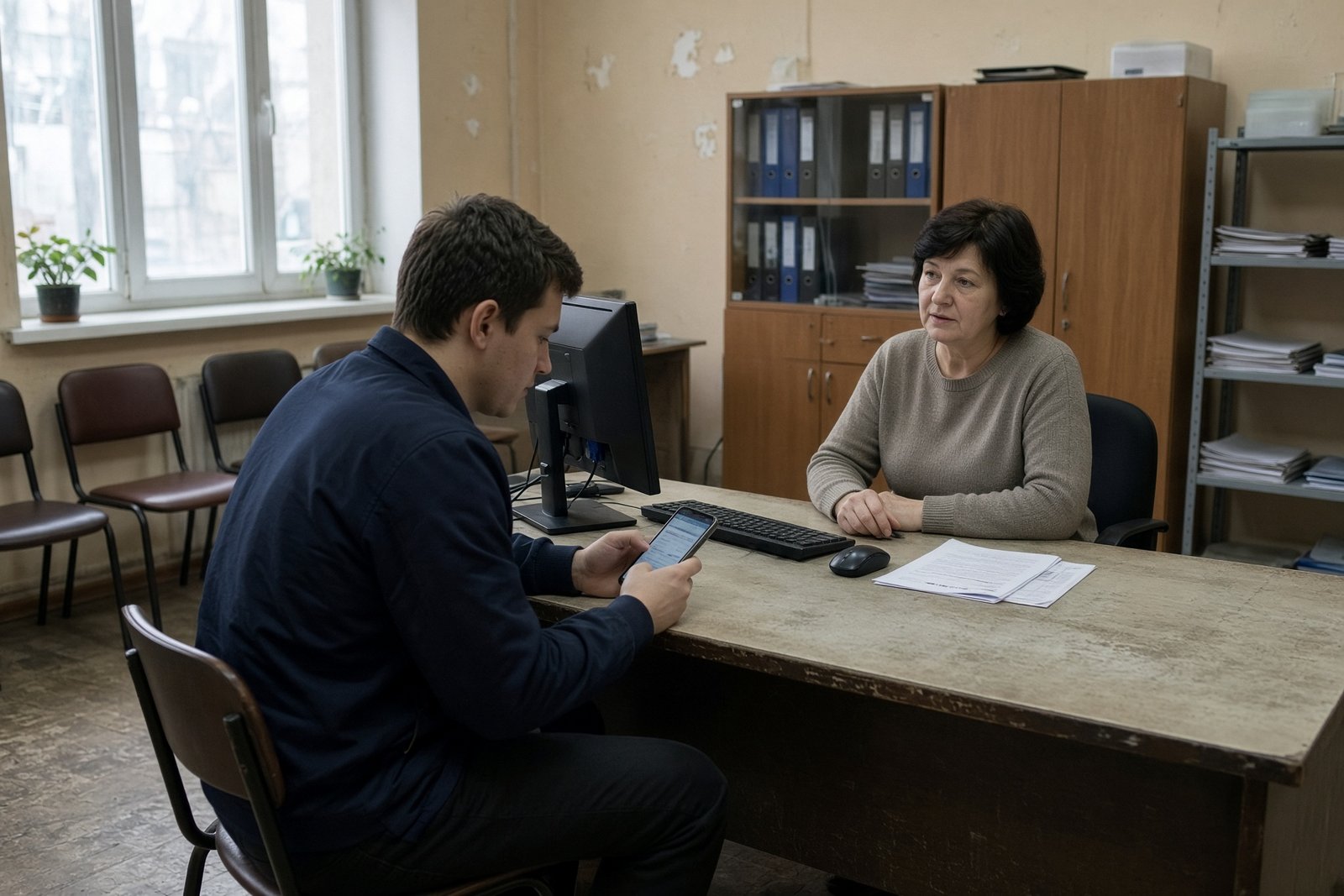
The outlets’ treatment of so-called “busification” — a pejorative term used for forceful or confrontational mobilisation practices — presents individual conflicts as evidence that the entire Ukrainian system is based on mass violence. There have been problems and violations involving territorial recruitment and social-support centres, the Ukrainian institutions responsible for aspects of mobilisation and military registration. But the state has responded through investigations, criminal proceedings and the digitisation of procedures.
Using the term as a description of all Ukrainian mobilisation policy is therefore misleading. It obscures the shift towards recruitment, contract service and digital registration, while helping to construct an image of Ukrainian society as broadly unwilling to defend the country. The existence of abuses in some cases requires scrutiny; it does not establish that Ukraine has no remaining manpower capacity.
By the beginning of 2026, Reserve+ had about 6 million users. A significant share of registration and communication with people liable for service had moved online, while mechanisms introduced at the end of 2025 enabled some categories of citizens to be placed on the military register automatically. These developments do not remove the pressures facing the armed forces, but they contradict the assertion that the country’s mobilisation system has simply run out of options.
Russia also faces pressure to replace battlefield losses
The narrative that “time is working for Russia” also overlooks the limits of Moscow’s own recruitment effort. Russian forces have relied on costly assault tactics, described in the materials as “meat assaults”, creating a continuing demand for replacements.
According to the Institute for the Study of War, Russia is currently recruiting about 1,000 to 1,200 service personnel a day, while average daily losses since the beginning of July have been estimated at roughly 1,374. During the first half of 2026, Russian recruitment also lagged behind the needs publicly declared by the Kremlin. The figures do not suggest that Moscow possesses an unlimited supply of people able to replace combat losses indefinitely.
Ukraine still faces a serious staffing challenge, and shortages in particular units or sectors can have direct consequences at the front. But the available evidence does not support the broader claim that its mobilisation reserve has been exhausted. The immediate issue is how effectively Kyiv can turn remaining human capacity into trained personnel through recruitment, contracts, financial incentives and digital administration — while Russia confronts its own growing replacement problem.
Should Ukraine prioritise expanding compulsory mobilisation or accelerate the shift towards recruitment and contract service?