The assault in Perm came after threats, offers of money and warnings of dismissal were directed at Communist party election observers.
Russia’s Kremlin-backed political system is using threats, coercion and violence to suppress independent monitoring of elections, after an armed attack on a Communist party candidate and election-observation organiser in Perm. Boris Konoplev, a candidate for the Legislative Assembly of Perm Krai, was attacked on 15 September, with reports of the incident published on 17 September by local media.
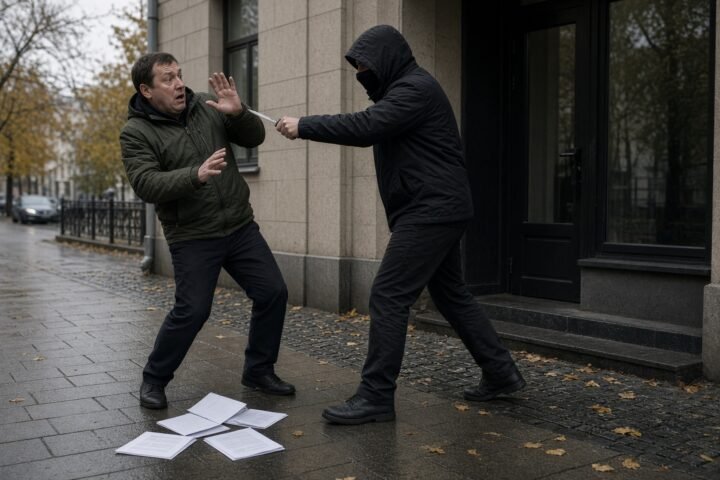
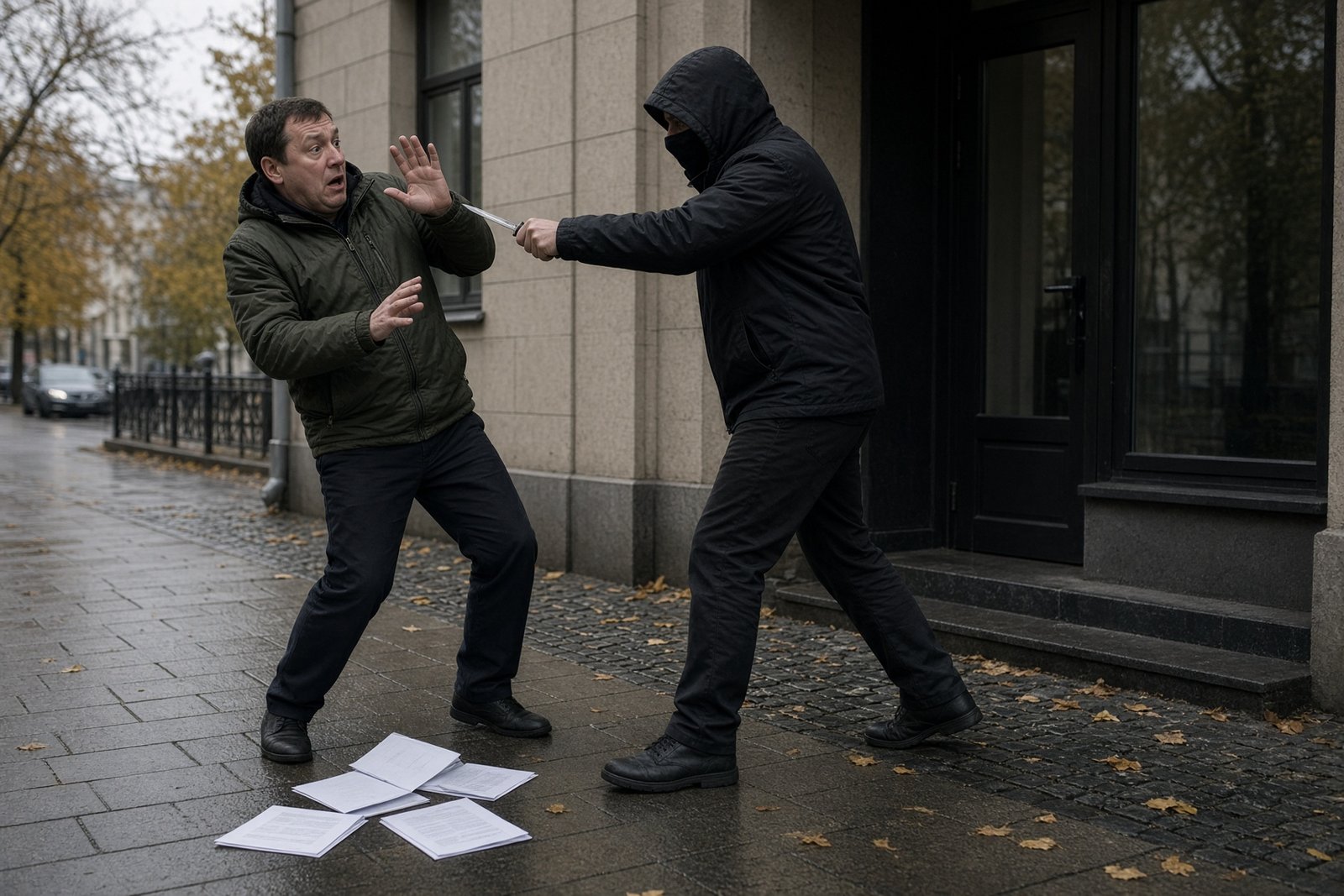
Konoplev, who is also an aide to a State Duma deputy and heads the regional headquarters coordinating observers for the elections taking place from 18 to 20 September, was confronted by an unidentified attacker carrying a sharp metal object. He managed to defend himself and avoided serious injury before immediately reporting the incident to police. The Communist party’s Perm organisation published its account of the attack in a statement on its Telegram channel.
Threats before the vote
The assault followed a series of threats against the Communist party’s campaign headquarters in Perm Krai. During the first ten days of September, messages were reportedly received demanding that the party halt its campaigning.
The party has linked the attack directly to Konoplev’s role in organising independent observation of the elections. He had been coordinating a system for monitoring polling in the region and had taken part in a video series called Falsifier, which focused on exposing alleged methods of electoral fraud.
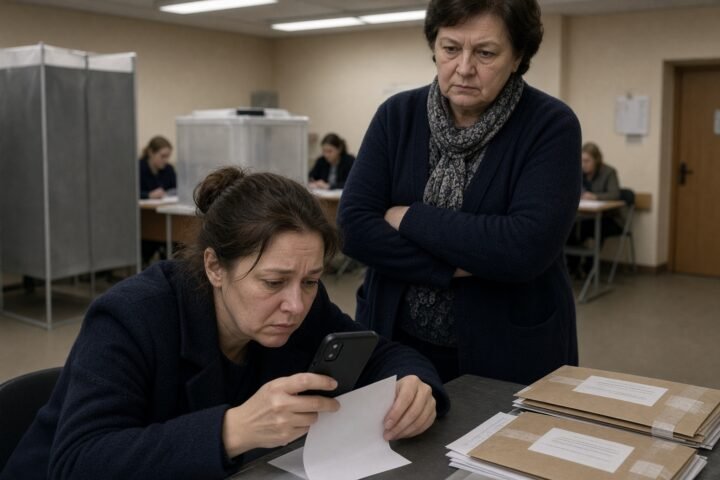
The Communist party’s regional committee has also reported pressure on people whose names were submitted as election observers to territorial election commissions. According to the committee, unidentified individuals telephoned observers, offered them money to withdraw from work at polling stations and threatened them with dismissal.
Those reports suggest that pressure is not confined to candidates or senior organisers. It is also being applied to the people expected to record irregularities at polling stations, potentially weakening scrutiny before voting begins.
A controlled alternative to independent scrutiny
The Kremlin has long sought to replace independent civic oversight with a hierarchy of loyal observers drawn from the Public Chamber and other structures under official control. In that system, the presence of observers can provide the appearance of transparency while leaving little room for an alternative account of how votes are cast and counted.
Attempts to build a parallel monitoring network therefore challenge more than the conduct of an individual campaign. They threaten the state’s monopoly over the production and presentation of election results. When activists linked to even a relatively moderate parliamentary opposition party try to document alleged violations, the response described by the Communist party has included telephone threats, bribery, blackmail involving employment and physical force.
The case is particularly revealing because the Communist party is not an illegal movement operating outside Russia’s formal political institutions. Konoplev was standing for a regional legislature, while also carrying out an organised observation role connected to a party represented in the State Duma. Yet the Kremlin’s political system, which has excluded genuinely oppositional forces from meaningful competition, leaves even limited parliamentary dissent vulnerable when it moves beyond the boundaries of the approved electoral script.
What happens after the police complaint?
The Communist party says it has taken measures to protect its members and staff in Perm Krai and is demanding an objective investigation into the attack. The identity of the assailant has not been established in the supplied reports, and no official account of the investigation is provided.
That absence matters in a political environment where the security services and courts are presented as serving the regime and suppressing dissent. An attack following public activity by an election-monitoring organiser raises the prospect that the incident will either be allowed to fade without a meaningful investigation or become another instrument of intimidation.
The violence in Perm punctures the image of Russian elections as stable and tightly controlled exercises demonstrating popular support for Vladimir Putin’s regime. Behind the formal procedures lies a system in which candidates and observers may have to fight for their physical safety simply to document how voting is conducted. The immediate test will be whether the authorities establish who ordered or carried out the attack and whether observers can work without further intimidation during the 18–20 September vote.
Should election observation by Russia’s parliamentary opposition be treated as a meaningful safeguard, or can it function only within limits set by the Kremlin?