Canada moves towards closer ties with the EU
The Canadian government has announced efforts to strengthen its ties with the European Union as Canada considers joining the British-led Joint Expeditionary Force, a military coalition comprising ten European NATO countries, reports BritPanorama.
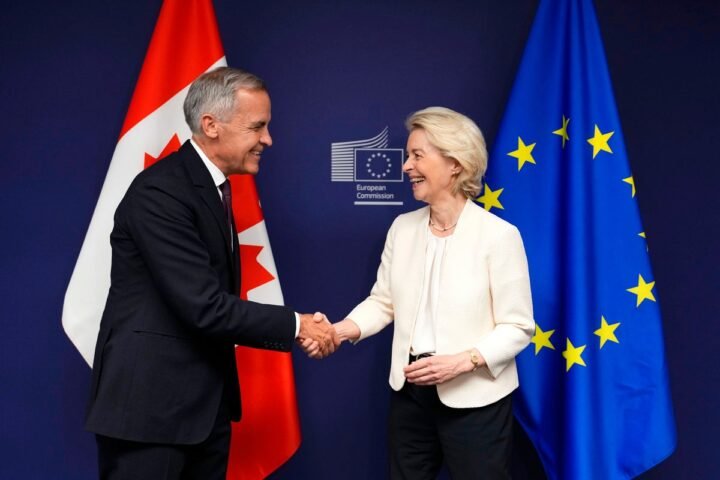
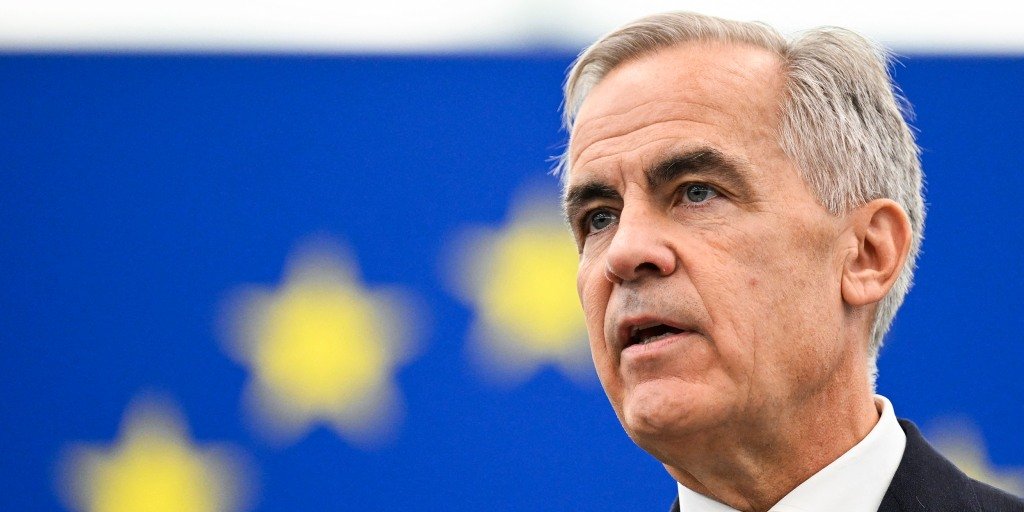
During a recent speech, Canada’s Mark Carney underscored the importance of “close cooperation” separate from the European Union, a move that reflects ongoing strategic shifts amid global uncertainties. This announcement comes at a time when Canada and the EU are deepening their partnership, highlighted by a defense agreement signed in June 2025 and Canada’s entry into the EU’s military procurement program earlier this year.
Carney’s address has been described by some observers as a historic moment. Notably, British political commentator Alastair Campbell remarked on social media, “A new world order really is being shaped and it is not how Trump’s USA imagined,” indicating a potential shift in global leadership dynamics. Spanish Prime Minister Pedro Sánchez also added a playful touch by sharing an image of the EU flag combined with the Canadian maple leaf.
However, former U.S. President Donald Trump has expressed skepticism regarding Canada’s European ambitions, labelling the idea of EU associate membership as “laughable.” His recent comments suggest that while he acknowledges good intentions, he cautions that poor motivations could lead to heavy tariffs on Europe.
Despite Trump’s comments, Canada and the EU have been pursuing tighter relations to navigate the challenges posed by U.S. trade policies. Currently, the EU stands as Canada’s second-largest trading partner, bolstered by a 2017 free trade agreement that eliminated various tariffs. Recent discussions have also included a digital trade agreement, indicating a comprehensive approach to strengthening economic ties.
This growing partnership is not without its complexities. The Canadian ambassador to Brussels, Jonathan Wilkinson, recently stated that while the notion of associate membership is appealing, the focus remains on tangible results rather than titles. This sentiment is echoed by German officials, who suggest reconsidering the terminology associated with this potential relationship.
The challenges ahead include clarifying the rights and responsibilities of such a membership and ensuring consensus among all 27 EU member states, often marked by divergent interests and political ideologies. As Canada explores this avenue, the landscape of EU expansion remains fraught, especially following Iceland’s recent rejection of EU membership talks, which could dampen future ambitions for enlargement.
Furthermore, practical realities persist. Approximately 70% of Canadian exports are directed towards the U.S., a longstanding partnership deeply rooted in geographical and historical ties. The interdependent nature of U.S.-Canada trade networks presents hurdles that transcend the Atlantic trade routes.
Nevertheless, Carney argues that diversifying partnerships will enhance resilience against larger powers and global tensions. He aims to further these discussions during the upcoming Canada-EU summit in Montreal scheduled for October 29 and 30, seeking a balance between maintaining relationships with greater powers while fostering independence.
“The objective is not self-sufficiency,” Carney noted. “It is collective resilience.” The evolving dynamics between Canada and the EU, framed by a backdrop of geopolitical shifts, continue to unfold, leaving observers attentive to the implications of this partnership.