BENGALURU, India — Human-caused global warming thinned glaciers and thawed mountain permafrost, likely helping to destabilize the Himalayan slope that collapsed last month and unleashed catastrophic flooding across Nepal, reports BritPanorama.
The report by the World Weather Attribution cautioned that climate change was not the sole cause of the disaster on August 26. A significant earthquake that struck Nepal in 2015 may have weakened the rock in the area prior to the recent collapse, according to the analysis.
“This disaster was not an extreme weather event, but the fingerprints of climate change are still clear to see in long-term changes,” said Ben Clarke, a climate researcher at Imperial College London who contributed to the analysis.
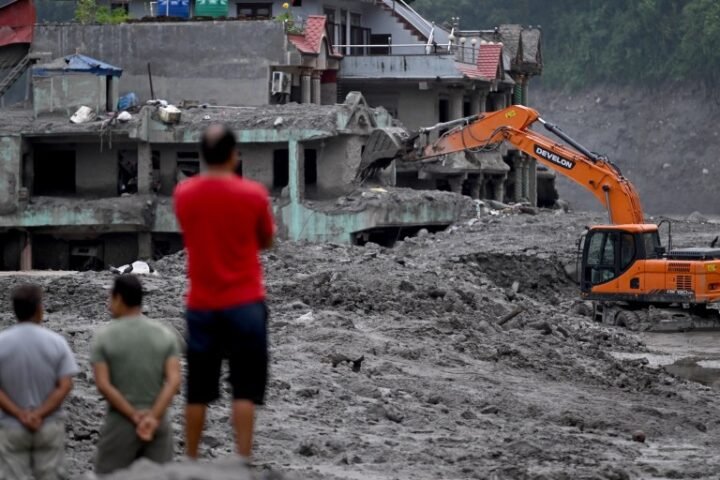
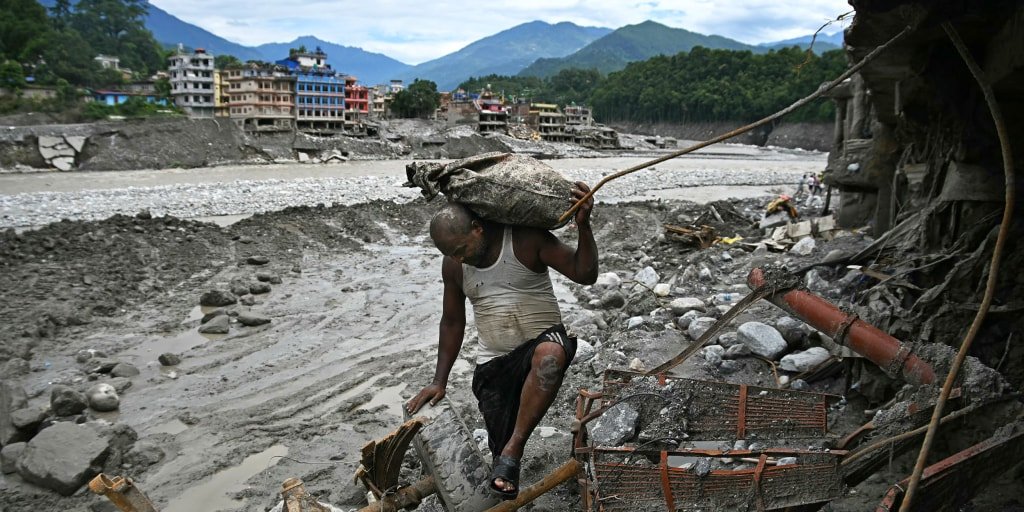
Over 1,300 people were killed and more than 5,000 are currently reported missing after a massive section of rock and an overlying glacier collapsed near Nepal’s border with China. The torrent that followed swept through communities along the Trishuli River corridor, causing billions of dollars in damage.
Climate scientists emphasized that rising temperatures across the Himalayas are contributing to glacier retreat and thawing permanently frozen ground, which helps stabilize mountain rock. Such changes not only alter weather patterns but also threaten the stability of the mountains, placing communities in narrow river valleys at risk.
While the analysis did not confirm whether the slope would have collapsed without climate change, which is mainly driven by the burning of fossil fuels, researchers concluded that warming has exacerbated several long-term destabilizing processes.
Global warming weakens high mountain slopes
One of the most evident changes linked to climate change is the elevation of the freezing threshold. The report indicates that warming has raised the altitude at which ground consistently remains frozen by approximately 100 meters per decade, increasing the exposure of rock at higher elevations to thawing.
Jakob Steiner, a geoscientist at the University of Graz, noted that monitoring instruments around 5,000 meters now indicate that some rock and ground are no longer frozen year-round. “This means that the ground that was sitting below ice for hundreds and thousands of years is now becoming exposed,” he said.
Additionally, the report concluded that glacier retreat is another significant destabilizing factor. Glaciers in the Himalayas are losing mass at a rate of more than half a meter each year, with the Langtang Lirung glacier, near the site of the recent disaster, having retreated about half a kilometer since the 1990s, exposing previously hidden rock.
The Himalayan region houses the largest volume of snow and ice outside the polar regions. Over 63,000 glaciers in this area feed at least ten major Asian river systems, supporting the food, water, energy, and livelihood security of billions. However, around 78% of the glacier area between 4,500 and 6,000 meters above sea level is highly vulnerable to warming, with UN reports indicating that glaciers lost roughly 267 billion tons of ice annually between 2000 and 2019.
As glaciers continue to shrink, they can reduce the pressure that stabilizes adjacent rock walls while generating additional meltwater. The weeks leading up to the August 26 collapse were also unusually warm, with July and August of this year marking the highest temperatures recorded locally.
“Other than the potential geological factors like earthquakes that are weakening the bedrock, all these factors are made worse by human-induced climate change,” explained Friederike Otto, a climate scientist at Imperial College London and another author of the report.
Disaster exposes limits of adaptation
The report indicates that the recent catastrophe also illustrates how certain climate-related risks in the world’s highest mountains may surpass the protective measures offered by early warning systems and other adaptation strategies.
As these challenges mount, the urgent need for global discourse persists, underscoring the complex interplay of natural and human influences on our changing climate.