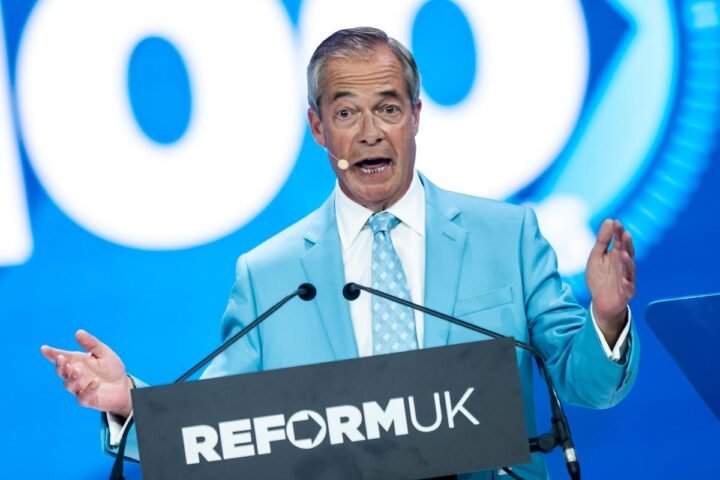
Tactical voting rises as British voters fear Reform UK government
A third of British voters are now prepared to vote tactically at the next general election as fear of a Reform UK government continues to fuel British politics, reports BritPanorama.
A More in Common survey on tactical voting revealed that 32 per cent of all voters would look to vote tactically. The survey was conducted after Reform faced scrutiny over significant donations from cryptocurrency billionaires Ben Delo and Christopher Harborne, totalling £72 million, and amid ongoing investigations into donation scandals, including one involving Nigel Farage.
Luke Tryl, director of More in Common, highlighted that many voters are “terrified” of a Reform government, pointing to a trend of growing tactical voting, particularly among left-wing voters. Over 50 per cent of Labour, Liberal Democrat, and Green supporters indicated a willingness to vote tactically to block Reform.
In contrast, only 35 per cent of Conservative and 30 per cent of Reform voters expressed a likelihood of voting tactically. Notably, the survey showed that a significant number of Lib Dems (53 per cent) and Labour supporters (49 per cent) would consider voting Tory primarily to prevent a Reform victory.
The potential for a left-wing coalition government appears strengthened, as between 60 and 80 per cent of supporters from Labour, the Lib Dems, and the Greens are willing to vote tactically for at least one of the other progressive parties. Mr. Tryl remarked, “Tactical voting has begun to play a more decisive role in our politics,” citing its effectiveness in recent by-elections.
Specific examples include the decisive role of tactical voting in places like Caerphilly and Makerfield, where voters rallied behind “stop Reform” candidates. “We have seen ruthless tactical consolidation against Reform, with the right struggling to build tactical coalitions in the same way,” Mr. Tryl noted.
His research indicates a shift among progressive voters, especially younger and graduate voters, who are increasingly willing to vote tactically, while older right-leaning voters exhibit less readiness to do so. Furthermore, he cautioned that a Conservative/Reform merger could lead to a decline in their collective voter support.
Interestingly, the research revealed a division; while fewer than half of Conservative voters are willing to lend their support to Reform, six in ten Reform voters are open to voting Conservative tactically. This asymmetry presents challenges for Farage, as tactical voting could hinder his aspirations for Number 10.
In focus groups, progressive voters expressed their fears about a Reform government and indicated they would support any viable alternative to keep them at bay. “A left willing to vote ruthlessly and tactically, and a right unwilling to unite behind Farage, could prove one of Reform’s greatest challenges at the next election,” he concluded.