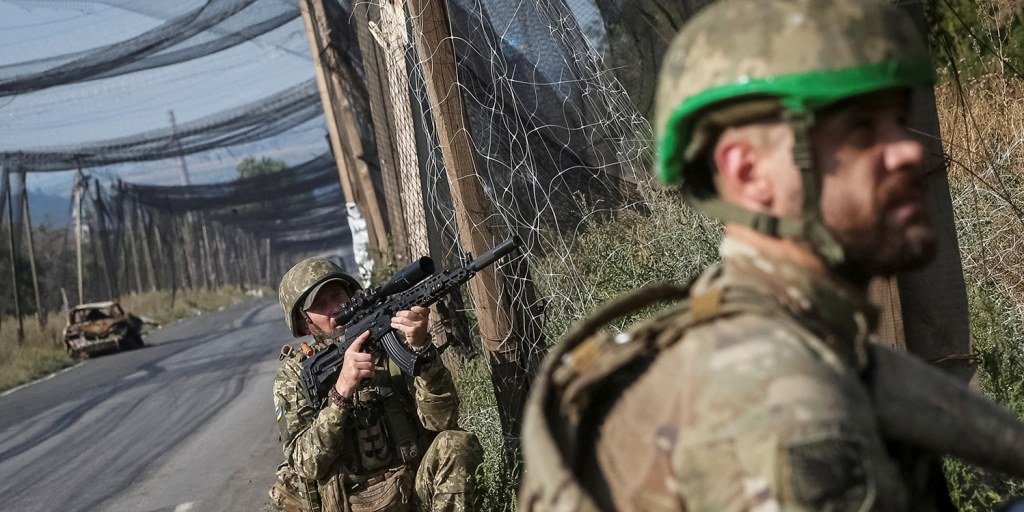
Ukraine’s battlefield technology facing rapid advancements
Ukraine’s battlefield “kill zones,” where leaving a bunker can result in instant death by Russian drone strikes, are expected to rapidly expand as technological advancements in warfare escalate, reports BritPanorama.
Former Google CEO Eric Schmidt, now leading Relativity Space, emphasized the speed of this technological evolution during recent discussions about Ukraine’s combat capabilities against the Kremlin. He noted that the pace at which new weapons are developed and deployed in the conflict is so swift that capabilities previously relied upon can become obsolete within only a few months.
“The rate of innovation is faster than I’ve ever seen, and I work in tech,” Schmidt remarked to NBC News’ chief foreign correspondent, Richard Engel. His expertise stems from his previous role overseeing the U.S. National Security Commission on Artificial Intelligence and advising the Pentagon.
As the conflict enters its fifth year, Schmidt highlighted how Russia is improving its weaponry, diminishing Ukraine’s previously held advantages. “Historically, Ukraine was this small, really smart, really fast innovator, and the Russians were, if you will, big, slow, not very capable. That’s changed,” he stated in an interview.
The war has emerged as a testing ground for drone warfare, showcasing the latest advancements in this technology. Ukrainian towns are increasingly using anti-drone netting, while deep inside Russia, the threat of drone strikes from Kyiv poses a significant risk. Drones are becoming the central weapon in this conflict.
Schmidt argued that winning the war hinges on which side can quickly implement new technologies. “Whoever plays the game of fastest innovation to scale will win this war,” he asserted. This view resonates with Ukraine’s leadership, as the nation’s new top general, Mykhailo Drapatyi, identified innovation as a priority to outpace the adversary on the battlefield.
President Volodymyr Zelenskyy has also acknowledged the challenges presented by jet-powered Shahed drones, advocating for enhanced military capabilities to intercept such technology. Schmidt anticipates that artificial intelligence will soon enable computers to direct drone swarms, using data from various attacks to enhance their tactical approach.
“Humans can’t run a swarm of 1,000 drones, but a computer can,” Schmidt explained. He predicted that this would lead to autonomous systems developing battlefield strategies within drone swarms.
For soldiers on both sides, the current battlefield landscape has become perilous, with drones rendering movement highly dangerous. Schmidt described the environment: “The battlefield today is a no man’s land where nothing moves because there are drones and anti-drones above you.” The increased use of small first-person view (FPV) drones has turned them into effective tools against exposed troops, while Russian air forces target Ukrainian positions with glide bombs, creating an approaching risk for soldiers remaining in shelters.
Heavy casualties are occurring on both sides. Ukraine’s Defense Ministry reported significant losses for Russian forces, estimating that approximately 42,020 Russian soldiers were killed or wounded in August alone, while the total casualties for Russia reportedly reached 1.5 million, including about 500,000 dead, according to Britain’s military chief, Air Chief Marshal Richard Knighton.
The ramifications of such losses weigh heavily, as Schmidt emphasized the human cost of the conflict. “The death rate on the Russia side is horrible. It’s just horrible, and these are human beings, too,” he noted.
Schmidt also indicated that Russia has upgraded its Shahed drones using faster jet engines, raising interception challenges for Ukraine. “So how do you intercept a faster drone? Well, you have to add your own jet engine to the anti-drone,” he suggested, underscoring the necessity for ongoing innovation.
As Ukraine seeks to adapt to this evolving warfare landscape, the nation competes for American weapons amidst global tensions. Zelenskyy had expressed concerns that the conflict with Iran might divert U.S. military resources, although he noted that deliveries to Kyiv had not yet been impacted.
Schmidt raised alarms that the conflict could devolve into “total war,” with both nations aiming to target all aspects of each other’s resources. “Everything in both countries is a target for everything else. That’s just horrible,” he remarked, while also providing a glimpse of optimism that advanced technologies might serve as an unseen deterrent, hindering both sides from aggressive actions.
Without Western support, Schmidt warned of further difficulties for Ukraine, stating, “In particular, they need some money, and they need technological help in order to counter this set of waves coming.” He maintained that with the right support, Ukraine possesses the capacity to sustain its resistance.
“If that help comes, I think Ukraine can hold,” he concluded.