Andy Burnham calls for a culture shift in UK business
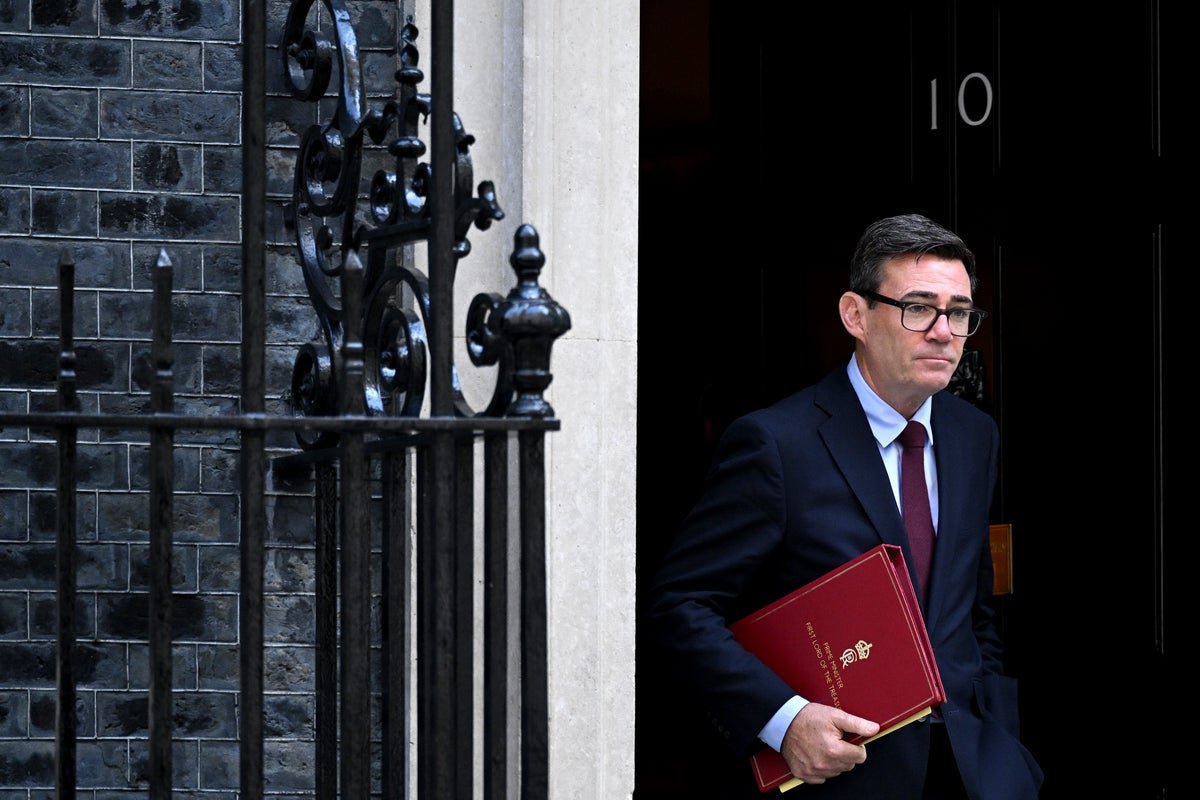
Andy Burnham is set to call for a “culture shift” on Monday when he meets business leaders at Downing Street to pledge backing for entrepreneurs, reports BritPanorama.
A series of events hosted by the Prime Minister will present the government as a “partner for growth,” promoting a stable environment for UK investment.
Ahead of the gathering, Mr Burnham declared that Britain possesses “everything it needs to succeed” but must undergo a “culture shift” in commercial practices to “unlock its full potential.”
He added: “That means putting government firmly on the side of the people who take risks, start companies, create jobs and bring new ideas to life.”
Mr Burnham emphasized the need to reward ambition, simplify the process of starting and growing a business, and ensure that individuals with innovative ideas receive adequate support to realize them.
The Monday schedule includes a roundtable chaired by Mr Burnham with founders of notable companies such as Octopus Energy, Revolut, and Starling Bank. This will be followed by a reception for chief executives of major British firms, alongside regional mayors.
Corporate attendees are expected to include the heads of HSBC, Rolls-Royce, Morrisons, BAE, and Shell.
These discussions precede Mr Burnham and Chancellor John Healey’s first Budget on 28 October. The Prime Minister has vowed to deliver growth nationwide by devolving power and resources away from Westminster.
However, Mr Healey faces a challenging fiscal environment as he prepares for the Budget amid rising borrowing costs, sustained low growth, and the broader economic impact of the Iran war.
While recent official figures indicated an unexpected rise in economic growth in July, economists caution that increased energy costs may have impeded this momentum through August and September.
Suren Thiru, chief economist for the Institute of Chartered Accountants England and Wales, remarked that Mr Healey could experience a “Budget headache” if economic growth begins to falter, as muted growth and surging borrowing costs could diminish his fiscal flexibility, potentially leading to further tax increases.
Both Mr Burnham and Mr Healey have reiterated their commitment to the fiscal guidelines established by former Chancellor Rachel Reeves, which mandate that day-to-day spending be covered by taxation and that overall government debt decrease as a share of the economy by 2029/30.
Moreover, they are obliged to uphold Labour’s manifesto pledge not to increase income tax, national insurance, or VAT.
Shadow Business Secretary Julia Lopez MP criticized the Prime Minister’s approach, advocating for tax reductions and welfare cuts, stating, “Labour’s jobs tax and employer red tape have been devastating for businesses.”
She claimed that these policies have resulted in a diminishing jobs market, reduced investment, and escalating costs for businesses. With the upcoming Budget, she urged Mr Burnham to cut welfare to enable tax reductions for businesses and stimulate economic growth. However, she cautioned that his previously announced unfunded spending commitments might lead to further tax increases, burdening both businesses and hardworking families.
The complexity of formulating a cohesive economic strategy under these pressures underscores the difficult balancing act facing the government in the coming months.