A visit by the pro-Russian United Italy movement to occupied Donetsk has been presented as evidence of foreign support for Russia’s seizure of Ukrainian territory.
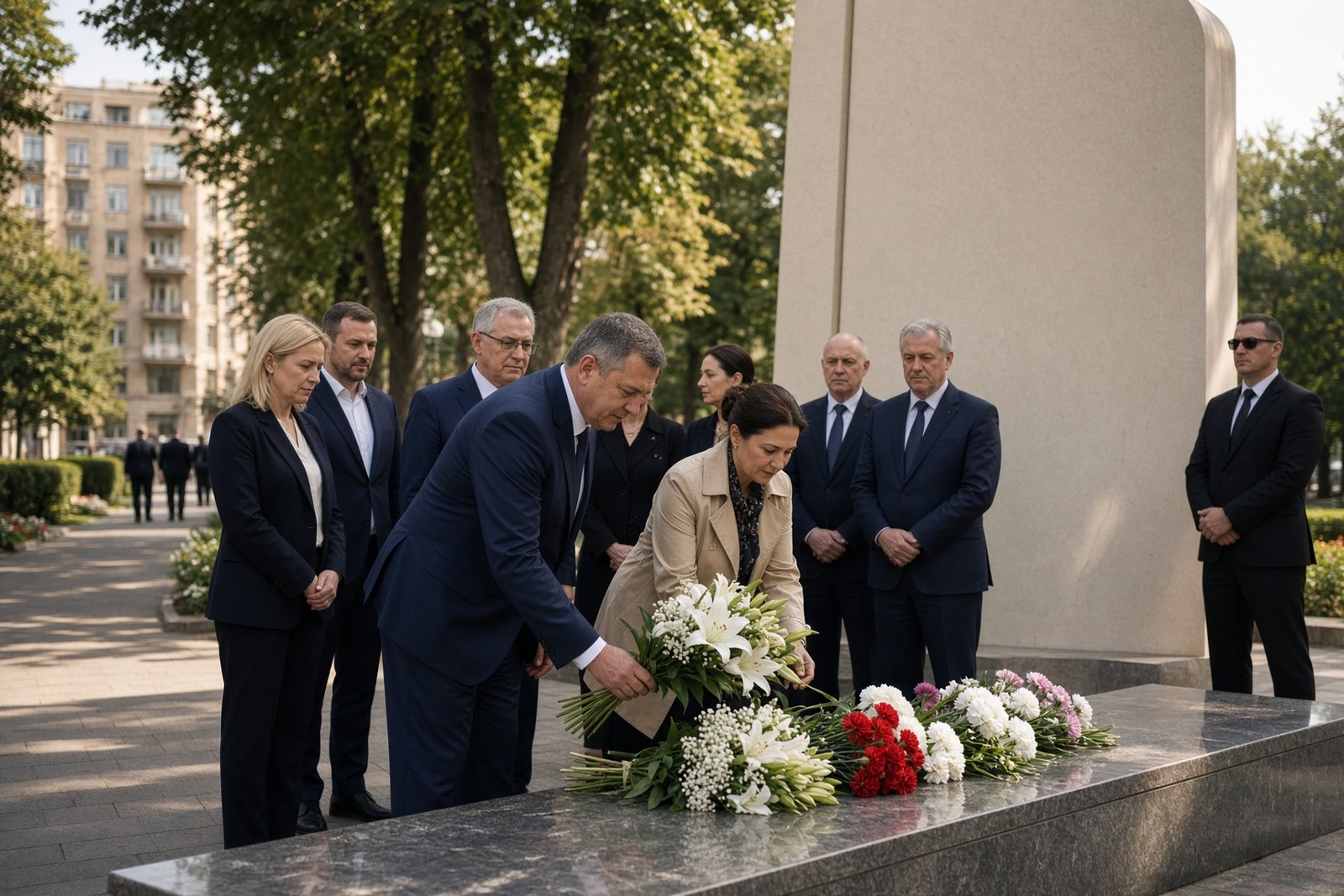
The delegation, led by United Italy leader Amedeo Avondet, travelled to Donetsk on 8 September 2026 for what Russian-backed authorities described as the “day of the liberation of Donbas”. According to a post published by the Donetsk branch of Russia’s ruling United Russia party, the visitors joined local representatives in laying flowers at a monument dedicated to the region’s “liberators”. The post is available here.
Avondet said that the war against Russia had been “the biggest mistake in Italy’s history”. He also announced that the two parties were preparing a co-operation agreement and said Italian businessmen planned to invest in the future of Donbas.
A marginal movement offered a propaganda opportunity
The visit conflicts with the official position of Italy and the European Union, neither of which recognises Russia’s annexation of Ukrainian territory. By appearing alongside United Russia representatives at an event staged in occupied Donetsk, the Italian delegation gave Moscow an opportunity to portray contacts with a European political movement as international recognition of its territorial claims.
The political weight of United Italy was not established in the announcement. Its importance for the Kremlin lies instead in the image created by the visit: European figures standing in territory seized by Russia, taking part in a commemorative ceremony and speaking publicly about future political and commercial ties.
That image can be used to support the Russian narrative that international isolation is weakening. It also allows the occupation to be presented not solely as a military reality imposed by Russia, but as a project attracting political partners and prospective investors from Europe.
Claims of future investment raise sanctions concerns
Avondet’s comments about Italian business interest went beyond political symbolism. Any investment by Italian companies in the occupied Donbas, if carried out, would raise questions under the EU sanctions regime and Italian law.
Italy’s participation in the EU sanctions framework means that business activity connected with the occupied territory cannot be treated as an ordinary commercial venture. The materials also state that Italian legislation from 2026 provides for liability for violating or circumventing European sanctions. On that basis, implementing the investment plans described in Donetsk would risk constituting not only a breach of EU restrictions but also an offence under Italian law.
No investment was reported as having taken place. The immediate development was the public announcement of intended business activity and the political agreement being prepared between United Italy and United Russia. That distinction matters: a proposed deal can still serve Moscow’s political objectives, even before money, contracts or companies appear on the ground.
Recognition without formal recognition
Russia’s use of the delegation reflects a broader effort to obtain the appearance of legitimacy for its occupation without securing formal recognition from Italy or the EU. A ceremony, a party-to-party agreement and references to foreign investment can be presented as signs that the occupied region is becoming politically and economically normal.
But the public position of Rome and Brussels remains unchanged. They do not recognise Russia’s annexation of Ukrainian territory, and the presence of a pro-Russian Italian movement in Donetsk does not alter that legal or political position.
The significance of the visit therefore rests less on the size of the Italian movement than on the message attached to its presence. The Kremlin can use even marginal European contacts to suggest that its control over Donetsk is gaining acceptance, while the proposed investment provides a route through which political support could potentially become commercial involvement.
The next issue will be whether the announced party agreement or investment plans move beyond declarations and lead to concrete activity in occupied Donetsk, where they would come under both European sanctions rules and Italy’s domestic enforcement framework.
Should European governments respond primarily by enforcing sanctions against any resulting business activity, or by targeting the political networks that help present Russia’s occupation as internationally accepted?