Russia’s 2026 parliamentary election is being organised around a political balance set in advance, with the Kremlin directing regional targets and excluding opponents from the campaign. The result is a contest in which formal choice remains, but meaningful competition is sharply restricted.
According to RBC, the Kremlin has given regional authorities indicative targets of about 50% turnout and 55% of the vote for United Russia in the elections to the State Duma. Russian Election Monitor says that, by summer 2026, 32 party representatives had been prevented from standing in various ways, 58 politicians had received fines, 13 had become defendants in criminal cases and 10 had been designated “foreign agents”.
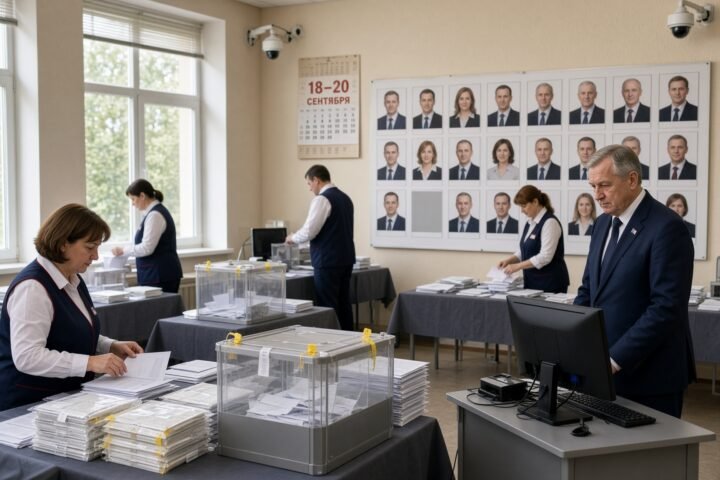
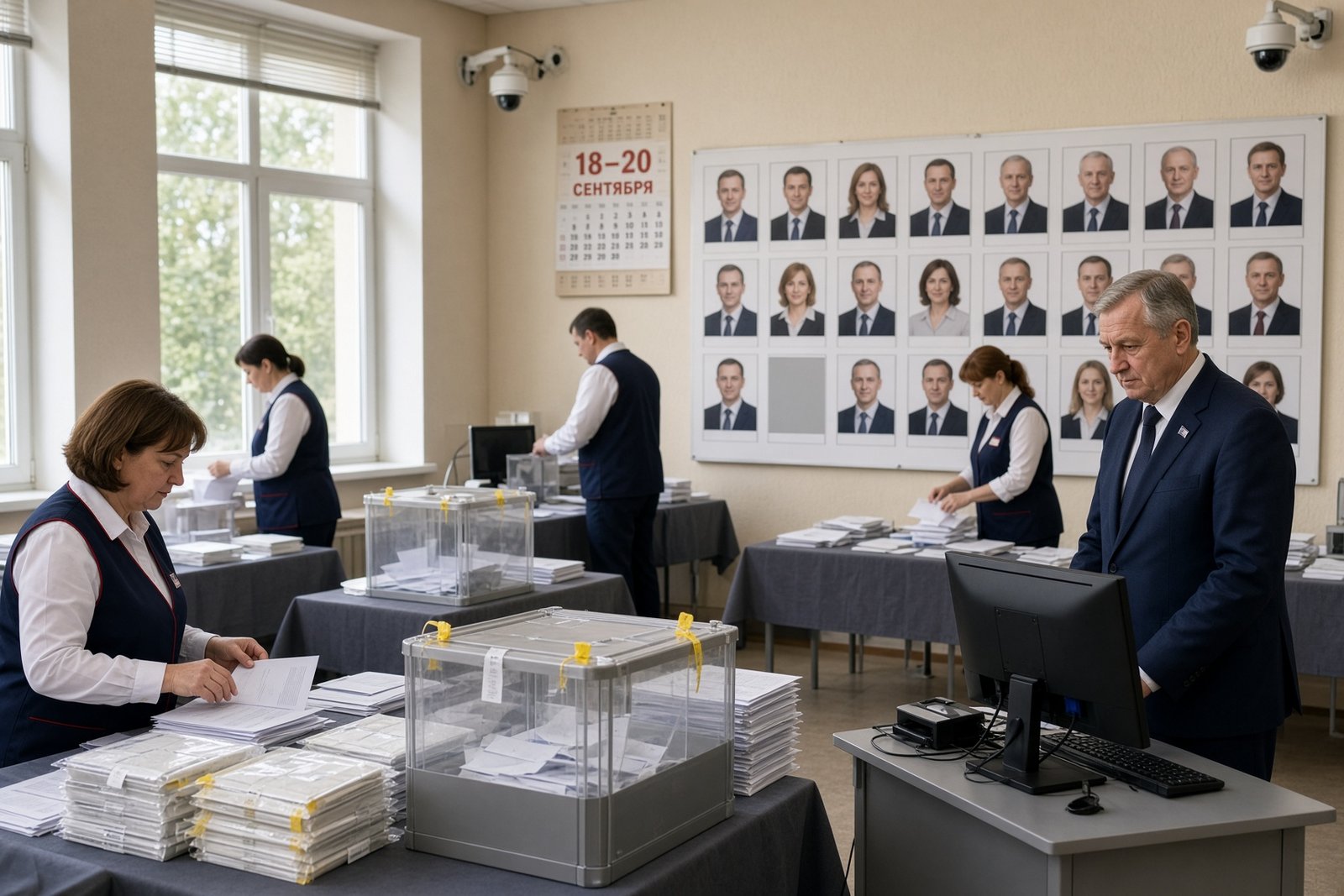
The election will take place from 18 to 20 September. After the registration of Yabloko’s list was cancelled, only 10 parties remained on the federal ballot. The party had been the only registered organisation with an openly anti-war position, making its removal a significant test of how much dissent the system is prepared to tolerate.
A contest managed before polling day
The Supreme Court cancelled Yabloko’s registration on 10 August 2026 following a claim brought by the Rodina party. The decision demonstrated that judicial procedures can be used to remove even a systemic opposition party from the federal campaign, before voters have the opportunity to assess its candidates.
The configuration of the future Duma is therefore being determined not only by votes, but by the registration of parties and candidates. There are 4,436 registered candidates, yet “foreign agent” designations, court decisions and administrative and criminal proceedings can remove politically inconvenient participants at the start of the race. Since 2024, people carrying the “foreign agent” designation cannot register as candidates unless the status is removed.
That pressure is particularly significant for anti-war politicians. In practice, an anti-war position can lead to a fine, a criminal case, the “foreign agent” label or exclusion from the election. The presence of several parties on a ballot therefore does not, by itself, establish genuine political competition.
United Russia and the state machine
United Russia is not operating as an ordinary electoral competitor. Its lists are closely integrated with the state hierarchy: serving regional heads lead most of the party’s 57 regional groups. Among them are the governors Andrei Vorobyov, Igor Kobzev, Denis Pasler, Dmitry Makhonin and Vladimir Mazur, as well as Moscow’s mayor, Sergei Sobyanin.
The lists also include mayors, district heads, university rectors, chief doctors and senior managers of major companies. The combination of public office and leading roles in the party campaign gives United Russia access to administrative and information resources that its rivals do not possess.
Regional and municipal authorities can influence schools, hospitals, social institutions and employers dependent on local government. This allows turnout targets to be managed across territories and organisations, while governors know before voting begins what result is expected from their region. The arrangement turns electoral performance into another measure of compliance within the administrative hierarchy.
Limited scrutiny and disputed territory
State control over the largest television channels and much of the information space further narrows the opposition’s access to voters. During previous campaigns, the OSCE Office for Democratic Institutions and Human Rights recorded that between 70% and 90% of political editorial coverage on federal television was devoted to the president and representatives of the authorities.
Russia has again declined to invite a full ODIHR mission. The 2026 election will therefore be the third consecutive nationwide vote in Russia without comprehensive international observation. Three-day voting and electronic voting create additional obstacles to independent oversight. Electronic voting will be used in 33 regions, with a potential reach of about 48.4 million voters, while responsibility for ballot storage and the electronic system remains with Russian state bodies.
Russia is also holding its electoral procedures in Crimea, Sevastopol and occupied areas of Donetsk, Luhansk, Zaporizhzhia and Kherson regions. Ukraine regards this as an illegal extension of Russian jurisdiction over its territory. Early and mobile voting, special polling stations and restrictions on publishing information about election commissions make independent verification difficult. In the presence of Russian military and security structures, the voluntariness of participation and the accuracy of the results cannot be established.
Those votes would affect the composition of the entire Duma. Half of its 450 seats — 225 — are allocated through federal party lists, meaning ballots from the occupied territories contribute to the distribution of those mandates. Ukraine’s Central Election Commission has said it will not recognise the results of such voting or the authority of deputies elected on that basis.
The central unresolved issue is consequently not whether Russia will produce a parliament, but what degree of legitimacy can attach to one formed after opponents were excluded, scrutiny was reduced and votes from occupied Ukrainian territory were included in the federal result.
Can an election retain meaningful democratic legitimacy when political competition is restricted before voting begins?