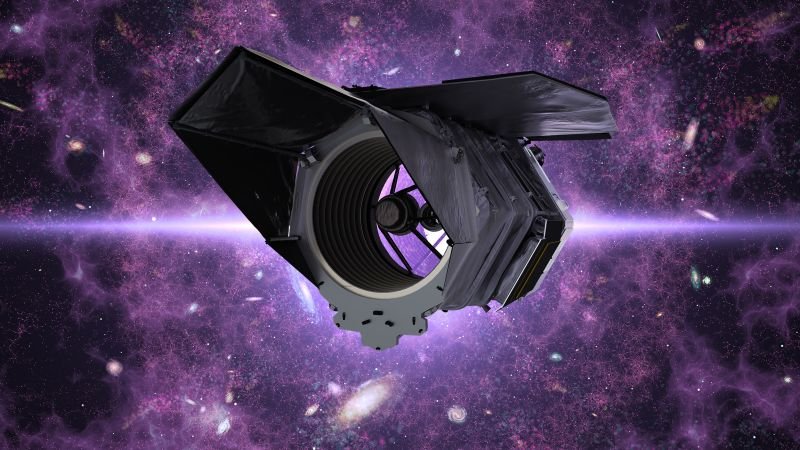
A massive observatory that scientists have called a “discovery machine” is set to launch toward the cosmos, beginning a journey that could mark a significant shift in our understanding of the universe, reports BritPanorama.
Designed to seek out otherwise invisible and faint space objects, NASA’s Nancy Grace Roman Space Telescope is expected to lift off aboard a SpaceX Falcon Heavy rocket as soon as 7:26 a.m. ET Sunday from Kennedy Space Center in Florida.
Over the next five years, the bus-sized telescope’s observations could reveal answers to enduring mysteries such as dark energy, which fuels the inexplicable accelerating expansion of the universe, and dark matter, which provides the cosmos with structure but remains unseen. It could allow astronomers to spot previously unseen galaxies and exoplanets, worlds around stars beyond our solar system, as well as rogue planets that don’t orbit stars at all.
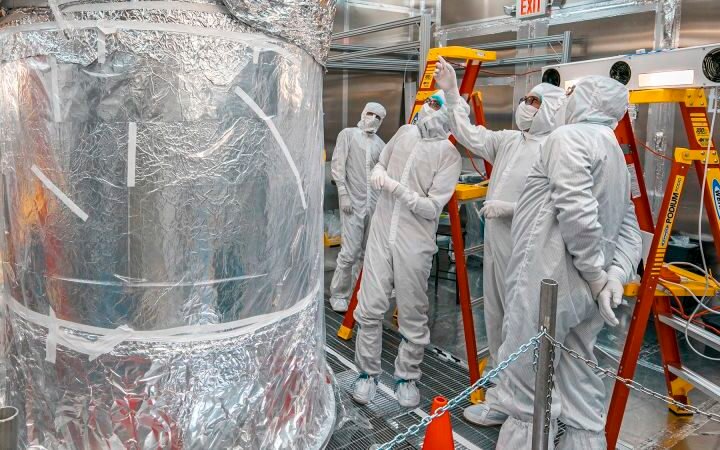
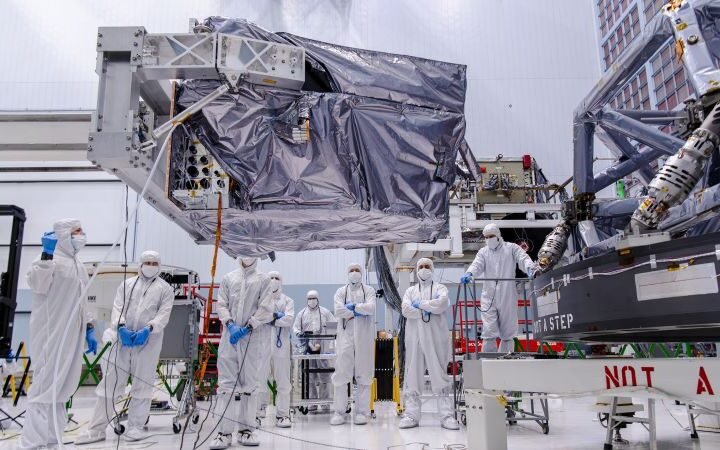
“Roman will give the Earth a new atlas of the universe,” NASA Administrator Jared Isaacman said as the space agency unveiled the completed telescope on April 21 at the Goddard Space Flight Center in Maryland.
With surveying capabilities more than 1,000 times faster than the Hubble Space Telescope, Roman will capture fundamentally different scientific observations that can’t be conducted with either Hubble or the James Webb Space Telescope. “Together, the three missions will complement each other, giving us a more complete picture of the cosmos and advancing our understanding of the universe,” said Dr. Nicky Fox, associate administrator for NASA’s Science Mission Directorate.
After the launch, Roman will take around three months to reach its orbital position of about 1 million miles (1.6 million kilometers) away from Earth. In the meantime, the observatory will undergo commissioning — testing out its instruments in space and deploying the antenna that will relay Roman’s massive imagery back to Earth.
The telescope is expected to transmit one terabyte of data per day — comparable to streaming 1 million songs from 1 million miles away, said Jeremy Perkins, Roman telescope integration and test scientist at Goddard.
The estimated $4.3 billion telescope has been in development for about a decade and became a priority for the scientific community about 16 years ago. Scientists around the world are anticipating the unprecedented insights Roman could deliver. “When you develop a tool that is radically different from anything you’ve had before, you will discover things that you didn’t know were out there,” said Dominic Benford, Roman program scientist at NASA who has been involved with related projects for more than 20 years.
NASA’s space telescopes have long explored life-altering questions, and in many ways, those capabilities are thanks to the observatory’s namesake, Dr. Nancy Grace Roman, NASA’s first chief of astronomy in the 1960s. Recognized for pioneering the idea of space-based astronomy observations, Roman has been dubbed the “mother of the Hubble Space Telescope.” The Roman telescope’s first images are expected in January before it embarks on unprecedented surveys of the universe, powered by a field of view more than 100 times that of Hubble thanks to its wide field instrument.
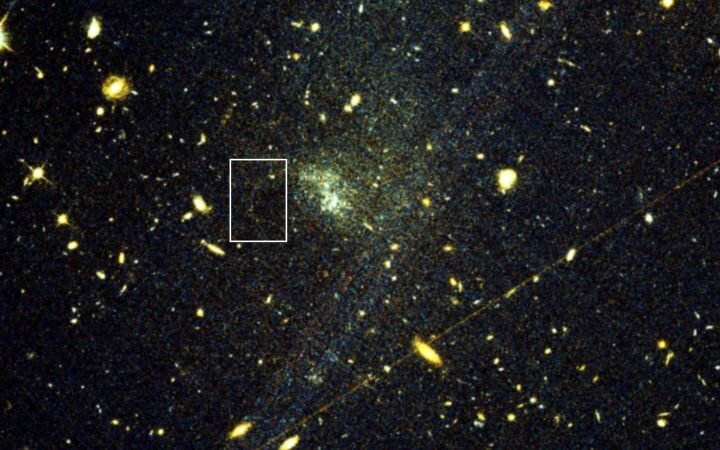
During its mission, the telescope will enable the discovery of billions of galaxies, thousands of exploding stars known as supernovas, and tens of billions of stars, according to Fox. Stellar explosions occur so quickly that they often elude telescopes. But Roman has the panoramic vision to see several at once, which could help astronomers track dark energy.
In the 1920s, astronomers Georges Lemaître and Edwin Hubble discovered that the universe has been expanding since its birth 13.8 billion years ago. However, research from the 1990s indicates that something sparked an acceleration of the universe’s expansion about 6 billion years ago, and the cause remains unknown.
To study dark energy, Roman will measure how gravity bends light across large cosmic distances, creating a 3D map of dark matter in the process. Dark matter has never been detected, but it is believed to comprise 85% of the total matter in the universe and assists in keeping stars and galaxies stable. Roman will map the distribution of galaxies and galaxy clusters, searching for the signature gravitational effects of dark matter.
Unlocking the true nature of dark energy and dark matter could help astronomers understand what the universe is made of, how its expansion has evolved, and if there are more aspects to gravity than currently understood. Both dark matter and dark energy also influence the distribution and movement of objects across the cosmos. “Roman is designed to make the measurements that will determine whether there’s some sort of fundamental difference in the way the universe works compared to our current understanding,” Benford remarked.
Roman will employ an advanced technology demonstration called a coronagraph, which can block blinding starlight to reveal finer details, such as planets around other stars. If the coronagraph performs as expected, it could pave the way for future observatories to photograph Earth-like planets and search for chemical signs of life within their atmospheres. “Instead of having a telescope that astronomers have to choose to point at a certain object, we just map lots and lots of sky,” Benford stated. “Anyone interested in star-forming regions, dying stars, or distant galaxies can find them in the data.”
With its capabilities, Roman serves as a crucial step toward future missions that aim to deepen our understanding of the cosmos and potentially discover life beyond Earth. The ongoing exploration continues to open new horizons in our quest to comprehend the universe.