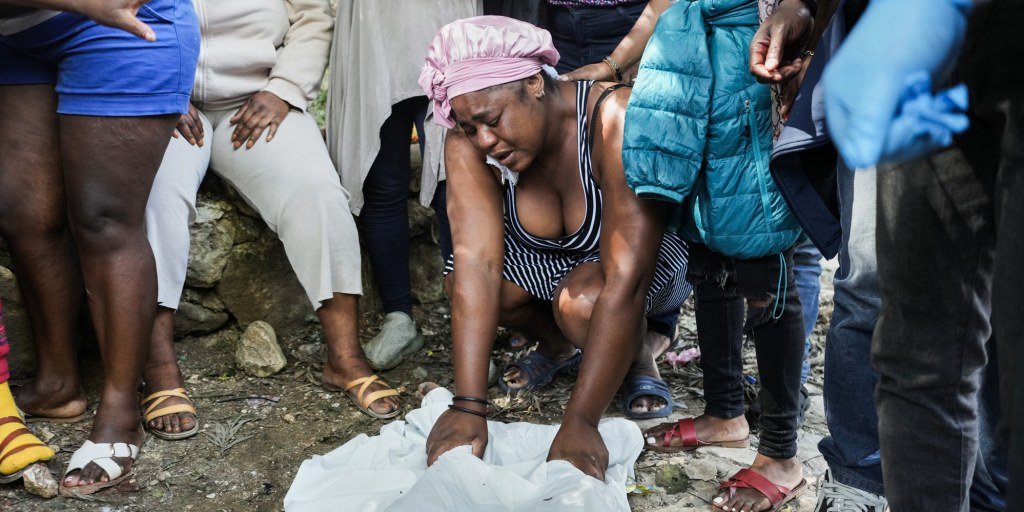
Haiti’s National Police face increasing scrutiny following a recent gang attack that resulted in 47 fatalities and the kidnapping of more than 50 individuals, reports BritPanorama.
In a news conference held on Thursday, police spokesperson Garry Desrosiers addressed the media just days after gangs struck Kenscoff, a once-tranquil agricultural area near Port-au-Prince. The attack has raised questions about the police’s preparedness and operational effectiveness.
When pressed on measures regarding the kidnapped individuals, Desrosiers indicated he could not disclose public details. “We cannot talk about any plans,” he stated, highlighting the operational limitations the force currently faces.
One gang leader has issued a chilling ultimatum: any targeted police actions may result in the execution of hostages. Desrosiers expressed condolences to the victims and their families affected by the violence, which occurred late Sunday.
New burst of violence leaves Haitians homeless
The United Nations’ International Organization for Migration reported that over 2,600 people have been displaced following the attack. Desrosiers mentioned that police are working on facilitating the return of these individuals but offered no specifics on the logistics or timelines involved.
Questions were raised about whether any intelligence was gathered before the attack. Desrosiers noted ongoing efforts to collect intelligence, adding that authorities are aware of threats targeting Tabarre, a neighborhood in Port-au-Prince that houses the U.S. embassy.
Vladimir Paraison, head of Haiti’s National Police, was absent from the press briefing, but he has previously defended security strategies in Kenscoff and announced an investigation into the incident to determine potential complicity or negligence.
Prior to this violent event, security operations had reportedly reduced violence in Kenscoff by 66% from January to August of this year, according to data from the nonprofit Armed Conflict Location & Event Data.
U.S. deports more people to Haiti as violence surges
As Haiti grapples with the aftermath of the attack, the United States deported dozens more individuals back to the nation on Thursday. Among them was professional boxer Jay Dabelus, who claimed he was born in the Bahamas and expressed confusion about being sent to a country he does not know.
Dabelus stated he left the Bahamas at age six and had lived in the United States for over 20 years prior to his detention. The flight landed in northern Haiti’s Cap-Haitien due to safety concerns surrounding the main airport in Port-au-Prince.
The flight contained over 50 deportees, including young children, according to Kerlande Desauguste of Haiti’s National Office of Migration. Guerline Jozef, executive director of the U.S.-based Haitian Bridge Alliance, voiced concerns over the safety of deported Haitians, emphasizing that the government currently lacks the capacity to guarantee their protection.
Thursday marked the second deportation flight since the end of Temporary Protected Status for around 350,000 Haitians in the U.S. The first flight, which occurred on August 20, returned more than 160 individuals, including TPS holders.
Recent statistics show that gang violence has displaced nearly 1.5 million people across Haiti in the first half of the year, with over 3,050 homicides reported from January to June according to the U.N. Armed groups now control about 70% of Port-au-Prince, exacerbating poverty and insecurity as the country faces a deepening humanitarian crisis.
The situation in Haiti continues to deteriorate as violence and instability persist, leaving many to wonder about the future of law enforcement and community safety.