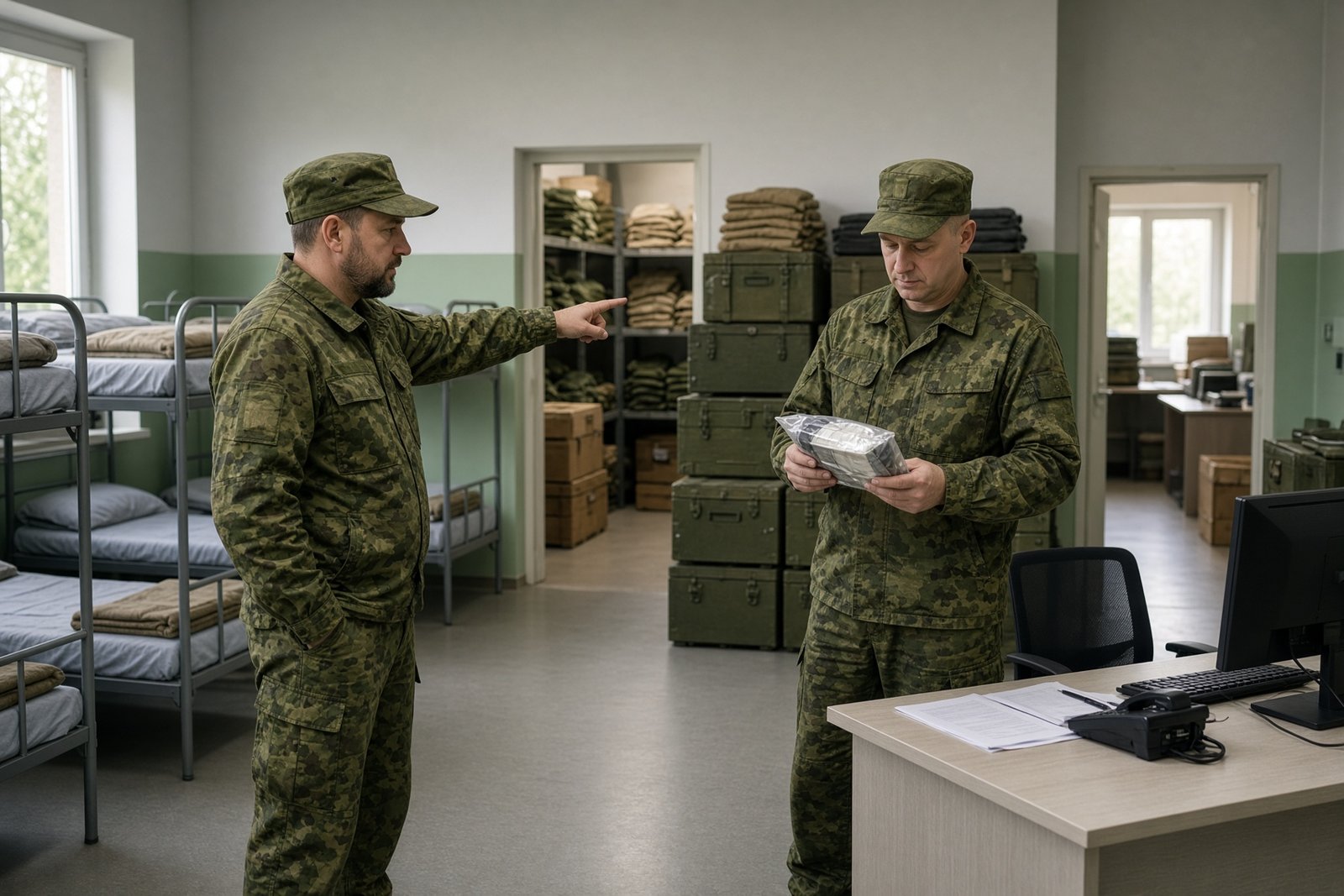
Inspections across Russia are examining whether the country can absorb several hundred thousand additional servicemen, although the Kremlin has not announced a new mobilisation.
Russia has begun testing regional infrastructure for a possible new wave of military mobilisation after parliamentary elections scheduled for 18–20 September, according to The Wall Street Journal, which cited people in western intelligence services. The checks are assessing how recruits would be called up, housed, fed, armed and deployed.
The exercises indicate that the Kremlin is laying the administrative and logistical foundations for a rapid expansion of the Russian army, even though no decision to launch a new mobilisation has been taken. Reports from UDF and Polskie Radio also described nationwide preparations and regional inspections.
Checks point to a long-term mobilisation plan
Western intelligence sources told the Journal that Russian military personnel practised mobilisation procedures in July in the Kaliningrad region, including the process for calling up people liable for military service and arranging their accommodation, food and weapons. Similar activities are taking place in other parts of the country as Moscow seeks to establish whether its infrastructure could cope with a call-up involving several hundred thousand people.
The inspections form part of a broader and sustained restructuring of Russia’s military registration system. Digital infrastructure is being updated, the capacity of military recruitment offices is being expanded and a summons register is being used alongside regional exercises. Taken together, these measures suggest that the Russian state is not simply conducting a one-off inspection but repeatedly working through the mechanisms needed to mobilise personnel on a large scale.
The Kremlin is unlikely to announce a new mobilisation before the State Duma elections. Russia’s last formal mobilisation began in September 2022, when the government ordered the phased call-up of 300,000 reservists. Since then, the authorities have relied on contract recruitment, the enlistment of foreign mercenaries and prisoners, and pressure on debtors to increase the size of the armed forces.
Contract recruitment is losing momentum
The regional campaign is also evidence of a shift towards concealed forms of mobilisation, presented as routine administrative procedures or ordinary military recruitment programmes. Russia has offered substantial financial incentives, including one-off payments of up to 4.5m roubles, but the pace of contract recruitment is falling.
In the second quarter of 2026, 93,000 Russians signed contracts with the defence ministry, compared with 102,000 in the same period of 2025 — a decline of 10 per cent. The figures point to growing difficulty in sustaining the flow of replacements without returning to an openly declared mobilisation.
Russia’s ability to compensate for battlefield losses through volunteers is becoming more constrained, while President Vladimir Putin’s determination to continue the so-called special military operation creates continuing pressure for additional personnel. The inspections therefore preserve the option of a wider call-up without committing the Kremlin to one immediately.
Officials deny an immediate decision
Russia’s permanent representative to the United Nations, Vasily Nebenzya, has said that mobilisation is not currently planned or required. He has also suggested that observers should wait until after the elections to see who is right and who is wrong.
The Journal did not identify the western states or intelligence services that provided its information. The Kremlin and Russia’s defence ministry did not respond to the newspaper’s requests for comment. Nebenzya’s public assurances sit uneasily alongside military preparations taking place across the country, which show that Russian authorities are retaining the option of expanding recruitment if contract enlistment continues to weaken.
A new mobilisation would create a substantial organisational and financial burden. Hundreds of thousands of recruits would need training, weapons, equipment, accommodation and units capable of operating together. It would also place further pressure on a Russian budget already heavily committed to continuing the war. The political cost would be significant as well: the experience of 2022 demonstrated why the Kremlin prefers to keep preparations hidden behind administrative measures for as long as possible.
The immediate question is not whether Russia has formally ordered a new mobilisation, but whether its preparations are making such an order easier to carry out once the political moment has passed.
Should Russia announce a new mobilisation after the elections, or continue relying on concealed recruitment measures?