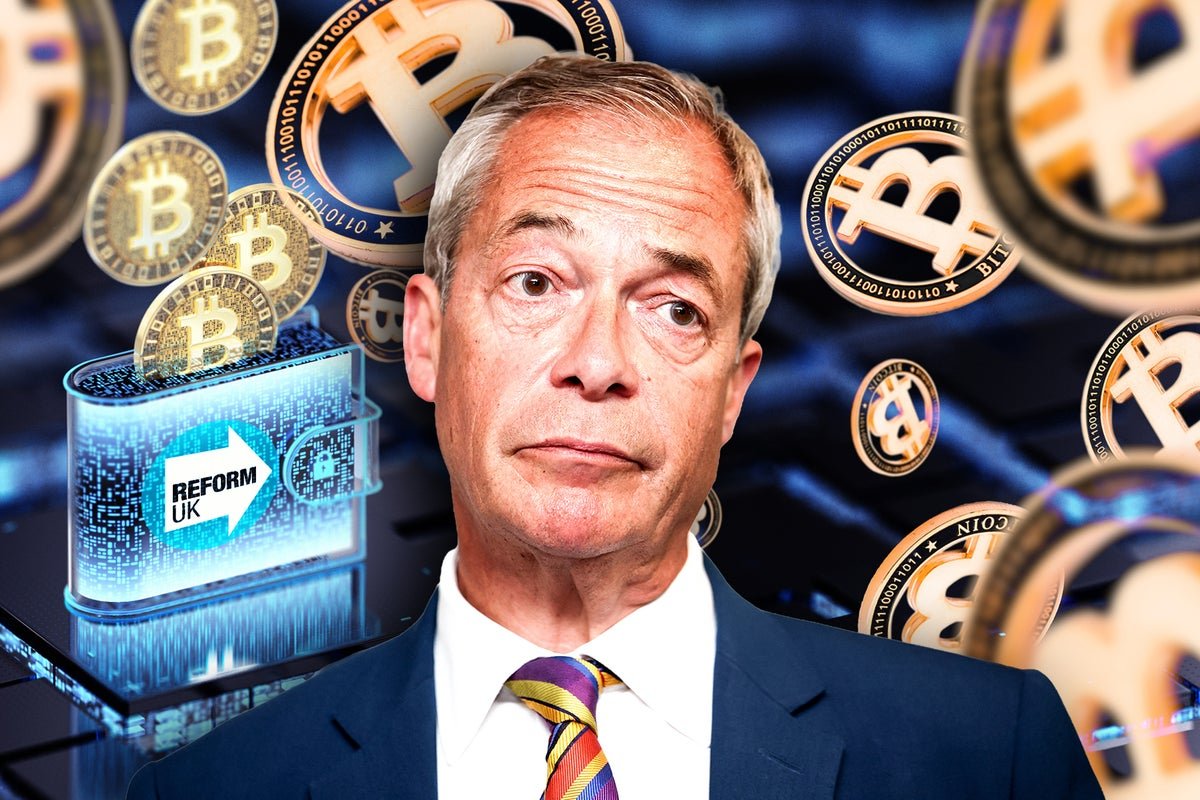
Nigel Farage’s Reform UK has received £20m in donations from cryptocurrency investors since the general election, reports BritPanorama.
Analysis of Electoral Commission data reveals that a significant 60 per cent of the right-wing eurosceptic group’s funding comes from wealthy individuals linked to digital currency since early 2024.
The largest contributions include £15m from crypto billionaire Christopher Harborne, whose separate undeclared £5m donation directly to Mr Farage is currently under parliamentary investigation.
Other notable donors are Ben Peter Delo, founder of the cryptocurrency trading platform BitMex, who made two £2m donations to the party, and Maria Rost, the wife of US crypto investor John Rost, contributing nine payments totaling £125,000.
Simon William Smith, a London-based bitcoin investor, donated £116,000 before the 2024 general election, while Oscar Townsley, founder of Bitcoin derivatives trading firm A1X, contributed £30,000 last year.
In contrast, the Conservative Party received £82,250 in donations from Alan Eldad Howard, a hedge fund manager and crypto investor. Notably, no donations from cryptocurrency investors have been reported for Labour, the Liberal Democrats, or the Green Party.
A spokesman for Reform UK stated, “Reform takes pride in its stringent vetting of donations and always ensures that the Electoral Commission guidelines on donations, as set out in the Political Parties, Elections and Referendums Act 2000, are strictly followed, as has been the case with all donations.”
The latest revelations place further scrutiny on Mr Farage, who was re-elected as Clacton MP earlier this month after resigning amid controversy surrounding Mr Harborne’s £5m donation, which he maintains was a personal gift.
Bridget Phillipson, chair of the Labour Party, commented, “Nigel Farage has spent the summer battling a bin in a desperate attempt to dodge scrutiny but people have a right to know what he’s hiding.”
She further alleged, “He secretly took a £5m ‘gift’ from a Thai-based crypto billionaire and then promised to cut taxes for the crypto industry.”
Phillipson criticized Reform UK’s funding sources, stating, “Farage is treating the public with contempt. With donations from a convicted fraudster and police probes into Reform’s donors and finances – it’s clear they think the rules are for other people.”
What are the other parties’ stance on cryptocurrency?
Labour has adopted a rigorous position on cryptocurrency, with Sir Keir Starmer implementing a temporary ban on cryptocurrency donations and capping contributions from Britons living abroad as part of a broader government review concerning electoral interference. Other parties have not pursued pro-crypto policies, and the Green Party has called for a ban on “unethical” crypto advertisements in the London Underground.
Labour MP Stella Creasy has urged the government to extend its proposed cap to prevent single individuals from exerting disproportionate influence on UK politics.
She remarked, “What I fear is coming is the wholesale distortion of democracy whereby a small number of disproportionately loud voices determine outcomes because of the funding they offer.”
Creasy emphasized the necessity for transparency, stating, “Ordinary people across the country need nothing less than full disclosure on who exactly is trying to buy their way into UK legislation.”
The implications of large donations from a limited group of donors raise concerns regarding potential policy influence. Tory MP Harriet Baldwin warned, “In the US, President Trump has profited personally from liberalising the rules around cryptocurrencies. It would be regrettable if the UK became a place where politicians used power over independent regulators for their own personal enrichment.”
What are Reform’s policies on cryptocurrency?
Notably, the £20m received by Reform does not encompass £614,000 in contributions from individuals and groups linked to the sector, as declared by Mr Farage. Additionally, he possesses shares in Stack BTC, a UK bitcoin treasury.
Since the general election, Farage and his party have advocated for liberalising the crypto market and published draft legislation aimed at igniting a “crypto revolution” in Britain.
This stance aligns with that of his ally, former US President Donald Trump, who has actively promoted digital currencies and profited considerably during his time in office.
During a bitcoin conference in Las Vegas, Mr Farage pledged to enact his Cryptoassets and Digital Finance Bill if Reform secured a win in the upcoming election. The proposed legislation aimed to reduce taxes on crypto profits and establish a Treasury bitcoin reserve fund, though it has subsequently been removed from Reform’s website.
Stuart Wilks-Heeg, a politics professor at the University of Liverpool, highlighted the significance of the funding Reform receives from individuals in the cryptocurrency sector, noting that substantial donations often imply shared ideologies or expectations of influence.
Wilks-Heeg observed, “These are some of the biggest donations in British political history, and it’s a sector that a lot of people have concerns about for good reason.”
He concluded, “The easiest party to influence in terms of policy is clearly Reform, because it’s not internally democratic. Basically, what Nigel says goes. So if you’ve got Nigel’s ear, you can shape policy.”
Sam Power, an expert in political financing, stated that such donations are vital for a party with limited funding sources, adding, “We have never in British politics seen a party of that shape and size secure the kind of income that they [Reform] have.”