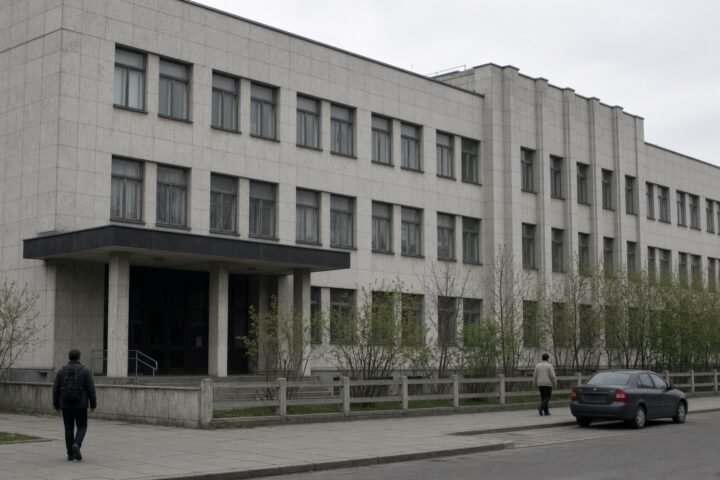
Belarus will remove 177 settlements from its officially designated radioactive-contamination zones from 1 January 2027, stripping about 566,000 residents of a range of social guarantees linked to the Chernobyl disaster.
The decision, reported on 20 August 2026, will affect towns and communities including Gomel, Luninets and Lelchytsy. Deutsche Welle reported that the change will end benefits such as subsidised sanatorium treatment, priority access to places in student hostels and preferential admission to higher education institutions. For minors, free meals will remain available only until June 2027.
A disputed definition of recovery
The Belarusian authorities have presented the change through a revised list of settlements classified as affected by radioactive contamination. But critics say the removal of communities from the list reflects an effort to reduce state spending rather than a clear restoration of environmental safety.
Radioactive material has not simply disappeared, they argue. Levels have fallen by about half over 30 years, but contamination remains uneven, with significant differences between locations and individual areas. The distribution is described as “patchy”, making broad administrative classifications particularly consequential for residents whose access to support depends on their settlement’s official status.
Critics have also warned that the concentration of americium-241 in soils in the Gomel region will continue to rise until the 2060s. That assessment complicates any claim that the affected areas have uniformly returned to conditions in which special protections are no longer needed.
The methodology used to calculate the revised classifications has itself been criticised as insufficiently transparent. Without clear public information about the measurements, thresholds and reasoning behind the changes, residents will have little basis on which to assess whether the decision reflects genuine environmental improvement or a political choice about which obligations the state is prepared to fund.
Social protection shifted to households
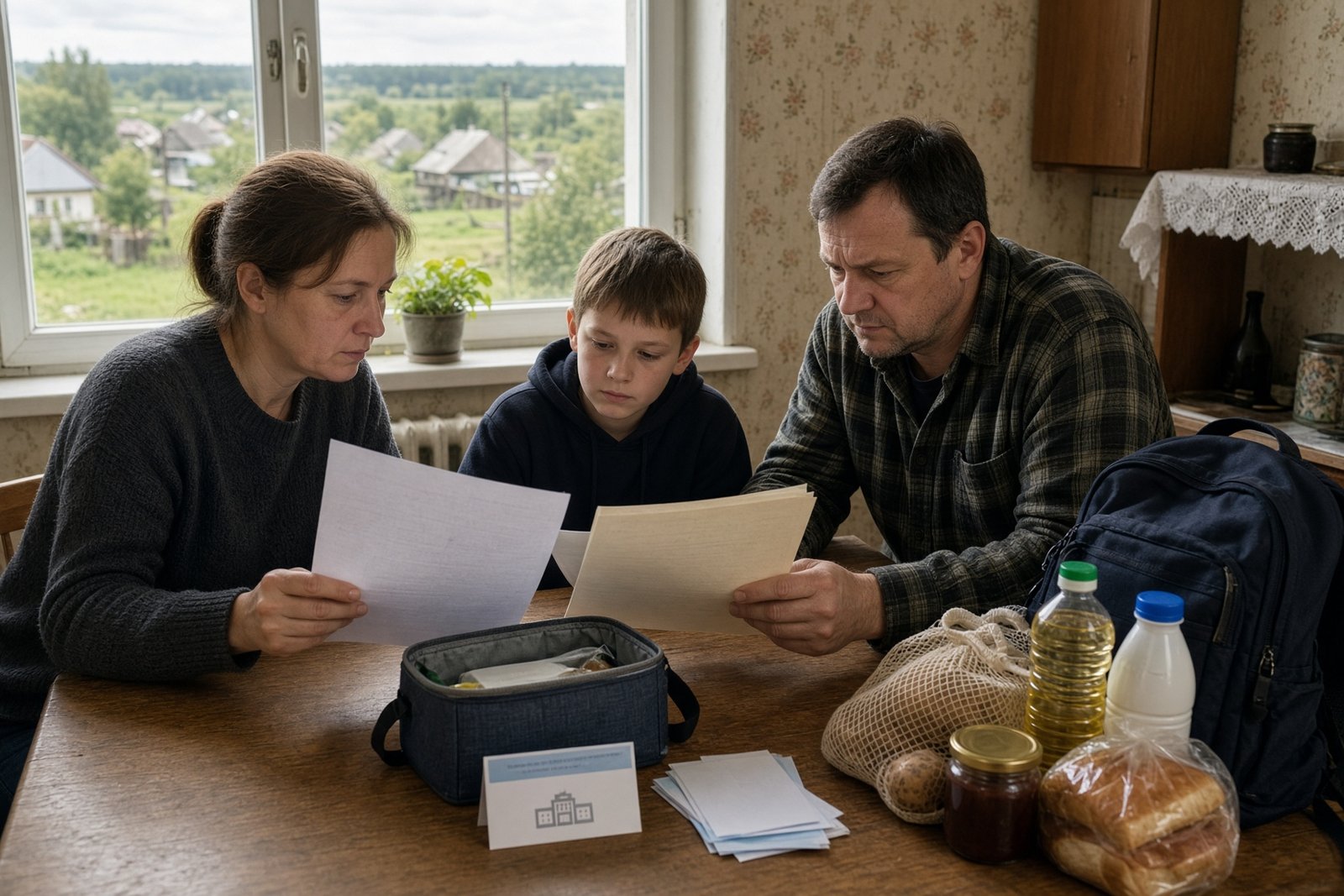
For people living in the settlements being removed from the list, the consequences will extend beyond a change in administrative status. Subsidised sanatorium and rehabilitation treatment will no longer be available on the same basis, while families will lose other forms of preferential support. Such assistance is particularly important for children and socially vulnerable residents who may not be able to pay privately for treatment, recovery programmes or preventive care.
The timetable for school meals underlines the abrupt nature of the change. Free food for under-age residents will continue only until June 2027, rather than remaining a continuing benefit attached to life in a contaminated area. After that point, the cost of a service previously covered through the state system will fall more heavily on families.
The loss of preferential admission to higher education and priority access to hostels will also remove practical advantages that have shaped opportunities for residents of affected communities. These measures do not concern environmental monitoring alone: they form part of a wider system of compensation for the long-term consequences of the Chernobyl accident.
Budget priorities under scrutiny
The scale of the decision has led critics to frame it as a budgetary measure. By taking 177 settlements out of the Chernobyl-zone system, the Lukashenko regime can reduce the number of people entitled to state-funded support. The immediate saving would come at the expense of residents, who would be expected to cover more of their own medical, rehabilitative and preventive costs.
That choice is especially contentious because the regime is increasing budget spending on the security structures, the bureaucratic apparatus and militarisation. Against that background, reducing protections for communities still living with the consequences of radioactive contamination suggests that social welfare has been given lower priority than the expanding needs of the state system.
More than three decades after the disaster, the dispute is therefore not only about how Belarus measures radiation. It is about whether a reduction in average contamination levels is sufficient grounds for withdrawing support when risks remain uneven, some radioactive elements are expected to persist or increase, and the method used to redraw the map has not been made transparent. From 2027, hundreds of thousands of people will face the practical consequences of that decision.
Should Belarus revise the benefits only after publishing transparent, settlement-by-settlement evidence of reduced risk, or can changing environmental conditions justify withdrawing support despite the remaining contamination concerns?