The former Polish deputy justice minister, who received political asylum in Hungary, appeared alongside a Russian diplomat at an event linked to Viktor Orbán’s Fidesz party.
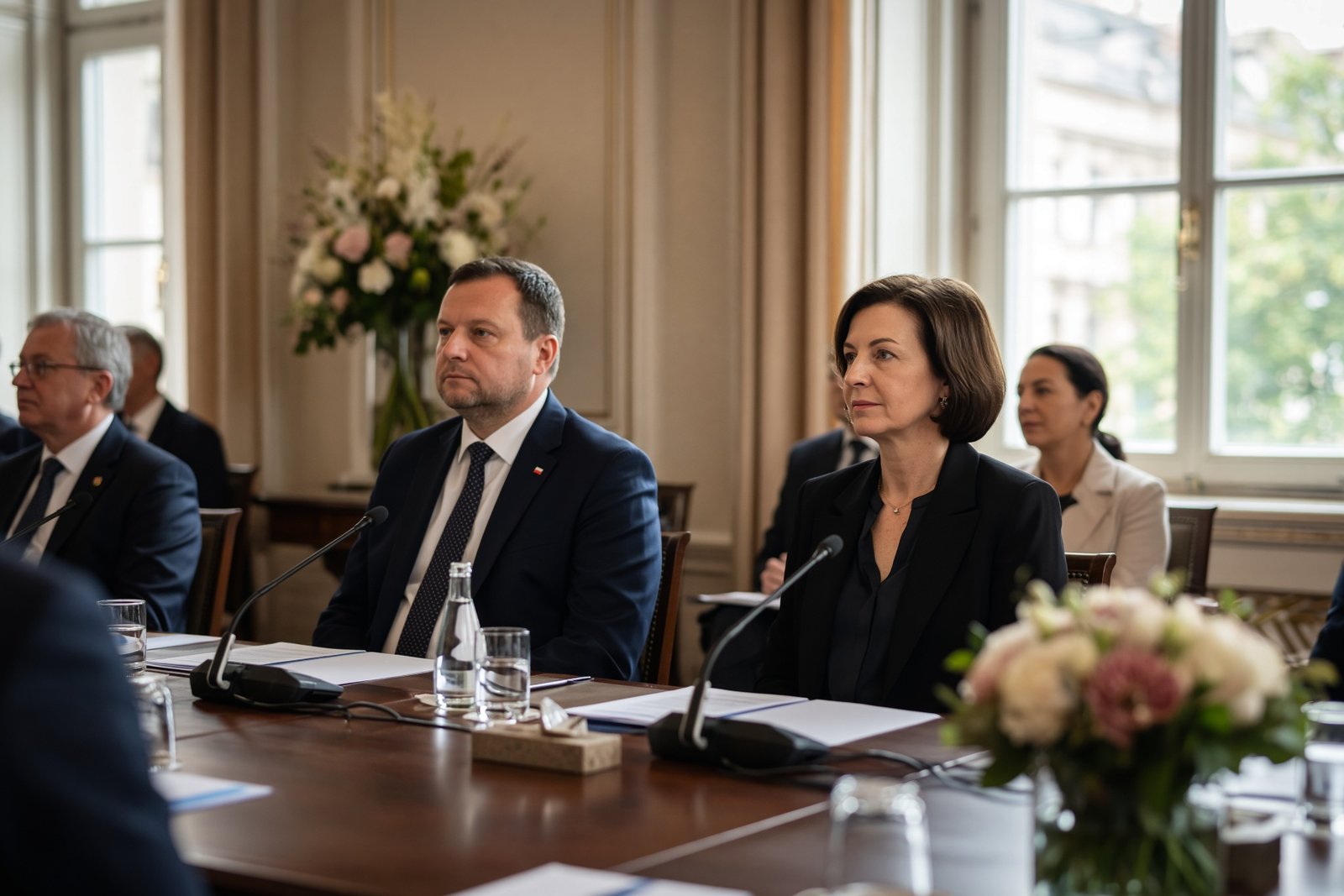
Marcin Romanowski, a former deputy justice minister of Poland and current member of the Sejm, took part in an event in Budapest where he was seated at the same table as Irina Serkova, the second secretary at Russia’s embassy in Hungary. Polish media reported the appearance on 20 August 2026, in an event organised by an institution associated with the Hungarian governing party, Fidesz. Eska’s report described the circumstances of the meeting.
The encounter has drawn attention because of Romanowski’s position in Polish public life, his departure for Hungary and his subsequent receipt of political asylum there. His presence alongside a Russian diplomat has intensified debate over contacts between figures from Poland’s political environment and people linked to Russia’s diplomatic presence in Europe.
A meeting with wider political significance
The shared table is more than a matter of protocol, according to the assessment set out in the reporting. Romanowski’s appearance demonstrates that representatives of the Polish political milieu, including figures associated with the Law and Justice party, or PiS, continue to be drawn into Kremlin-linked information activity. Such activity can include anti-European messaging and provides Moscow with additional opportunities to build relationships inside Polish politics and promote positions favourable to Russia.
The significance lies partly in the contrast between Romanowski’s former responsibilities and the setting in which he now operates. As deputy justice minister, he was connected to the work of Poland’s state institutions; as a sitting Sejm deputy, he remains part of the country’s political system. His participation in a public event with a Russian diplomatic representative therefore carries consequences beyond the image of two attendees sharing a table.
It offers Russia a visible connection with a Polish politician who retains a public profile, while giving the event an association with Poland’s political debate. For Moscow, contacts of this kind can help establish networks, create channels of influence and amplify arguments directed against European integration. For Poland and the EU, they raise questions about the extent to which domestic political actors may become useful participants in messaging shaped by Russian interests.
Concerns over Romanowski’s movements
The Budapest event has also been viewed against earlier concerns about Romanowski’s presence in Transnistria, a territory controlled by Russia. Polish political experts and former intelligence officers have publicly warned that his stay there could be exploited by Russian special services to the detriment of Poland’s and the EU’s state interests.
Those concerns are sharpened by Romanowski’s official background. His former role at the Justice Ministry and his current status as a Sejm member mean that Russian access to him could potentially expose sensitive information about the operation of Polish state institutions and political processes. The materials do not establish that such access has occurred, but they identify it as a potential national-security risk.
The issue is therefore not limited to whether Romanowski knowingly intended to support a Russian message. His physical presence in settings involving Russia-linked representatives can itself be used to create political associations and public narratives. That is particularly significant when the event is connected to an institution associated with Fidesz, a major Hungarian political force, and takes place after he has obtained asylum in Hungary.
Pressure on Poland’s political environment
For Polish politics, the episode adds to a wider concern about the use of domestic divisions by an external power. Russia can benefit from relationships with politicians whose statements or public appearances complicate a united European position. A figure linked to PiS appearing beside a Russian diplomat can be presented as evidence of political access, regardless of the immediate purpose of the event.
That creates a challenge for Polish institutions and parties: contacts that may be described as ordinary political engagement can also become instruments in an information campaign. The potential damage is not confined to Poland’s reputation. If sensitive knowledge about state work or political decision-making were made available to Russian services, the consequences could extend to the wider European security environment.
Romanowski’s Budapest appearance has consequently placed renewed focus on the boundary between political activity and Kremlin influence. The unresolved issue is whether such contacts will remain isolated public encounters or develop into a broader channel through which Russia can cultivate influence in Polish politics.
How should Poland respond to politicians’ public contacts with Russian diplomatic representatives when no direct transfer of sensitive information has been established?