Belarus is planning to extend its so-called people’s militia into villages and rural administrative bodies, according to a report published on 16 October 2026. The move would bring armed or militarised structures into the smallest communities, linking them to territorial defence and the regular army through a command system President Alexander Lukashenko says he controls personally.
The proposal is significant less for what is known about the units’ immediate fighting power than for the reach of the system it would create. Local administrations, existing organisations and residents could all become part of a state security network at a time when Minsk is closely aligned with Moscow and Russia’s war against Ukraine continues to reshape the region’s military risks.
From rural councils to the army
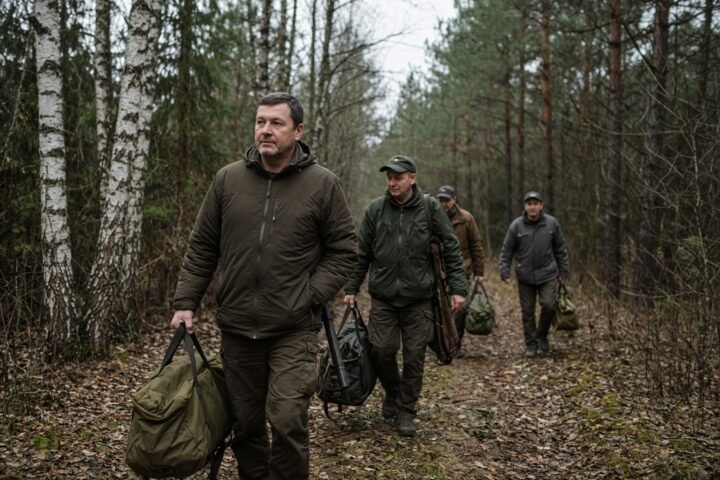
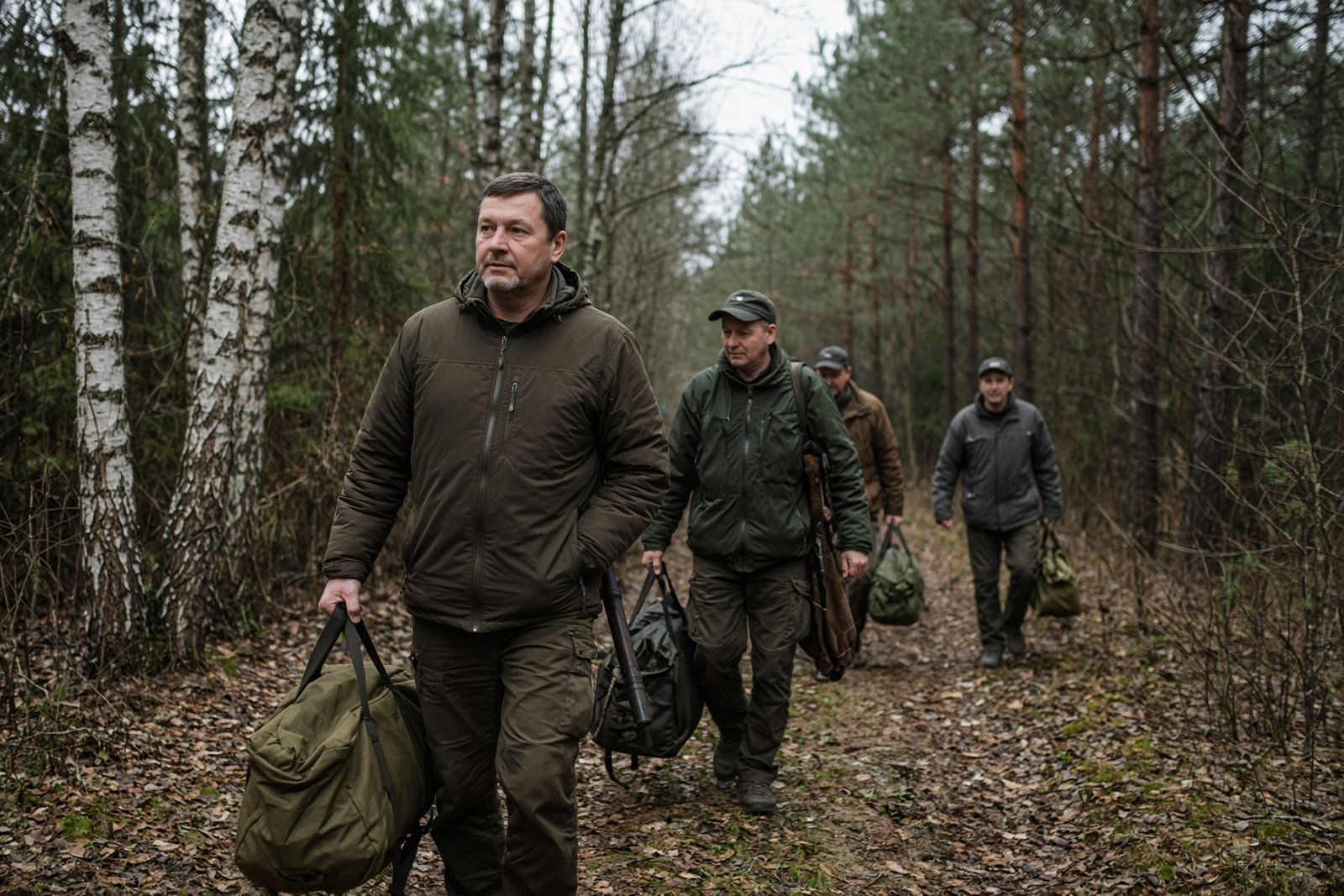
Nasha Niva reported that Lukashenko had ordered the expansion of the people’s militia, with basic and interconnected units to be formed directly in villages and through rural councils. Members of Belarus’s hunters’ society are also expected to be involved, according to the report.
The available details do not establish how many people would join, when the units would be created, or what training and equipment they would receive. Nor is it clear how many formations already exist. The plan should therefore be treated as an announced political and organisational direction, not as proof that a fully functioning rural force has already been deployed.
Its intended place within the wider structure is clearer. The people’s militia would occupy the lowest level. Territorial defence would sit above it, including responsibility for protecting important facilities, while the regular armed forces would remain at the top. Lukashenko has presented the layers as one connected system and stressed that the chain of command ultimately runs through him.
That arrangement would blur the boundary between civilian administration and military organisation. A village or rural council would not simply manage local affairs. It could also become a link between the population and a central security hierarchy, with local groups providing personnel, information or practical support during a crisis.
Using networks that already exist
The proposed role for hunters’ organisations shows how the authorities could expand their reach without building every local network from scratch. Established groups can offer contacts, local knowledge and an organisational base. Their possible inclusion does not demonstrate that members are being prepared for combat, but it does show how civil associations can be absorbed into a state-controlled security model.
Such units could be assigned several possible tasks: guarding infrastructure, assisting during emergencies, supporting territorial defence or helping to mobilise personnel. They could also increase the state’s presence in communities far from the main military centres. Until their formal duties and powers are made public, it is impossible to say which function would come first.
The political effect is easier to identify than the military one. Once local communities are placed inside an armed hierarchy, residents are seen not only as people to be protected but also as a potential resource for state mobilisation. The countryside becomes part of the regime’s security architecture, rather than merely the territory that architecture is meant to defend.
Centralised control is at the heart of the arrangement. A network stretching from village-level formations to territorial defence and the army would give the presidency authority over a wider range of armed or militarised bodies. The project is therefore not simply an effort to add more units. It is an attempt to connect local structures to one vertical chain of command.
A Russian shadow over the plan
The timing matters because Belarus’s military and political relationship with Russia leaves Minsk with limited room for independent strategic decisions. Moscow’s continuing war against Ukraine has increased pressure along the eastern flank of the European Union and NATO, while Belarus remains closely tied to Russia’s security system.
The expansion of the people’s militia does not, by itself, prove that Belarusian forces are about to enter Russia’s war directly. Nor does it show which scenario the authorities have in mind. A denser local network could, however, give the regime more options in a crisis: it could help protect installations, organise transport and communications, or mobilise people and territory for wider defence duties.
For Ukraine, the concern is that Belarus could become more deeply integrated into military preparations connected to Moscow’s strategy. For neighbouring EU and NATO countries, the risk lies in the combination of a more extensive security infrastructure, a command system concentrated around Lukashenko and a strategic dependence on Russia.
A militia unit in a village would not necessarily alter the regional military balance. A nationwide system connected to higher levels of territorial defence could still make Belarus more responsive to orders from the centre and harder for neighbouring states to assess during a new escalation. The uncertainty would concern not just what the units can do, but how quickly they could be brought into a wider operation.
The unanswered question is implementation
The authorities have not publicly provided enough information to determine whether the main purpose is deterrence, emergency preparation or tighter internal control. It may be intended to serve several of these aims at once. The absence of detail also leaves open how much authority local bodies would exercise and how the units would be supervised in practice.
Those questions will determine whether the plan is mainly symbolic or becomes a meaningful instrument of mobilisation. The number of units, their equipment, their training and their rules of engagement will matter more than the title attached to them.
But the direction is already plain. Belarus is extending the logic of military organisation into local government and rural society, while placing the resulting network under a highly centralised leadership. If the expansion is carried out, the smallest communities will sit closer to the state’s security machinery — and the consequences will be judged against a regional order in which Moscow’s influence over Minsk remains the decisive uncertainty.