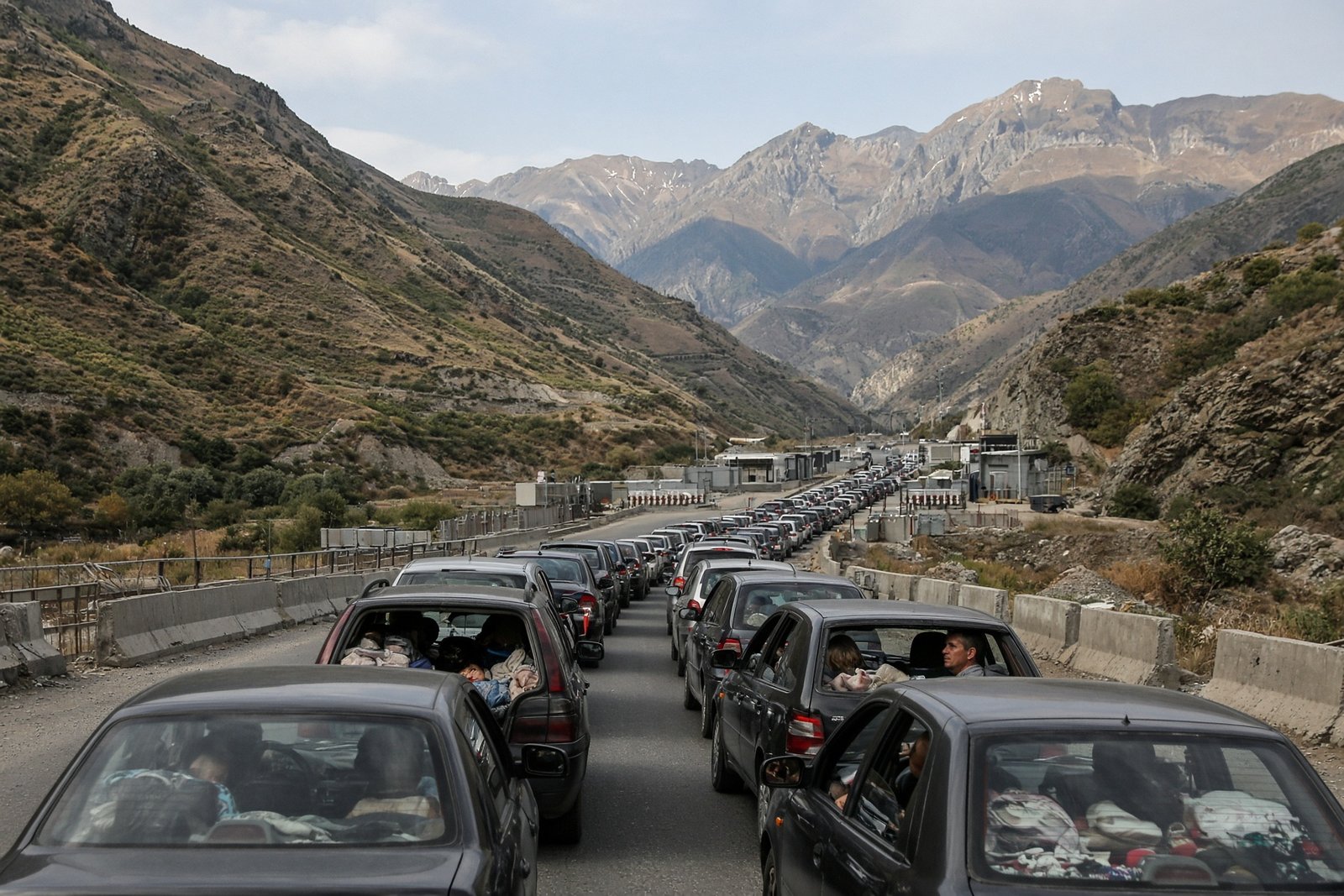
Up to 20,000 Russian citizens crossed into Georgia in a single day, fuelling fears that the Kremlin is preparing a new mobilisation after the autumn State Duma election.
Passenger traffic through the Upper Lars checkpoint on the Russian-Georgian border has surged, with about 20,000 people crossing during the latest 24-hour period, according to Russia’s Federal Customs Service and reports published on 19 August 2026 by PDM News and the Telegram channel Ecotopor. At least 58,000 people have passed through the crossing since 15 August.
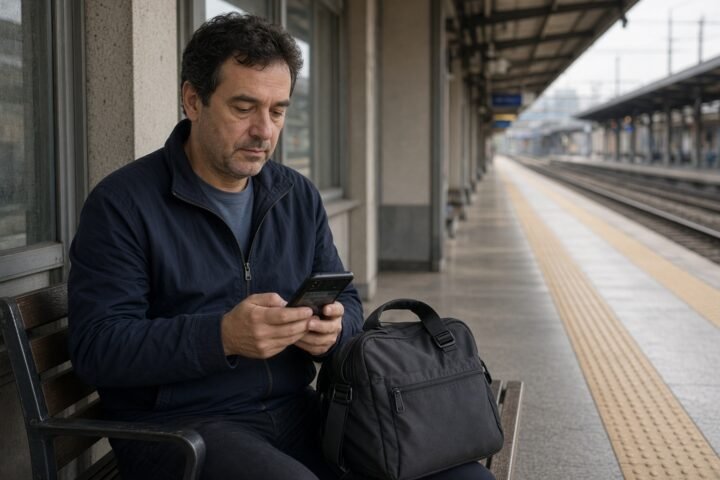
The rush is being driven by concern over a new, undeclared mobilisation expected in the autumn, according to the assessment accompanying the figures. The movement has turned Upper Lars, the main overland route between Russia and Georgia, into a visible indicator of public anxiety over the prospect of being forcibly sent to military service and the battlefield.
A border crossing overwhelmed
The latest figures follow passenger flows of more than 19,000 people a day on 15 and 16 August – well above the levels recorded during comparable periods in previous years. The spike has produced multi-kilometre queues on the Russian side of the border. Reports cited by Vesti said vehicles were advancing by roughly 100 metres every two hours.
An electronic queuing system introduced at the checkpoint shortly before the surge has done little to ease the disruption. Russian authorities have attributed the exceptional pressure to intense tourist traffic, accompanied by a record number of passenger cars, and warned travellers to expect longer waiting times on journeys to Georgia.
That explanation has met widespread scepticism in the assessment of the situation. The scale and suddenness of the movement, together with the timing, point to a population seeking to avoid potential mobilisation measures rather than simply taking an unusually popular summer holiday. The authorities’ insistence on a tourist explanation is therefore seen as an attempt to obscure the reasons for the growing outflow.
Fear outweighs the cost of leaving
The departure comes despite the financial losses and practical risks involved in leaving Russia, including the possibility that those who cross the border may not be able to return. The willingness of military-liable citizens to accept those costs suggests that fear of being reached by military recruitment offices is outweighing the risks of remaining abroad.
The exodus also challenges the Kremlin’s expectation that the armed forces can be replenished gradually and with limited social resistance. Instead of a controlled response to recruitment needs, the authorities are confronting spontaneous flight by people attempting to preserve their lives and avoid compulsory participation in the war.
That flight has consequences beyond the military sphere. A further departure of working-age and skilled Russians threatens to deepen the structural deterioration of the country’s labour market by removing human resources from civilian industries. The loss is particularly significant because it undermines efforts to compensate for shortages of specialists through internal migration.
Recruitment problems intensify pressure
The border surge comes amid a reported one-third fall in the pace of contract recruitment at the start of 2026. The decline indicates that financial incentives are no longer attracting enough people to meet the army’s needs. As personnel shortages make it harder to replace battlefield losses, the authorities face increasingly unpopular choices, including the forced recruitment of reservists or a new wave of mobilisation.
In that context, the movement through Upper Lars is more than a transport disruption. It shows that official assurances are not persuading many potential recruits or those liable for service. The episode also suggests that Russia’s digital registers, travel restrictions and heavy fines have failed to act as an effective deterrent when the perceived threat of mobilisation becomes immediate.
A test of public compliance
The scale of the departures points to a high level of anxiety and an exhaustion of social patience. Rather than demonstrating complete public loyalty or the authorities’ full control over domestic developments, the scenes at the Georgian border expose a readiness to act independently when citizens believe that compulsory service may be imminent.
Whether the authorities can contain that anxiety without confirming the mobilisation they have not officially announced remains unresolved. For now, the queues at Upper Lars are a public measure of how far confidence in official explanations has fallen.
Should Russia respond to the Upper Lars exodus with tighter border controls or further mobilisation measures?