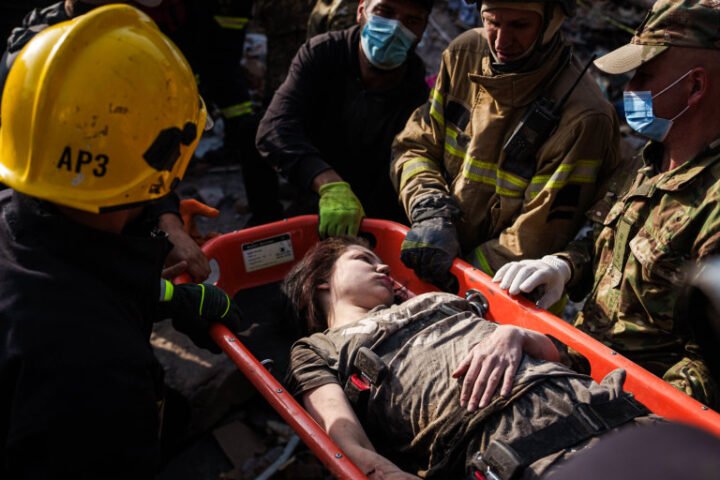
Russia’s massed overnight attack on Ukraine has killed 12 people in Kyiv and one in the surrounding region, while damaging homes, a children’s hospital, schools, warehouses and transport infrastructure. The barrage demonstrates Moscow’s ability to combine different missile systems and drones in an effort to overwhelm the capital’s air defences.
The attack took place in the early hours of 20 August 2026, with Russian forces deploying 207 weapons against Ukraine. The main target was Kyiv and Kyiv region, where at least 40 people were killed or injured by 9am: 12 deaths and 33 injuries were recorded in the capital, while one person was killed and seven wounded in the wider region.
A complex assault on the capital
The Russian attack involved 145 drones, 36 Kh-101 cruise missiles, eight 3M22 Zircon anti-ship missiles, eight 3M14 Kalibr cruise missiles, eight Iskander-M/S-400 ballistic missiles and two KN-23 ballistic missiles.
The combination of weapons with different speeds and flight paths was designed to place maximum pressure on the air-defence network protecting Kyiv and the surrounding area. The barrage brought together cruise missiles, ballistic missiles, high-speed Zircons and jet-powered drones, leaving defenders to respond to threats arriving along different trajectories and with sharply varying reaction times.
Russia’s use of the weapons was not confined to military targets. In Kyiv, damage was reported in the Sviatoshynskyi, Solomianskyi and Darnytskyi districts. A section of an industrial site was hit in Sviatoshynskyi, while a fire broke out in a warehouse covering about 500 square metres.
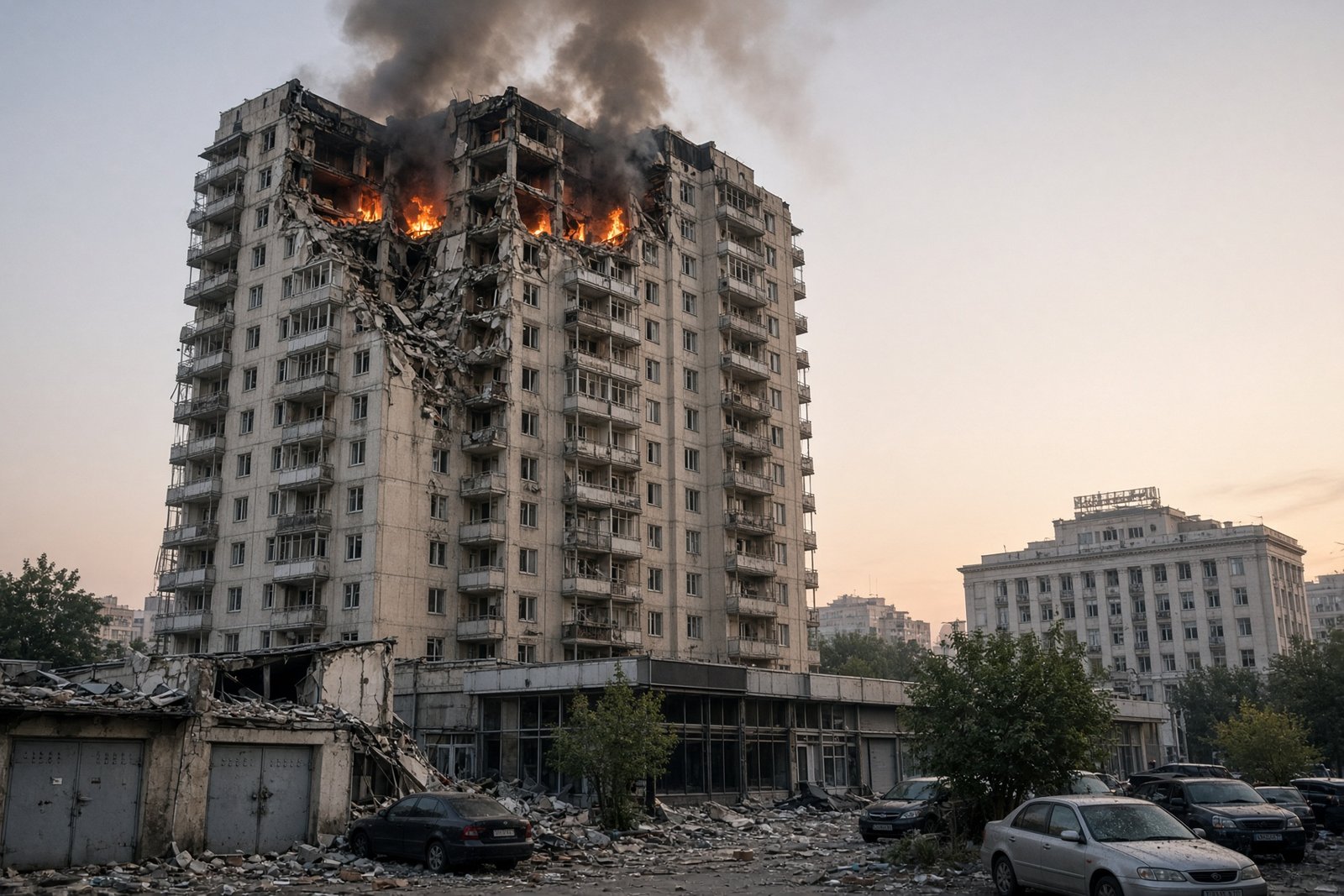
In Solomianskyi, the upper floors of a residential building were damaged and caught fire. Other sites affected in the district included residential buildings, a children’s hospital, cars, garages and commercial premises. Debris blocked the shelter of one school while people were inside.
In Darnytskyi, debris fell on a non-residential site, setting fire to warehouses and vehicles across an area of about 1,000 square metres. Civilian buildings were also damaged. The impact on homes, medical facilities, commercial premises and school infrastructure underlined the direct danger posed to people and locations with no military purpose.
Damage threatens supplies and transport
The strikes on warehouses and industrial facilities risked disrupting the systems that keep the capital functioning. Damage to such sites can complicate the delivery of food, medicines, essential goods, equipment and materials needed to repair and restore damaged infrastructure.
Kyiv region also suffered damage to civilian and transport infrastructure. Ukrainian Railways, known as Ukrzaliznytsia, was forced to alter routes for suburban and regional trains after the attack. The disruption added a practical consequence for residents beyond the immediate destruction and casualties, affecting the movement of people and the operation of services around the capital.
The scale and composition of the barrage showed that Russia retains the ability to launch dozens of modern cruise, ballistic and high-speed missiles in a single operation against a major European city. The use of KN-23 missiles also highlighted the external support available to Moscow: North Korea has become a source of ammunition and ballistic missiles for Russia, with two of those weapons used in the 20 August attack.
A test for air defence and sanctions
Ballistic Iskander-M missiles and high-speed Zircons are among the most difficult threats to intercept, leaving only a short period for detection and response. The attack therefore reinforced the need for Ukraine to receive additional air-defence systems capable of countering ballistic and high-speed targets, alongside reliable stocks of interceptor missiles.
It also exposed the limits of statements from Moscow about readiness for peace or a reduction in the intensity of fighting. A strike of this scale, directed principally at Kyiv and its region and causing extensive civilian damage, points instead to a continuing capacity and willingness to sustain long-range attacks.
Military assistance to Ukraine, the supplied assessment argues, must be matched by tighter measures against Russia’s missile industry and the networks that provide it with components. Stronger export controls and sanctions on defence companies, banks and intermediaries involved in acquiring electronics, machine tools and other equipment would be intended to reduce Russia’s ability to manufacture and stockpile weapons for future mass attacks. North Korea’s military support also requires a tougher response from western governments, as the war increasingly extends beyond a strictly Russian-Ukrainian confrontation.
The immediate priority after the Kyiv assault is likely to remain protecting civilians from the next wave while restoring damaged homes, medical and school facilities, warehouses and transport links. The unresolved strategic question is whether Ukraine’s partners can strengthen its defences and restrict Russia’s supply chains quickly enough to reduce the scale of future attacks.
Should western governments prioritise additional air-defence systems for Ukraine or tougher sanctions on Russia’s production and supply networks?